






The Valley of Flowers located in Uttarakhand's Chamoli district is now open to the public. The UNESCO World Heritage Site is a stunning specimen in the conservation
of the rich biodiversity and rare plant species that the valley houses - something which the Forest Department has requested tourists to respect and cooperate with. An Akashvani News report shares an input from Forest Range Officer Chetna Kandpal, requesting the valley will remain open till October 31. Now the thriving ecosystem in the valley does not take away from the challenging geographical conditions of the region, which is why the safety standards and guidelines are of utmost importance to tourists visiting. Besides this, the Valley of Flowers can make for a deeply delightful trip. Here's everything you need to know to before you get down to the planning.
Everything You Need to Know About the Valley of Flowers
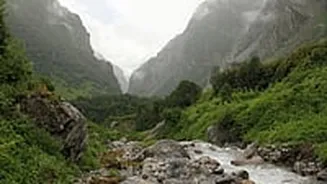
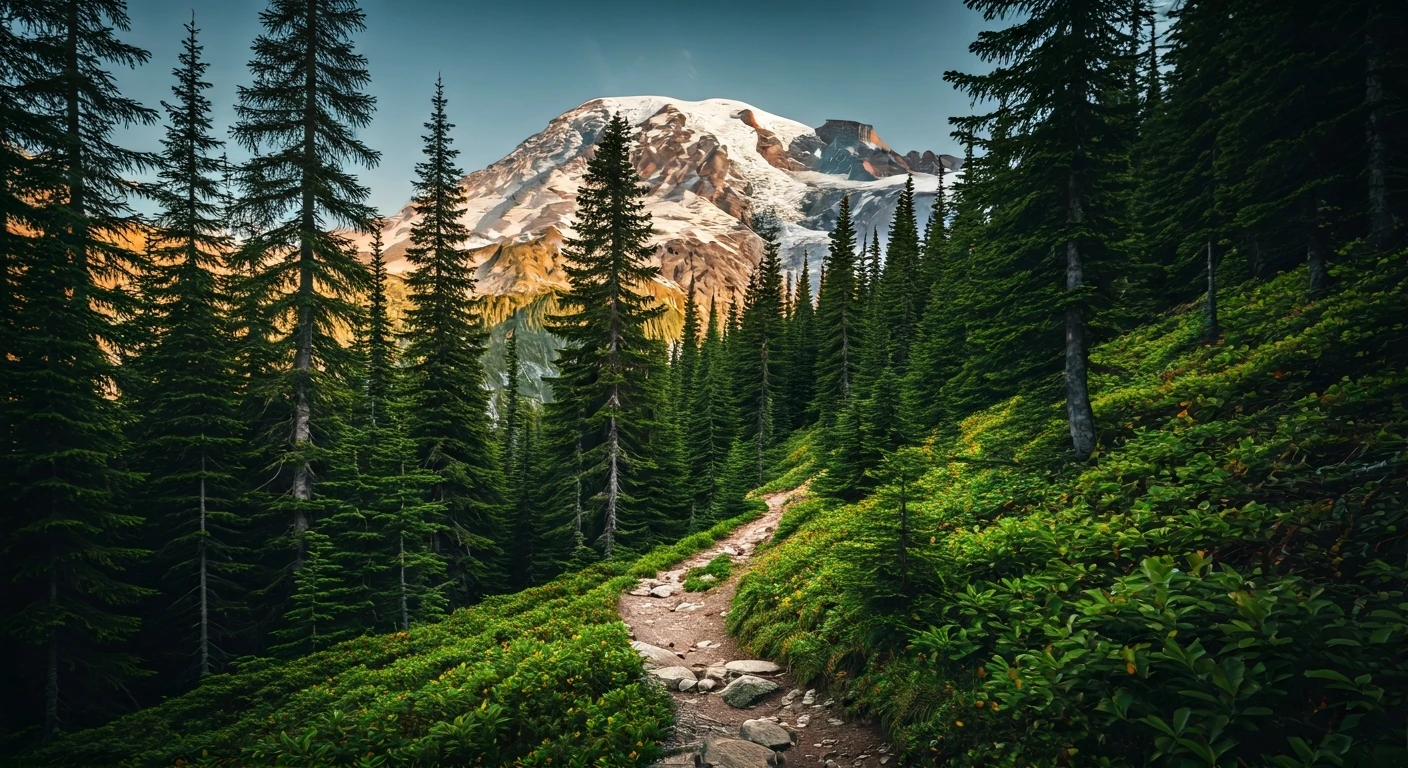
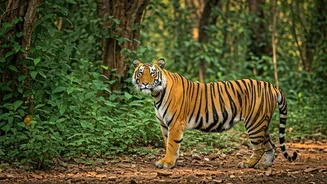
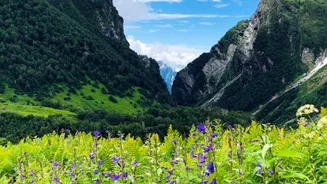
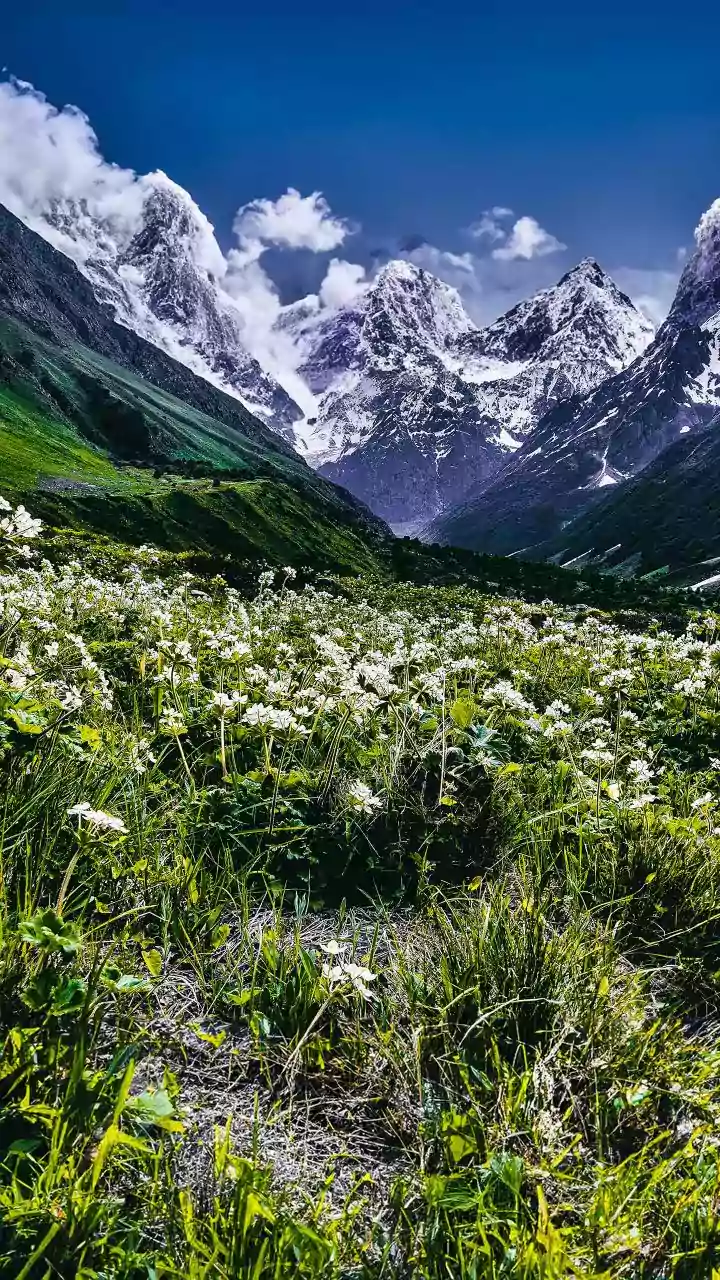
Spread over an area of 87 square kilometres, the Valley of Flowers forms one of the two core zones of the Nanda Devi Biosphere Reserve. The Valley is home to over 600 species of flowers across orchids, poppies, primulas, marigold, daisies and anemones. The way to the Valley is paved with waterfalls and wild streams dotted with sub-alpine forest birch and rhododendron. Situated at an altitude of 3,600 metres above seal level, the UNESCO World heritage Site is also home to rare wildlife species such as the gray langur, the flying squirrel, the Himalayan weasel, black bear, red fox, lime butterfly and the snow leopard.
The stretch between May and October is the time slotted for tourists to throng the Valley of Flowers, though the Uttarakhand Tourism website specifically points out the months from July to September to catch the ecosystem at the peak of its natural abundance.
How to Reach the Valley of Flowers
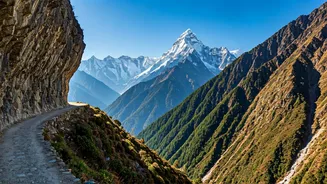
The nearest airport to the Valley of Flowers is the Jolly Grant Airport. However, the roads only go up to the Govind Ghat after which there is a 16 kilometre trek to actually reach the valley. By train, the nearest railway station to the attraction is Rishikesh. Once you disembark, take a bus or taxi to reach the Govind Ghat. This is an approximate journey of 273 kilometres via NH58.
How to Explore the Valley of Flowers
The Valley of Flowers deserves to be explored on foot alone. One of the most popular Himalayan treks in the country, the Uttarakhand Tourism website pegs its difficulty level as being moderate to challenging - if you're not a routine trekker, ponies and porters are available on the route to help you along. You are not allowed to stay in the Valley of Flowers overnight and must reach Ghangaria - the last inhabited village on the Valley of Flowers trek route - by 5 PM latest. If you're hesitant about trekking without professional direction, the Garhwal Mandal Vikas Nigam conducts daily treks to the Valley.
Beyond the Valley of Flowers
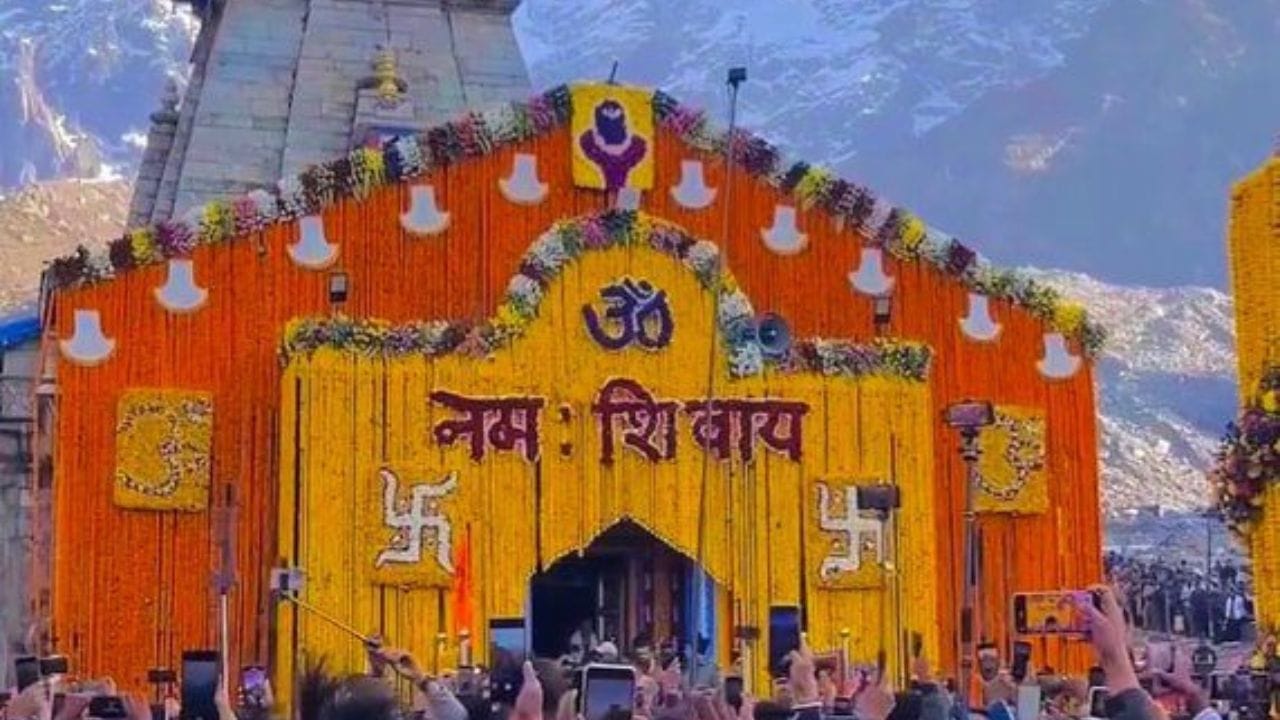
There are several attractions near the Valley of Flowers to extend your Uttarakhand trip for. The pilgrimage site of Hemkunt Sahib along with the Hemkunt Lake, the serene hamlet of Govindghat, Lord Badri's sacred town of Joshimath, the last settlement on the road to Tibet - Mana, the sacred spot of Pandukeshwar and the adjacent and blooming Nanda Devi National Park.