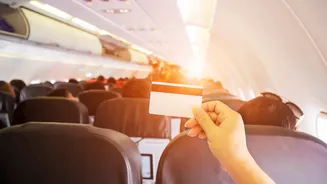










If you’ve recently seen headlines claiming that “60% seats on flights are now free”, it sounds almost too good to be true. And in a way, it is, because
the reality is more nuanced than the headline suggests. In March 2026, India’s aviation regulator, the Directorate General of Civil Aviation (DGCA), introduced a new rule requiring airlines to make at least 60% of seats on every flight available without any seat selection fee. At first glance, this feels like a major win for travellers. For years, passengers have complained about airlines advertising low base fares, only to add extra charges later, especially for choosing seats. This move aims to fix exactly that, making pricing more transparent and fair. But here’s the catch: “free seats” doesn’t mean free tickets.
What “Free” actually means
The rule only applies to seat selection charges, not the airfare itself. So while you won’t have to pay extra to pick many seats, you’re still paying for the ticket as usual. Earlier, airlines often charged extra for, window or aisle seats, seats in the front rows, and extra legroom seats. Now, at least 60% of seats must be selectable without paying that additional fee.
The government stepped in after growing frustration from passengers who felt airlines were hiding real costs behind add-ons. The new directive is meant to ensure fair access to seating without hidden fees, greater transparency in ticket pricing, and better travel experience for families and groups. In fact, the rules also state that passengers booked under the same PNR, like families, should be seated together, preferably in adjacent seats.
So What’s The Real Catch?
1. Ticket prices may go up
Airlines rely heavily on these add-on fees (called ancillary revenue). If they lose that income, they may compensate by increasing base fares. So while you’re not paying separately for a seat, you might still end up paying more overall.
2. Not all seats are included
The rule applies to “at least 60%” of seats, which means premium seats (extra legroom, exit rows, front rows) can still be paid, and that the best seats may still cost extra. So the free pool exists, but it’s not necessarily the most desirable section of the plane.
3. Availability depends on timing
If you book late, many of those free seats may already be taken. In that case, you may still need to pay to select from the remaining options.
So ultimately, the new rule is definitely a passenger-friendly move, but it doesn’t make flying cheaper overnight. Instead, it shifts how airlines charge you. That being the catch here. But the move comes in a good faith so passengers can rest assured that they won't be charged extra for the seat they are already paying for just to pick it. Think of it this way, you’re no longer paying separately to sit, but you might still be paying for it, just in a different way. So one might say, 60% of seats are “free,” but only in the sense that the fee has been removed, not the cost.