





What is the story about?
Imagine waking up to gentle waves beneath your home instead of solid ground. Imagine children who learn to paddle before they learn to walk, markets that
float, and villages that move with the rhythm of water. These floating communities didn’t just adapt; they invented a whole new way to live. Whether they’re tucked into mangrove forests, drifting out on lakes, or clinging to the edge of a bay, water isn’t a challenge for them—it’s home. Let’s dive into some of the most incredible floating villages you’ll ever see. Each one is a testament to human ingenuity, culture, and grit.
Uros Islands, Lake Titicaca, Peru
High in the Andes sits Lake Titicaca, and on it, the Uros Islands float. Locals actually build these islands by hand, layering totora reeds again and again—otherwise, the islands would just sink. Every few months, everyone gets together and adds new layers. About 2,000 Uru people call these reed islands home. Picture small houses, lookout towers, and even floating schools. Life here moves at its own pace. People fish, weave bright textiles, and greet strangers with big, genuine smiles. It’s wild to think about: an entire community thriving on islands they built themselves.
Ganvie, Lake Nokoué, Benin
In the heart of Lake Nokoué sits Ganvie, sometimes called 'the Venice of Africa.' Over 20,000 people live in wooden houses balanced on stilts, all linked by narrow canals. This village has roots going back to the 16th century, when the Tofinu people escaped slave raiders and found safety on the water, convinced their pursuers wouldn’t dare follow. That decision shaped everything that came after. These days, canoes are the main way to get around, markets bob on the water, and old traditions still matter. Fittingly, Ganvie means 'we survived.' You can feel that energy everywhere you go.
Tonle Sap Lake, Cambodia
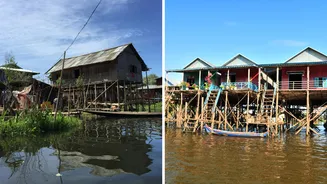
Southeast Asia’s largest lake, Tonle Sap, is a world of itself. Dozens of floating villages move with the seasons. During the monsoon, the lake swells, and whole villages drift out into deeper water. When the water pulls back, houses perch high on bamboo stilts, waiting for the next flood. Khmer, Vietnamese, and Cham families mix together here. Everything you can imagine floats—schools, markets, even basketball courts. Villages like Kompong Phluk and Kompong Khleang give you a front-row seat to a way of life that rises and falls with the water.
Inle Lake, Myanmar
Inle Lake is famous for its glassy surface and the Intha people, who row with one leg wrapped around the oar. It looks almost like ballet, but on water. Houses stand up on stilts, and the lake is full of floating gardens—patches of plants anchored by bamboo poles, where farmers grow tomatoes, cucumbers, gourds, you name it. People fish, farm, weave, and everything just seems to move at half speed here. It’s peaceful, almost suspended in time.
Halong Bay Floating Villages, Vietnam
Halong Bay is all emerald water and towering limestone cliffs and tucked between them are floating villages that seem pulled from a dream. In places like Cua Van and Vung Vieng, whole families have lived on the water for generations. Kids paddle off to floating schools, fishermen repair nets on bobbing boats, and market boats glide from home to home. Tourism has picked up lately, but plenty of families still fish the old way, keeping their culture alive and well.