






New Delhi: Eid al-Fitr of 2026 is one of the most auspicious festivals for Muslims, a day that marks the end of the holy month of Ramadan. At a time when
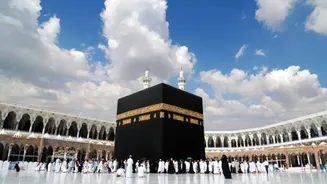
the Israel-Iran war is raging, it becomes even more special because the festival marks the end of fasting and the beginning of Shawwal. While most people enjoy celebrating the festival in the presence of family and friends, there are others who like to take the road less travelled and set out on a journey that offers a cultural experience—for instance, visiting some of the most prestigious mosques in the world. Ahead of the crescent moon sighting this Eid, take a look at the top 5 largest mosques in the world that could make it to your itinerary this year. When it comes to fathoming just how large a mosque is, it all depends on its capacity to accommodate worshippers during Sajda. Masjid al-Haram (Mecca, Saudi Arabia): Also known as the Great Mosque, this is the holiest site in Islam, which can hold up to 4 million worshippers at a time. It is the main site for Umrah and Hajj pilgrims—one of the key pillars of Islam that is required of all able-bodied Muslims who can afford the trip. It surrounds the sacred Kaaba, which is the focal point of Islamic prayer around the world. Since the 7th century, it is said to have expanded continuously to accommodate a growing crowd of pilgrims. Imam Reza Shrine (Mashhad, Iran): Amid the ongoing war, making a trip to the Imam Reza Shrine in Iran might not be advised. Yet, it continues to be an auspicious mosque and one of the largest in the world. A massive historic complex, it is where Ali ibn Musa al-Reza, the eighth Shia Imam, was buried. It features museums, libraries, and architectural excellence that attracts millions of pilgrims every year. The architecture showcases a thousand years of Persian-Islamic design, with gold-covered domes, minarets, and unique tile work. It offers a unique experience for Shia devotion. Al-Masjid an-Nabawi (Medina, Saudi Arabia): Dating back to 622 AD, Al-Masjid an-Nabawi is known as 'The Prophet's Mosque,' which can accommodate up to 1.5 million people. It is the world's second-largest mosque and one of the holiest sites in Islam. It is located in the heart of Medina and was originally an open-air building that served as a community center, a religious school, and a court of law. Grand Jamia Mosque (Karachi, Pakistan): One of the best examples of Islamic and Mughal architecture, the Grand Jamia Mosque in Karachi, Pakistan, can be a part of your travel list this year. It is spread over 200 acres of land on a 60-foot-high plateau, and the cherry on top is its majestic presence from every corner of Bahria Town Karachi. The mosque can accommodate approximately 8 lakh pilgrims at a time, and its exterior evokes a soothing spiritual experience. It also houses an Islamic Community Center with a central library that contains 5 lakh books.
Jamkaran Mosque (Qom, Iran): Located in the holy city of Qom, Jamkaran Mosque is more than a place of worship—it holds spiritual significance for Shia Muslims and attracts thousands of pilgrims from around the world. Its connection with the Twelfth Imam, Mahdi, makes it a place for profound peace and contemplation. A brilliant example of Islamic art and craftsmanship, it features majestic domes, spacious courtyards, and a huge prayer hall adorned with verses and Islamic motifs from the Quran. The massive courtyard can host over 5 lakh people at a time.