







What is the story about?
The much-anticipated 'missing link' on the Mumbai–Pune Expressway marks a quiet but significant shift in how one of India’s busiest corridors will function.
For years, the expressway has been a lifeline between Mumbai and Pune, carrying everything from daily commuters to long-haul freight. But it has also had its weak spots, sections where traffic slows, terrain challenges engineering, and delays feel inevitable. The missing link aims to change that narrative.
What Is The Missing Link?
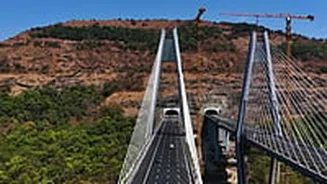
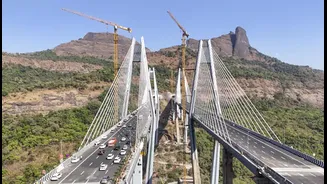
Spanning roughly 13.3 km, this new alignment is designed to bypass the most difficult ghat section of the existing route, particularly around the Khopoli–Lonavala stretch. Anyone who has driven this route knows the experience: sharp curves, heavy vehicle congestion, and unpredictable slowdowns, especially during weekends or monsoon months. The new link offers a straighter, more controlled path that significantly reduces both travel time and stress.
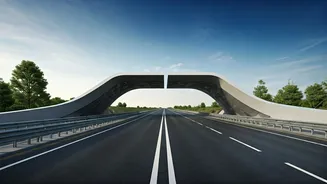
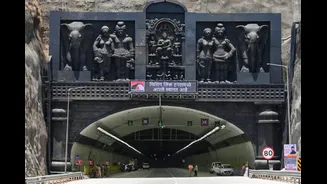
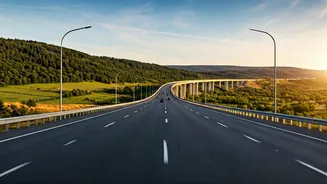
This project has two major tunnels and several long viaducts, built to cut through and rise above the rugged terrain rather than wind around it. These engineering choices are not just about speed, they also enhance safety. The older ghat section has historically been prone to accidents due to steep gradients and traffic bottlenecks. By offering a smoother gradient and more predictable driving conditions, the new stretch is expected to reduce such risks.
How Much Time Does It Save?
What stands out is the time saving. The journey between Mumbai and Pune, which typically takes around two and a half to three hours depending on traffic, could now be shortened by up to 30 minutes. That might not sound dramatic at first glance, but for daily commuters, logistics operators, and emergency services, those minutes add up quickly. Over time, the cumulative impact on fuel consumption, productivity, and even driver fatigue becomes substantial.
There is also a broader ripple effect. Improved connectivity between these two major urban centers strengthens economic ties, making movement of goods faster and more efficient. It supports industries, boosts tourism—especially to hill stations like Lonavala, and encourages more seamless intercity travel. For a corridor that already sees immense traffic, even incremental improvements can have outsized benefits.
However, like many large infrastructure projects, the missing link has also sparked conversations around cost and environmental impact. Tunneling through mountainous terrain and constructing large-scale viaducts require significant investment and careful ecological consideration. Balancing development with sustainability remains an ongoing challenge, and the long-term effects will be closely watched.
Still, the opening of this missing link signals a clear intent: to modernise existing infrastructure rather than just expand it. It reflects a shift toward smarter, more efficient road design that prioritises safety, speed, and reliability. For now, for anyone planning the drive between Mumbai and Pune, the difference will likely be felt almost immediately, not just in minutes saved, but in a journey that feels noticeably smoother.