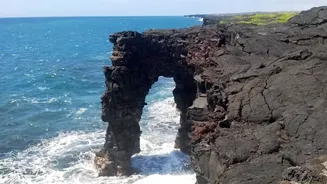






One of Hawaii's best-known natural landmarks has fallen into the sea. The 90-foot Hōlei Sea Arch in Hawaiʻi Volcanoes National Park was still standing
on September 23, but it had collapsed by Sunday night, September 27. Nobody saw it happen. The exact time is unknown, and it may have happened while the park was closed for Tropical Storm Nolo. The park confirmed the news publicly on Wednesday, September 30. A Landmark Shaped By The Sea The arch stood at the end of Chain of Craters Road on the Big Island. It was cut into the cliff of an ancient lava flow about 550 years ago. The park says it formed through "differential erosion," which means waves wore away softer layers of lava faster than harder ones. The U.S. Geological Survey describes it as a process where the sea first removes material along cracks and weaker sections of basalt rock. Over centuries, that slow work carved out the opening. The arch was named after the hōlei, a small native plant. For visitors, it was a surprising sight. The arch stretched out from the sea cliffs above some of the roughest water in Hawaii. The drive to reach it is nearly 19 miles long and starts at the summit of Kīlauea volcano. Many travelers made the trip just to watch waves crash through the stone.
Yes, it's true. RIP Hōlei Sea Arch.
The iconic Hōlei Sea Arch in Hawaiʻi Volcanoes National Park has collapsed into the Pacific Ocean, marking the latest transformation of the park’s remote and rugged coastline. pic.twitter.com/s7Gv2d2DOw— U.S. Department of the Interior (@Interior) October 2, 2026
Bad weather around the island this season may have been the final push. Storm Nolo is reported to have brought over a foot of rain to some parts of the Big Island. Heavy surf and soaked ground can weaken already cracked cliffs.
Park staff had prepared visitors for this day. A sign at the viewpoint called the arch a "temporary display of nature's handiwork."
Staying Safe At The Cliffs
The collapse has brought a new problem. The park has urged people to stay back from the unstable cliff edges, which drop straight into the ocean. Photos on social media show some people going into the closed area near where the arch stood. Officials say this puts them and rescue crews at serious risk of falling or drowning in the rough water. The viewpoint itself is still open, and some visitors say the trip is worth it even without the arch. One visitor who arrived without knowing it had fallen said the drive and the view were still worth the time.
So, What's Next?
Geologists say the story does not end here. Sea arches are always temporary. As waves keep cutting into the coast, the cliff slowly moves inland. Other arches are expected to form in time as the coastline retreats. The same force that destroyed Hōlei is already shaping its replacements, though that process can take centuries.
The loss is a reminder of how fast Hawaii's coast is changing. The island sits on one of the most active volcanic areas on Earth. Eruptions, earthquakes and storm surf all keep reshaping the shoreline.
For the people who saw the arch in person, it remains a lasting memory. For the rest, photos and videos from over the years now serve as a record of a landmark that stood for half a millennium.