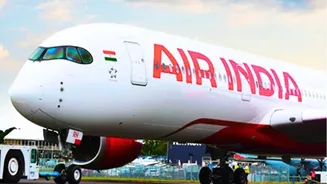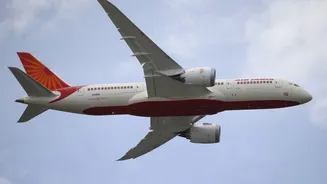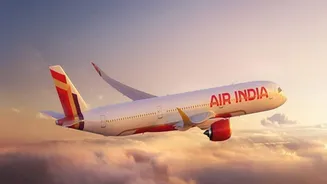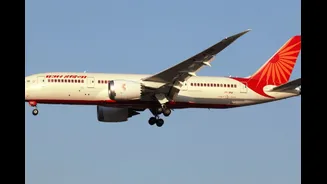

For many Indian flyers, July last year marked a turning point in how they feel about flying. When an Air India Boeing 787-8 Dreamliner, headed to London
from Ahmedabad, crashed just 32 seconds after take-off, it didn’t just dominate headlines, it quietly settled into people’s minds. And for many, the fear never quite left. Investigators later revealed that the aircraft’s engine fuel control switches were briefly moved from the RUN position to CUTOFF, cutting fuel to both engines and causing the aircraft to lose thrust, thus crashing. While aviation experts stress that accidents are rarely the result of a single failure, for passengers watching from the outside, flying suddenly felt unsafe again and Boeing aircraft felt harder to trust. That anxiety resurfaced today when another Air India Boeing 787 Dreamliner was grounded after its left fuel control switch reportedly failed to stay in the RUN position and moved to CUTOFF twice during engine start-up. The flight in question- AI 132 arrived in Bengaluru from Heathrow. An Air India spokesperson confirmed that a pilot had flagged a possible defect in the fuel control switch. ALSO READ: Fuel Switch Moves From 'Run to Cutoff' on Air India Boeing 787-8 London Heathrow-Bengaluru Flight, Plane Grounded For flyers still processing the Ahmedabad crash, the news felt unsettlingly familiar. While experts caution against drawing direct links, fear doesn’t operate on safety statistics but on memory. And ever since the Ahmedabad crash, that fear has translated into behaviour. Many passengers now consciously check the aircraft type while booking flights and this shift is not just random. A senior government official shared last year that several online travel platforms, including Skyscanner, Agoda and other international booking sites, already offer passengers the option to see or filter flights based on the aircraft being operated, including Boeing and Airbus models. And now customers are demanding that this information be shown across all platforms. According to officials, Indian passengers have also raised complaints at the Consumer Online Resource and Empowerment (CORE) Centre under the Consumer Coordination Council (CCC), urging greater transparency from airlines and booking platforms about the exact aircraft being flown on a route. To be honest, for most flyers who do not understand technical jargons, this isn’t about comparisons but about some reassurance. Knowing the aircraft type before booking offers a small but significant sense of control in an otherwise anxiety-inducing experience. This detail has now become a key decision-making factor for everyday travellers, showing how deeply safety fears have reshaped passenger behaviour. “I never used to check what aircraft I was flying. After the Ahmedabad accident, that changed completely. I have cancelled trips but haven’t flown Boeing since. And I know I am not alone,” says Bengaluru-based marketing professional Shuchi Verma. This pattern is clear across travel forums and social media comment threads. Flyers openly admit to choosing flights based on aircraft type, even if it means changing airlines, routes or departure times. Mumbai-based PR manager Rohit Singh echoes the sentiment. “Choosing Airbus over Boeing feels like a safety measure, even if it’s psychological. Take-off used to be routine for me and now it’s the most stressful part of the journey. I only relax once I know we are properly airborne.” For 45-year-old entrepreneur Nilesh, the shift has been instinctive rather than calculated. “Earlier, I booked based on time and price. Now I look at the aircraft first. Unless there’s absolutely no option, I avoid Boeing.” Aviation professionals are quick to point out that both Boeing and Airbus operate under the same global safety standards and regulatory oversight. But passenger confidence doesn’t always follow logic.
How to differentiate between Boeing and Airbus
Founded in 1970 as a consortium of European aerospace companies and headquartered in Toulouse, France, Airbus has maintained a relatively strong safety reputation over the years. Its A320 family, one of the most widely used aircraft in the world is considered reliable and efficient. Boeing on the other hand has found itself under sustained scrutiny in recent years. Founded in 1916 and headquartered in Chicago, the American aerospace giant once set the gold standard for commercial aviation. But a series of high-profile safety controversies has chipped away at that legacy.
For the uninitiated, spotting the difference between Airbus and Boeing is surprisingly simple. Start with the windows: Boeing aircraft usually have more angular window designs, while Airbus windows tend to be rounder with smoother edges. At the nose, Boeing planes often look sharper and more pointed, with cockpit windows that appear slightly angled. Airbus aircraft typically have rounder noses and cockpit windows that are more rectangular and neatly aligned in a straight line. Some of the iconic models such as the Boeing 747 is instantly recognisable by its humpbacked upper deck, while Airbus’s A320 family dominates single-aisle routes and the massive A380 stands out with its two full-length passenger decks.
Ultimately, aviation safety is complex and flying remains one of the safest ways to travel. But for passengers still shaken by recent mishaps, perception matters as much as performance. The growing preference for Airbus over Boeing seems less about numbers and more about trust.