








India’s wildlife narrative is often told through the lens of vanishing forests, shrinking habitats and alarming red lists. But that is only half the story.
Running quietly alongside the losses is a far more hopeful chronicle — one of species that refused to disappear, landscapes that were repaired piece by piece, and communities that chose protection over profit. From royal hunting grounds turned sanctuaries to villages that rewrote their relationship with nature, India has pulled off conservation turnarounds that are now studied across the world. These recoveries were not accidents. They were the result of political will, scientific persistence, grassroots participation and, in some cases, sheer moral courage. Here are five Indian species that stood on the brink of extinction — and walked back.
The Asiatic Lion
Where to see them: Gir Forest and surrounding landscapes, Gujarat
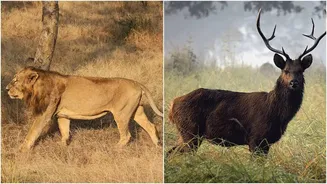
At the turn of the 20th century, the Asiatic lion was almost a historical footnote. Relentless hunting by colonial officers and Indian royalty had pushed the species to the edge, leaving barely 20 individuals clinging to survival in Gujarat’s Gir forest. The turning point came when the Nawab of Junagadh imposed a ban on lion hunting — a decision that would later be hailed as one of India’s earliest conservation acts.
Post-Independence, this protection evolved into structured conservation under what is now known as Project Lion. What makes the Gir recovery unique is that lions did not remain confined to a fenced reserve. As numbers increased, they spilled into revenue lands, coastal scrub, farms and villages, forcing conservationists to work with local communities rather than exclude them.
Today, more than 670 Asiatic lions roam the Gir landscape, including satellite habitats such as Amreli and Bhavnagar. Regular health monitoring, rescue teams and compensation mechanisms for livestock losses have made coexistence possible. Trivia worth noting: this is the only wild population of Asiatic lions left on Earth — all others live in captivity.
The One-Horned Rhinoceros
Where to see them: Kaziranga, Pobitora, Orang and Manas, Assam
In 1905, fewer than 75 greater one-horned rhinoceroses survived in India. Poaching for horns and unchecked hunting had pushed the species dangerously close to extinction. The creation of Kaziranga Reserve Forest in 1908 — later upgraded to a national park — marked the beginning of one of the most dramatic large-mammal recoveries in the world.
Kaziranga’s success was built on uncompromising protection. Anti-poaching camps, armed patrols and strict enforcement created a fortress-like environment for rhinos to breed. Over time, translocation programmes helped establish secondary populations in Manas and Orang, reducing pressure on Kaziranga alone.
Today, Assam supports more than 2,400 one-horned rhinos, accounting for the largest population globally. The species’ recovery is often cited by the International Union for Conservation of Nature (IUCN) as a textbook example of effective habitat-led conservation. Interestingly, Pobitora Wildlife Sanctuary, though much smaller than Kaziranga, has one of the highest rhino densities in the world.
The Amur Falcon
Where to see them: Doyang Reservoir and surrounding villages, Nagaland
The Amur falcon’s comeback story does not centre on forests or parks — it revolves around people. These tiny raptors migrate from Siberia to southern Africa, covering nearly 22,000 kilometres annually, with Nagaland as a crucial stopover. Until the early 2010s, thousands were hunted each year during their rest period, threatening a global population collapse.
In 2012, photographic evidence of mass hunting triggered outrage and swift intervention. What followed was extraordinary. Village councils, church groups and youth organisations partnered with conservationists and the Nagaland Forest Department to enforce a complete hunting ban. Awareness campaigns reframed the falcon as a global traveller rather than local prey.
Within a few years, hunting stopped almost entirely. Nagaland is now internationally recognised as the “Amur Falcon capital of the world,” with community-protected roosting sites drawing researchers and birders alike. The episode is frequently cited by BirdLife International as proof that community-led conservation can work faster than legislation alone.
The Olive Ridley Turtle
Where to see them: Gahirmatha, Rushikulya and Devi River mouth, Odisha
Few wildlife spectacles rival the arribada — the mass nesting of Olive Ridley turtles along Odisha’s coastline. Yet, in the late 20th century, these beaches were becoming death traps. Mechanised fishing, trawler strikes and coastal development led to mass mortality, with thousands of turtles washing ashore dead each season.
The recovery began with tough choices. Seasonal fishing bans were imposed, turtle excluder devices became mandatory on trawlers, and large marine protection zones were notified. Perhaps most crucially, local fishing communities were brought into the process through beach patrols and conservation-linked livelihoods.
The results have been remarkable. Today, lakhs of Olive Ridley turtles nest annually along Odisha’s coast, making it the world’s most important breeding ground for the species. Gahirmatha is now protected under the Wildlife Protection Act, while Rushikulya’s community-led conservation model is often showcased internationally.
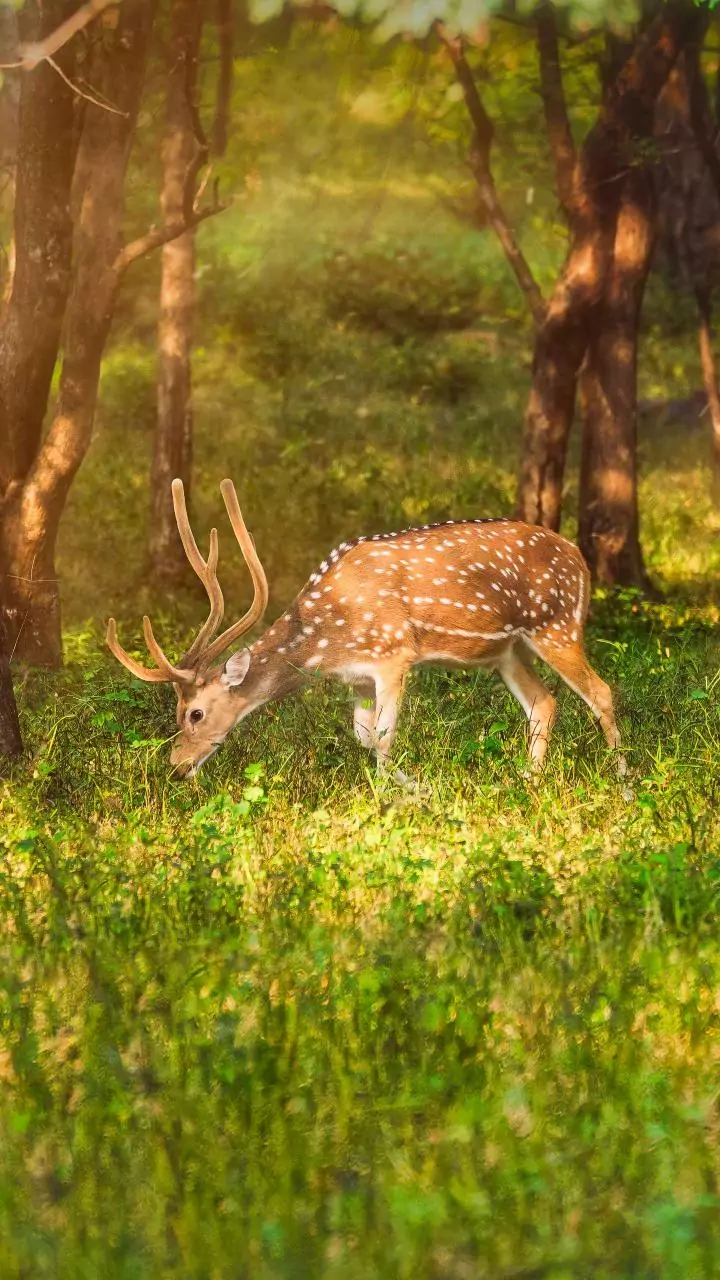
The Barasingha (Swamp Deer)
Where to see them: Kanha National Park, Madhya Pradesh
The barasingha’s decline was silent but severe. By the 1960s, fewer than 60 hard-ground barasinghas survived in Kanha, victims of habitat loss and altered grassland ecosystems. Unlike predators that attract attention, herbivores often vanish unnoticed — until it is almost too late.
Kanha’s recovery strategy was meticulous. Grasslands were restored using controlled burning, invasive species were removed, and predator-proof enclosures gave fawns a fighting chance. Scientific monitoring ensured genetic diversity was maintained, preventing inbreeding.
Today, Kanha supports over 800 barasinghas, and the species has been reintroduced into Satpura and other landscapes. The deer’s return transformed Kanha’s ecology, reinforcing the idea that conserving prey species is as critical as protecting big cats. Fittingly, the barasingha now serves as Madhya Pradesh’s state animal.