




What is the story about?
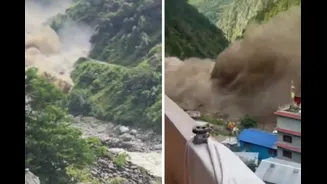
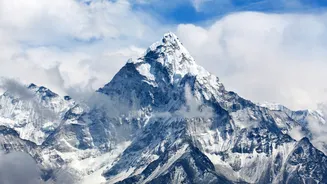
The Himalayas can look deceptively still. On Wednesday, August 26, that stillness gave way to a devastating chain of events along the Nepal-China border,
when a collapse high in the mountains sent ice, rock, mud and water rushing through valleys below. Read More: A Picnic at 30,000 Feet Doesn't Make the Cut: What is and isn't Okay on a Flight?
Nepal Floods
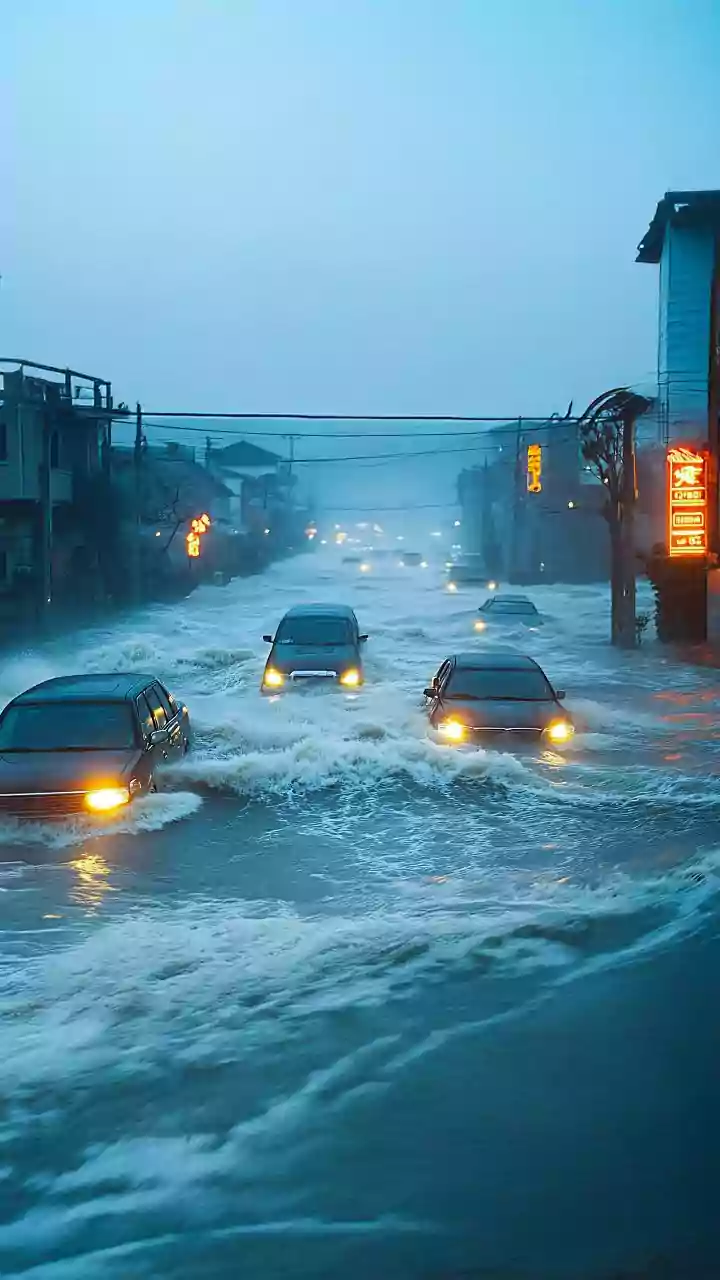
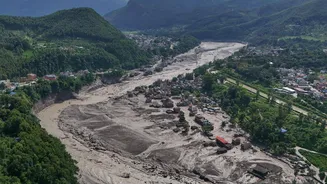
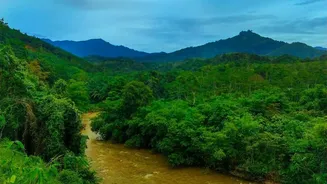
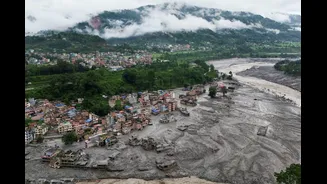
As of now, according to the reports, at least 165 people have been killed and nearly 1,500 remain missing across Nepal and Tibet, according to the latest reports. Around 800 foreigners are among those unaccounted for. In Nepal, the floods swept through Rasuwa district before travelling downstream through the Lhende Khola, Bhote Koshi and Trishuli river systems. At least 19 bridges and around 40 kilometres of roads were washed away, while large stretches of the affected area remained without electricity as rescue teams struggled with debris and damaged infrastructure. More than 5,000 Nepalese army and police personnel have been mobilised for the search and rescue operation.
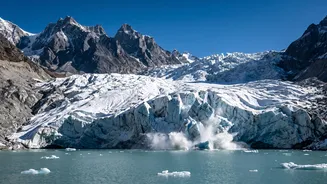
What makes the disaster particularly striking is that the flooding did not simply follow a period of torrential rain. Satellite imagery showed that a section of glacier at around 5,200 metres broke away and plunged roughly 1,200 metres onto the valley floor, gathering rock and sediment as it fell. The resulting ice-rock avalanche struck the Lhende River, temporarily blocking its flow. When that natural barrier gave way, water and debris surged downstream. The US Geological Survey also revised early reports of an earthquake, saying the seismic signal was generated by the landslide itself.
How Can An Avalanche Become A Flood?
An avalanche is essentially a rapid movement of snow, ice, rock or a combination of these materials down a steep slope. In the high Himalayas, an ice or rock avalanche can hit a river or glacial lake with enormous force. If enough material blocks a river, water can accumulate behind the debris like a temporary dam. When that blockage collapses, the stored water can be released suddenly, carrying mud, boulders and more debris with it.
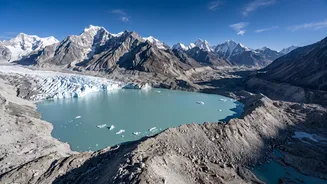
Another related hazard is a glacial lake outburst flood, or GLOF. As glaciers retreat, water can collect in lakes held back by loose piles of rock and sediment known as moraines. If an avalanche crashes into such a lake, or the natural dam becomes unstable, the lake can suddenly drain downstream.
Nepal has seen this phenomenon before as well. ICIMOD’s investigation of the August 2024 Thame flood found that a rock avalanche hit a glacial lake at about 4,900 metres, creating a displacement wave that breached the lake and released around 1,56,000 cubic metres of water. That water then triggered the breach of a second lake, releasing another 3,03,000 cubic metres. Together, the two releases amounted to about 4,59,000 cubic metres, roughly the volume of 185 Olympic-sized swimming pools. The resulting slurry carried debris as far as 80 kilometres downstream.
How Do The Himalayas Become Vulnerable?
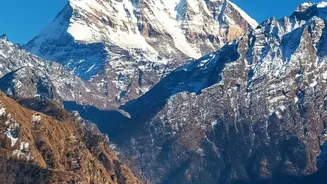
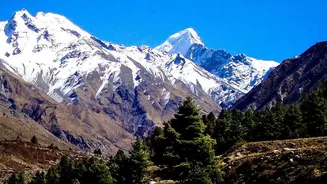
The Himalayas are particularly vulnerable because several hazards overlap in one landscape. The region combines extreme elevation, steep slopes, active geology, glaciers, unstable moraines and fast-flowing rivers. A disturbance at thousands of metres above sea level can therefore become a major downstream disaster within a remarkably short time. Climate change is adding another layer to that risk. ICIMOD’s latest assessment found that glaciers across the Hindu Kush Himalaya lost about 12% of their total area and 9% of their estimated ice reserves between 1990 and 2020. The rate of ice loss has accelerated, with melting rates doubling after 2000.
Nepal’s glacier and glacial-lake inventory illustrates the scale of what is at stake. An ICIMOD inventory identified 3,252 glaciers and 2,323 glacial lakes in Nepal, of which 20 were classified as potentially dangerous under the assessment criteria used. Across the wider Hindu Kush Himalaya, ICIMOD now counts more than 25,000 glacial lakes. That does not mean every glacier or glacial lake is about to trigger a disaster, nor can climate change be automatically labelled the sole cause of an individual event. But a warming mountain environment is changing the behaviour of glaciers, snow and frozen ground, while creating conditions that can increase instability and alter the risks faced by communities downstream.
For travellers, trekkers and pilgrims, the lesson is not that the Himalayas are suddenly unsafe. It is that mountain landscapes can change far beyond the point where a person is standing. A clear sky at a trekking route or border town does not necessarily mean conditions are stable higher up the valley. In the Himalayas, the warning may begin kilometres, and sometimes thousands of metres, away.
Read More: Mountains, Glaciers And Wild Coastlines: Travel Influencer Ryan Resatka’s Patagonia Adventure