







New Satellites Ascend
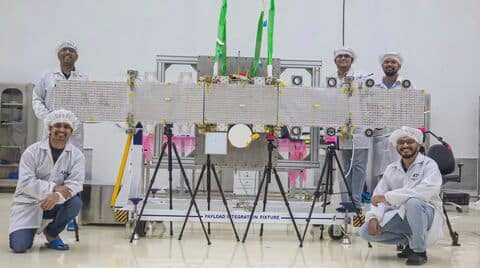
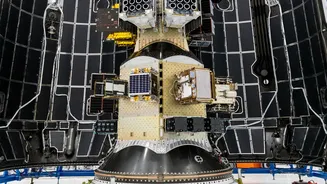
Taiwanese tech giant Foxconn has successfully deployed its second generation of Low Earth Orbit (LEO) satellites, named PEARL-1A and PEARL-1B, into the
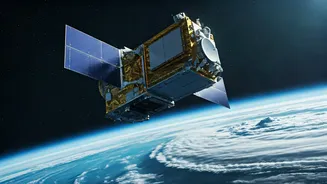
vast expanse of space. These advanced spacecraft were lofted into their designated orbits atop a SpaceX Falcon 9 rocket, launching from the California coast. The mission is slated for a five-year operational lifespan, during which they will undertake critical in-orbit testing. The primary objective of these satellites is to rigorously validate new payload technologies specifically designed for communication and space science applications. Operating within the LEO region, an altitude zone extending up to approximately 2,000 kilometers (about 1,200 miles) above Earth, these satellites are strategically positioned to leverage the benefits of proximity to our planet. This orbital layer is particularly advantageous for a variety of missions, including rapid transportation, robust communication networks, high-resolution Earth observation, and essential resupply operations. It's also the very altitude where the International Space Station makes its home, underscoring the accessibility and utility of this orbital domain.
LEO's Communication Edge
Satellites positioned in Low Earth Orbit offer a distinct advantage due to their close proximity to the Earth's surface, typically operating at altitudes no higher than 2,000 kilometers. This closeness is instrumental in enabling remarkably fast and low-latency communication, making them ideal for real-time applications. Furthermore, their position just above the Earth's atmosphere allows for the capture of high-resolution imagery for Earth observation purposes, providing unprecedented detail about our planet. The ability to maintain strong and stable connections is a hallmark of LEO satellite operations, which is crucial for consistent data flow and reliable service delivery. These satellites rarely operate in isolation; instead, they are frequently integrated into vast, interconnected constellations. Such networks can comprise hundreds, or even thousands, of individual satellites working in concert to achieve comprehensive global coverage. This interconnectedness ensures resilience and redundancy, as if one satellite encounters an issue or goes offline, other satellites within the constellation can seamlessly assume its responsibilities. This cooperative network allows for the efficient handoff of signals between satellites, thereby guaranteeing uninterrupted service for users on the ground.
Constellation Powerhouse
The strategic advantage of deploying satellites in interconnected constellations lies in their inherent scalability and adaptability. As global demand for connectivity and data services continues to surge, these LEO networks are designed to expand and evolve efficiently to meet these growing needs. Prominent players in the telecommunications and aerospace industries are actively investing in and leveraging this transformative technology. Companies such as Starlink, Eutelsat OneWeb, Amazon with its Project Kuiper initiative, and Telesat Lightspeed are at the forefront of building and deploying these advanced satellite networks. The rapid pace of deployment is evident, with Project Kuiper recently surpassing the 300-satellite milestone after executing two launches on different continents within a single week. This aggressive expansion highlights the industry's commitment to rapidly establishing robust LEO infrastructure. Illustrating further acceleration in constellation deployment, a recent Arianespace mission on April 30 successfully launched 32 satellites aboard an Ariane 6 rocket from Europe’s Spaceport in French Guiana. This LE-02 mission followed closely on the heels of an Atlas V launch earlier that same week, signaling a significant and coordinated push towards building out extensive satellite networks.