







Unified Digital Visions
The digital landscape is witnessing a significant shift as major players aim to consolidate a multitude of services into single, powerful applications.
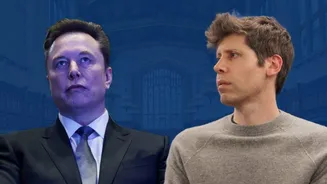
While Elon Musk has been vocal about his vision for an 'everything app,' a concept inspired by platforms like China's WeChat, OpenAI is also making strides in this direction. OpenAI is developing a 'super app' designed to merge its various AI tools, such as ChatGPT and Codex, into a cohesive desktop experience. This convergence aims to streamline user workflows by eliminating the need to navigate between separate applications, thereby enhancing efficiency, particularly for users heavily involved in coding and AI-driven tasks. The core idea behind both initiatives, despite their differing origins – one rooted in AI, the other in social media – is to simplify users' digital interactions by creating an all-in-one destination for a wide array of activities, from communication and entertainment to productivity and potentially even financial transactions.
Distinct Approaches to Integration
While both OpenAI and Elon Musk are pursuing the creation of all-encompassing digital platforms, their strategies and intended functionalities diverge. OpenAI's super app is primarily geared towards enhancing productivity and integrating its AI capabilities. It plans to seamlessly combine its conversational AI (ChatGPT) with its coding assistant (Codex) and even introduce browser-like features, creating a unified environment for developers and power users. The company acknowledges that the fragmentation of tools has previously hindered workflow efficiency, and their consolidation aims to provide a smoother, faster, and more cohesive user experience. In contrast, Musk's 'everything' app, as envisioned for X (formerly Twitter), is far more expansive. It aims to become a comprehensive digital ecosystem encompassing messaging, payments, e-commerce, streaming services, and social interactions, all within a single interface. Features like 'X Money' and 'X TV' are integral to this vision, alongside enhanced AI functionalities through its Grok chatbot. Essentially, OpenAI's focus is on refining AI-driven workflows, whereas Musk's ambition is to create a daily life companion app.
The Road Ahead: Challenges and Potential
Despite the ambitious nature of these plans, neither the OpenAI super app nor Musk's 'everything' app is fully realized. OpenAI is reportedly undertaking internal restructuring to bring its unified application vision to fruition, while Musk's X 'everything' app, despite years of anticipation, is still a work in progress, with individual features gradually rolling out. The path to creating these comprehensive platforms is fraught with significant challenges that extend beyond technological prowess. Crucially, building trust and navigating regulatory landscapes are paramount, especially when integrating financial services, which introduces complex compliance hurdles. Furthermore, the consolidation of multiple services raises considerable concerns regarding data privacy and security. Perhaps the most significant hurdle is user adoption. In saturated Western markets, where specialized apps already perform their functions effectively, convincing users to migrate to a single, all-encompassing platform will be a considerable challenge, unlike in markets where a dominant super app, like WeChat, already exists with less competition. Nevertheless, the potential rewards are immense. A successful OpenAI super app could revolutionize AI interaction, while a fully realized 'everything' app from Musk could fundamentally transform how individuals manage their daily digital lives.