







Summit's Vision
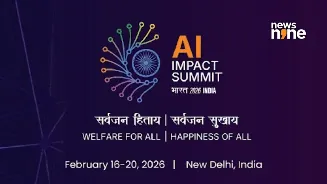
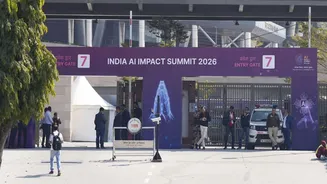
The India-AI Impact Summit 2026, held in New Delhi, marked a pivotal moment for the nation's digital aspirations. Prime Minister Narendra Modi inaugurated
the event, emphasizing the central role of artificial intelligence in India's development blueprint under the IndiaAI Mission and Digital India initiatives. The summit's core objective was to translate global AI discussions into tangible developmental outcomes. By fostering robust cooperation, the aim is to cultivate an inclusive and trustworthy AI ecosystem, aligning with the long-term vision of Viksit Bharat@2047. The gathering attracted prominent global leaders, ministers, and industry pioneers, all converging to chart a course for responsible AI integration and widespread adoption across the country, setting the stage for significant advancements.
Platform Integrations
A notable collaboration was announced between Eternal Limited and OpenAI, focusing on the widespread deployment of AI technologies across various services including Zomato, Blinkit, District, Hyperpure, Feeding India, and Nugget. This partnership will leverage OpenAI’s Enterprise API to significantly enhance existing applications, partner platforms, and internal operational systems. The planned applications include the development of AI-powered assistants tailored for merchants and delivery personnel, the introduction of novel search interfaces, and the creation of advanced coding tools within its Stitch platform. Furthermore, a comprehensive upskilling program is slated to be launched for partners, with the ultimate goal of broadening AI adoption throughout its extensive ecosystem and improving user experiences across all platforms.
Infrastructure Alliance
Advanced Micro Devices (AMD) and Tata Consultancy Services (TCS) have solidified their existing partnership with plans to co-develop a comprehensive rack-scale AI infrastructure. This initiative will be built upon AMD’s advanced Helios platform, paving the way for a substantial new 200MW deployment designed for enterprises and to establish sovereign AI factories within India. This cutting-edge blueprint will utilize AMD Instinct GPUs, EPYC CPUs, and the ROCm software suite, providing the necessary power for large-scale AI model training and inference. TCS, through its HyperVault offering, is set to collaborate closely with hyperscalers and other AI firms to expedite the construction of AI data centers across the nation, bolstering India's computational capabilities.
Enterprise AI Development
Infosys and Anthropic have joined forces to develop sophisticated enterprise AI solutions specifically for sectors like telecommunications, finance, and manufacturing, with an initial focus on software development. Their collaboration begins with establishing an Anthropic Centre of Excellence dedicated to building advanced AI agents. These agents, powered by Anthropic's Claude models, will be integrated with Infosys's Topaz platform to streamline workflows, modernize existing legacy systems, and ensure compliance with stringent regulatory requirements. Industry leaders have indicated a strategic shift from mere pilot projects to the execution of complex, real-world deployments, utilizing deep domain expertise to bridge the gap between initial demonstrations and practical application in regulated industries.
Localized AI Impact
Anthropic is also extending its reach through partnerships with Indian organizations such as Karya, Collective Intelligence Project, Digital Green, and Adalat AI, focusing on applications within local agriculture and legal domains, as well as developing Indic language models. Several prominent companies in India are already utilizing Claude, including Air India, Cred, Cognizant, Razorpay, Enterpret, and Emergent. In the education sector, partnerships with Pratham and Central Square Foundation are underway, while EkStep and Adalat AI are supporting public service initiatives. Anthropic’s commitment to an open protocol facilitates seamless integrations, enabling functionalities like querying government statistics and accessing various commerce services, thereby democratizing AI access.
Pharmaceutical Innovations
In a specialized development, Siddhartha College of Pharmaceutical Sciences in Vijayawada, in collaboration with US-based Core Defender AI, is organizing an e-summit. This event will also see the launch of a new certificate program that merges artificial intelligence with introductory quantum computing principles, specifically designed for pharmacy students and faculty. The summit will feature the unveiling of the NVIDIA Jetson Orin Nano platform, which will be utilized for local model implementation and practical projects. These projects will span critical areas like drug discovery, regulatory compliance, pharmacovigilance, manufacturing processes, and healthcare services, with the aim of cultivating hands-on skills that extend beyond theoretical knowledge.
Small Language Models
Cognizant and Uniphore have announced plans for a joint venture to co-develop industry-specific small language models (SLMs). This initiative will leverage Uniphore's Business AI Cloud and Cognizant's robust delivery platforms. The primary target for this partnership is the creation of governable AI systems designed for operational workflows, with an initial focus on the life sciences and banking sectors. Company executives have highlighted a strong demand from clients for AI systems that are not only technically advanced but also designed with practical operational contexts and tangible business outcomes in mind. The collaboration seeks to produce scalable and repeatable AI solutions that will accelerate adoption as businesses increasingly integrate AI into their daily operations.