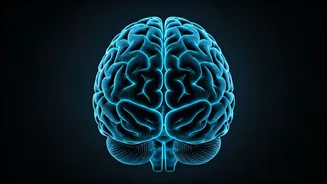








Brain's Remarkable Plasticity
The human brain, a marvel of biological engineering, exhibits an extraordinary quality known as neuroplasticity, which is its capacity to reorganize itself
by forming new neural connections throughout life. This inherent flexibility allows the brain to adapt to novel situations, learn from experiences, and store new information. When you encounter something new, such as a fresh piece of data or a novel perspective, the brain's neural networks undergo change. Existing connections are either strengthened or weakened, and new pathways are forged. This dynamic process of rewiring is how we update our understanding of the world and make cognitive shifts. The more you engage with new concepts and actively challenge old beliefs, the more robust and adaptable your brain becomes. Understanding neuroplasticity is key to understanding how we change our minds.
Rewiring Neural Pathways
When we undergo a change of thought, the brain doesn't just store new facts; it restructures its internal architecture. Initially, encountering information that conflicts with existing beliefs can trigger discomfort, as it challenges established neural pathways. However, as we process this new information, the brain begins to adapt. Through a process of synaptic pruning, which involves the elimination of less-used connections, and synaptic strengthening, where new connections are built, the brain effectively rewrites its internal map. This rewiring is not a passive process; it requires focused attention, critical thinking, and a willingness to question assumptions. The brain's constant process of renewal shows how experiences shape how we perceive the world. By recognizing this, individuals are equipped to adapt and alter their thought patterns.
Cognitive Dissonance Challenge
Embracing new viewpoints can be a struggle, often because it brings up cognitive dissonance, the mental discomfort that arises when holding conflicting beliefs or attitudes. When faced with new information that contradicts our firmly held beliefs, the brain often tries to resolve this conflict by downplaying the significance of the new information or bolstering the older beliefs. This is a survival mechanism, as changing ingrained beliefs can feel like a threat to the self. Overcoming cognitive dissonance requires awareness. It involves critically evaluating your existing beliefs, recognizing biases, and being open to the possibility that your viewpoint may be incomplete or flawed. This mental exercise promotes intellectual growth and allows for more complex, well-rounded understandings of the world. Therefore, embracing the challenge of cognitive dissonance is vital for a more nuanced world view.
Embracing New Perspectives
Shifting your thought patterns is not just about taking in new information; it's also about actively seeking out diverse perspectives. Exposing yourself to varied viewpoints, even those that run against your own, is a key strategy. This exposure broadens your horizons, challenges your biases, and can lead to a more balanced and complete view. Engaging in healthy debates with people who hold different beliefs, reading books and articles from different sources, and traveling to experience diverse cultures can all enrich your understanding. The ability to empathize with and appreciate different perspectives also enhances your ability to solve complex problems and build meaningful relationships. The journey of transforming your mindset involves embracing the world's complexity with an open mind and a willingness to evolve.
Benefits of Transformation
The rewards of changing your mind extend far beyond intellectual growth. Embracing new perspectives often leads to increased creativity and innovative thinking. When the brain is flexible and adaptable, individuals can more easily see the connections between different ideas, leading to innovative solutions and insights. Furthermore, a willingness to reconsider your beliefs fosters emotional resilience. When you understand that your beliefs are not fixed, it becomes easier to cope with setbacks and unexpected changes. Finally, being open to change strengthens relationships. Showing a willingness to listen to others and consider their views builds trust and fosters stronger connections. The willingness to change your mind is a sign of personal growth that positively affects all aspects of life.