





Ambitious Global Rollout
A groundbreaking partnership has been forged between ride-hailing giant Uber and artificial intelligence leader Nvidia, signaling a significant acceleration
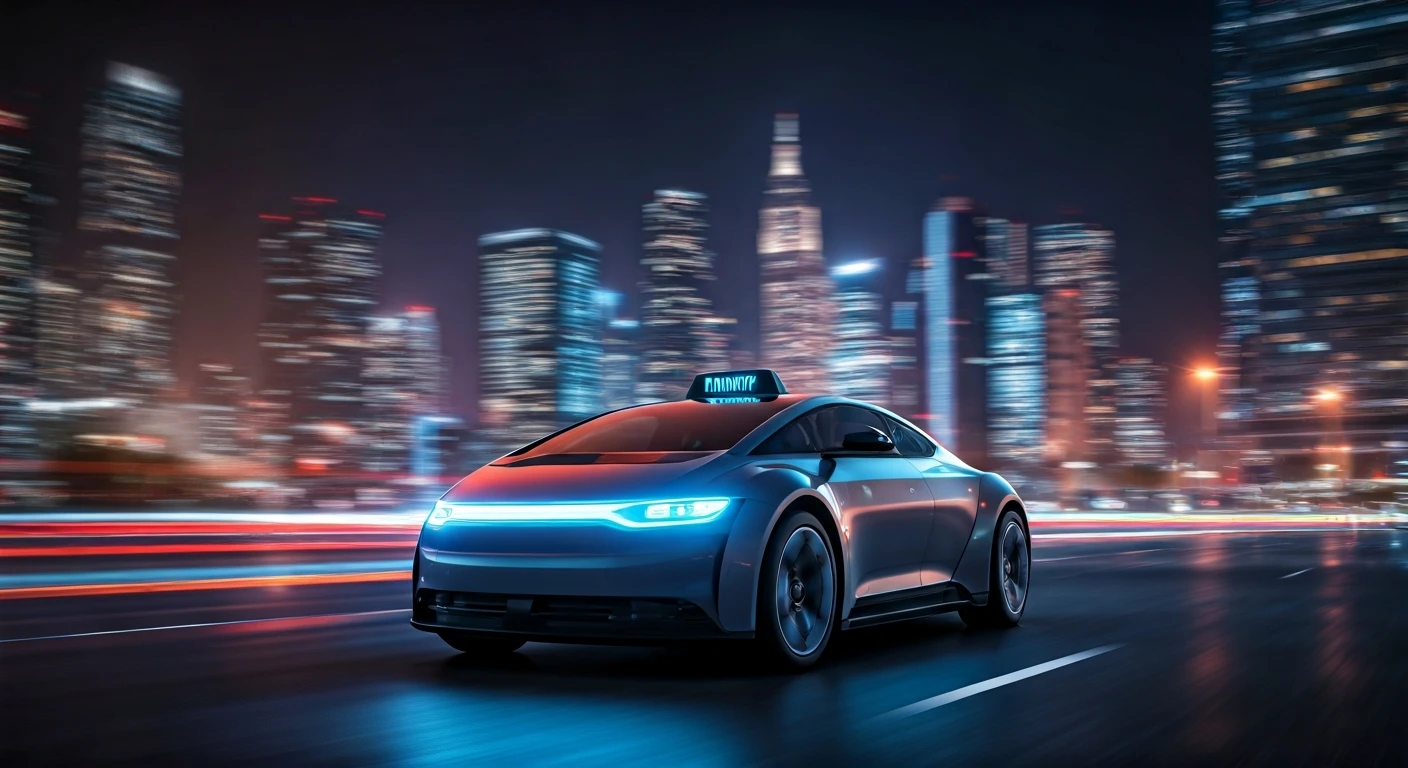
in the deployment of autonomous vehicle technology. This collaboration plans to introduce a fleet of robotaxis, powered by Nvidia's advanced autonomous driving software, onto Uber's extensive network. The initial phase is slated to commence in 2027, with operations beginning in the major metropolitan areas of Los Angeles and San Francisco. Following this crucial pilot, the ambitious vision extends to a substantial expansion, targeting a presence in 28 cities worldwide by the year 2028. This strategic move directly confronts and intensifies the ongoing competition within the burgeoning autonomous ride-hailing sector, where companies are fiercely vying to establish and scale their driverless services on a global scale.
Technological Backbone
The foundation of this extensive robotaxi deployment will rest upon Nvidia's sophisticated DRIVE Hyperion autonomous vehicle platform. This robust system is designed to handle the complexities of self-driving, integrating advanced sensors, processing units, and AI capabilities. Complementing this hardware is Alpamayo, a cutting-edge, reasoning-based artificial intelligence model. Alpamayo is specifically engineered to interpret and react to intricate traffic scenarios, making critical decisions in real-time to ensure safety and efficiency. The initial deployment strategy involves a phased approach. It will begin with vehicles dedicated to data collection, meticulously gathering information about city-specific driving conditions to refine the AI's performance. This will be followed by a transition to operator-supervised autonomous operations, gradually leading towards fully driverless, Level 4 autonomous functionality, signifying a high degree of self-sufficiency in diverse driving environments.
Competitive Landscape
The rapid expansion of robotaxis into more urban centers underscores a global race to achieve commercial viability for autonomous ride-sharing. At present, Alphabet's Waymo is widely recognized as the frontrunner in this domain, operating a sophisticated commercial robotaxi service that already offers fully driverless rides in key cities such as Phoenix, San Francisco, and Los Angeles, with continuous fleet expansion. Simultaneously, Tesla is pursuing its own distinct path, heavily investing in a camera-centric approach to autonomous driving technology. The company has voiced intentions to launch its proprietary robotaxi service, leveraging its immense vehicle manufacturing capacity as a significant competitive advantage. The intensifying competition means that companies are under pressure to not only develop reliable technology but also to effectively scale their driverless fleets to meet market demand and establish dominance.
Uber's Partnership Strategy
Uber's approach to the autonomous vehicle revolution is characterized by a strategic reliance on collaboration rather than developing all the necessary technology in-house. This partnership with Nvidia exemplifies this philosophy, aiming to build a diverse ecosystem of autonomous vehicle providers on Uber's platform. The company seeks to facilitate a 'multi-player' environment where various developers and automotive manufacturers can bring their robotaxi services to market, utilizing Uber's established ride-hailing network. This strategy has already led to prior agreements with other key players in the industry. For instance, Uber has previously entered into agreements with the electric vehicle manufacturer Lucid Group and the autonomous driving startup Nuro. These collaborations involve deploying robotaxis built on Lucid vehicles and powered by Nuro's self-driving software, further diversifying Uber's autonomous fleet offerings and reinforcing its commitment to a partnership-driven model.