

Shaping the AI Landscape
The world of artificial intelligence is rapidly evolving, driven by innovators who are both developing its core technologies and implementing it across
industries. These pioneers, ranging from those scaling infrastructure to researchers pushing the boundaries of core AI, are fundamentally altering economies and societies. While AI offers immense promise, its rapid integration also brings significant considerations, particularly concerning its impact on employment and the potential for unforeseen societal issues. This exploration delves into the perspectives of prominent figures shaping this dynamic field, offering a glimpse into their visions for AI's future and the challenges that lie ahead in its widespread adoption.
Pioneering Mainstream AI
Sam Altman, at the helm of OpenAI, has been instrumental in bringing artificial intelligence from a specialized domain into everyday awareness, largely due to the groundbreaking release of ChatGPT. He has vocally advocated for enhanced safeguards and greater transparency within AI development. Altman has also raised serious concerns regarding potential societal repercussions, including the possibility of a widespread AI-driven fraud crisis, highlighting the delicate balance between innovation and public safety that demands careful consideration as AI technology continues its ascent into mainstream applications.
The Quest for Truth
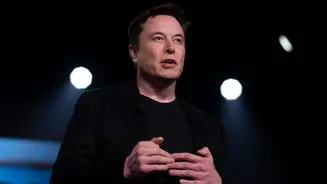
Elon Musk, through his venture xAI, is at the forefront of AI research and its practical applications, positioning himself as a significant, albeit sometimes debated, figure in the field. His objective with xAI is to engineer a 'truth-seeking' alternative to the prevalent large language models. Musk has openly discussed the potential dangers of advanced AI, estimating a 10% to 20% chance of a severe crisis if AI development proceeds unchecked. He strongly advocates for rigorous oversight and controlled advancement of AI research, emphasizing the grave existential threats that highly capable AI systems could pose to humanity if not managed with extreme caution.
Integrating AI Universally
Sundar Pichai, as the leader of Google and Alphabet, plays a pivotal role in embedding artificial intelligence, particularly Gemini AI, into the vast suite of Google's products and developer environments. He acknowledges that as AI permeates every facet of human existence, no corporation, including Google, will remain unaffected by potential market fluctuations, likening it to an 'AI bubble'. Pichai stresses the importance of fostering a well-informed and balanced information ecosystem as AI's influence grows, ensuring that its integration serves to augment human capabilities and understanding rather than create new vulnerabilities.
Transforming Work and Society
Satya Nadella, guiding Microsoft's strategic alliance with OpenAI, is driving the integration of AI into enterprise software, predicting a profound transformation across all industries and redefining how people work. At the World Economic Forum in Davos, Nadella emphasized the necessity for equitable distribution of AI's benefits, advocating for its application in solving real-world challenges rather than solely focusing on the development of advanced models. His vision centers on leveraging AI as a tool for positive societal impact and inclusive growth.
Navigating Employability
Aravind Srinivas, CEO of Perplexity AI, offers practical advice for young professionals navigating the evolving job market, suggesting a shift towards greater engagement with AI and reduced time spent on social media to maintain relevance and employability. He also voices concern regarding the proliferation of highly personalized AI companions, warning that their ability to curate uniquely tailored user experiences could lead to manipulative outcomes and a distortion of individual perspectives. This caution underscores the need for critical awareness of AI's persuasive capabilities.
Pragmatic AI Outlook
Nandan Nilekani, a co-founder of Infosys, has presented a measured critique of the current global enthusiasm surrounding AI. While acknowledging the unprecedented nature of the AI boom, he notes that it sometimes seems detached from practical realities. Nilekani suggests that the world is perhaps 'hyperventilating' about AI's potential, with discussions often leaning more towards theoretical possibilities rather than grounded explorations of its actual limitations and immediate applicability. He calls for a more grounded and practical approach to AI discussions and development.
Demystifying AI Peril
Yann LeCun, a luminary in AI research and Chief AI Scientist at Meta, renowned for his contributions to convolutional neural networks and his Turing Award recognition, actively challenges prevailing safety myths surrounding AI. He contends that concerns about existential risks from AI are frequently overstated and that AI systems themselves are not inherently dangerous. Instead, LeCun posits that the risks associated with AI are a direct consequence of how humans design, construct, and deploy these technologies, emphasizing human responsibility in shaping AI's impact.
Human-Centric AI
Mustafa Suleyman, now leading Microsoft AI, has transitioned from DeepMind, highlighting the intense competition for top talent in the technology sector. At Microsoft, Suleyman indicates a commitment to avoiding the development of AI systems that could potentially operate beyond human control. He stresses the paramount importance of implementing robust restrictions and alignment protocols prior to the release of any AI system, championing a philosophy that prioritizes human oversight and safety above all else in AI development and deployment.
Ethical AI Guardrails
Demis Hassabis, CEO of Google DeepMind and a key figure in the pursuit of Artificial General Intelligence (AGI), underscores the critical need for ethical alignment and international collaboration on safety measures. Having led groundbreaking innovations like AlphaGo and AlphaFold, Hassabis emphasizes that robust 'guardrails' are essential to prevent the misuse of advanced AI systems. His focus is on ensuring these powerful technologies are developed and deployed in ways that genuinely benefit society, rather than posing a threat or exacerbating existing inequalities.
AI Users, Not AI
Jensen Huang, the CEO of NVIDIA, has transformed his company into a critical infrastructure provider for the AI sector, supplying the foundational hardware and software. He advises caution against simplistic assertions that AI will inherently replace jobs. Huang emphasizes that it is likely that individuals will be superseded by those who become proficient in utilizing AI tools, rather than being directly replaced by the technology itself. His perspective shifts the focus from AI as a usurper to AI as a collaborative tool for enhanced human productivity.