




The Terafab Initiative Emerges
Elon Musk has announced the imminent launch of Tesla's 'Terafab Project,' a significant undertaking in semiconductor manufacturing. This initiative is poised
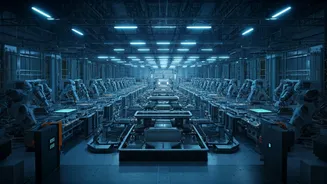
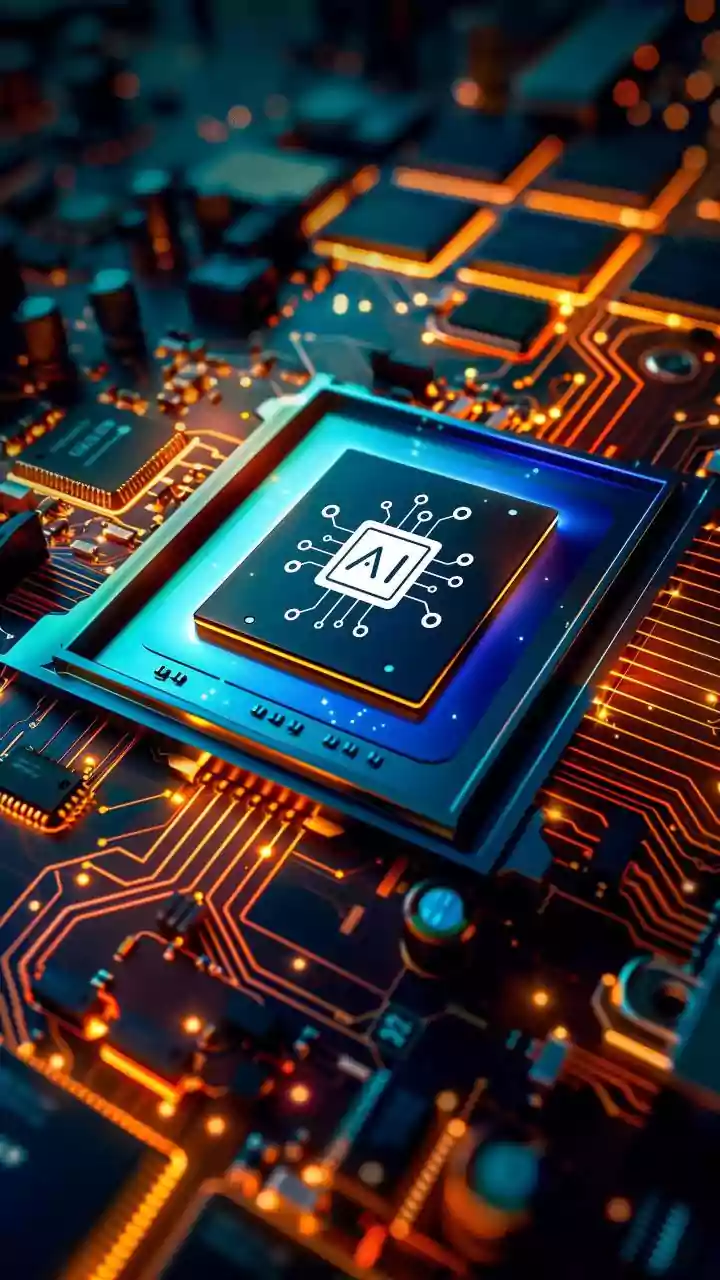
to become a cornerstone for Tesla's burgeoning artificial intelligence capabilities, autonomous vehicle technology, and advancements in robotics. The project aims to establish an in-house chip fabrication facility, a strategic move to reduce the company's dependence on third-party chip producers like TSMC and Samsung. This venture represents a natural extension of Tesla's philosophy of vertical integration, mirroring the massive scale and impact of its established Gigafactories but applied to the critical domain of silicon production. The need for such a facility stems from the rapidly escalating computational demands of Tesla's cutting-edge technologies, particularly its Full Self-Driving (FSD) system and its AI training infrastructure.
Why Tesla Needs Its Own Chips
The motivation behind Tesla's push for its own chip fabrication plant, dubbed 'Terafab,' stems from a projected shortfall in semiconductor supply. Elon Musk has previously voiced concerns that even the most optimistic forecasts from current suppliers might not be sufficient to meet Tesla's rapidly growing needs. He highlighted this at Tesla's annual shareholder meeting, stating that even under the best-case scenario for chip production from partners, the output would still be inadequate. This underscores a pivotal strategic shift for Tesla, where computing power is becoming as fundamental to its operations and future success as battery technology once was. The 'Terafab' concept signifies an aspiration to build a facility on a scale far exceeding typical chip plants, aiming to achieve 'trillions' of processing capabilities, hence the 'tera' prefix.
Terafab vs. Gigafactories
Tesla's manufacturing facilities are widely recognized as 'Gigafactories,' a name signifying their immense scale, symbolized by the 'giga' prefix denoting billions, primarily for battery and vehicle production. The 'Terafab Project' follows this nomenclature but elevates it by one order of magnitude, using the 'tera' prefix to represent trillions. This naming convention reflects Musk's vision for a semiconductor manufacturing operation of unparalleled size and capability, intended to be significantly larger than conventional chip foundries. While Gigafactories were instrumental in revolutionizing electric vehicle production and securing battery supply chains through massive output, the Terafab aims to replicate this transformative impact within the semiconductor industry. Gigafactories are dedicated to electric vehicle manufacturing, battery production, and energy storage systems, whereas the Terafab will concentrate specifically on semiconductor fabrication, focusing on advanced AI processors and chips essential for autonomous driving and robotics.
Strategic Implications for Tesla
The realization of the Terafab project would represent a substantial expansion of Tesla's industrial reach and could fundamentally alter its technological trajectory. Establishing an in-house chip fabrication capability would empower Tesla to produce its proprietary AI processors at a scale that aligns with its ambitious goals, thereby mitigating its reliance on external chip suppliers and strengthening its supply chain against potential shortages. Furthermore, it would significantly accelerate advancements in areas such as autonomous driving, robotics, and the development of AI infrastructure by ensuring a consistent and tailored supply of high-performance chips optimized for Tesla's unique hardware and software systems. This initiative also signals a broader evolution in Tesla's corporate identity, transitioning from being primarily recognized as an electric vehicle manufacturer to increasingly positioning itself as a leader in AI and robotics, industries where computing power is as crucial as automotive engineering.