




Strategic AI Chip Partnership
In a significant move for the semiconductor industry, Intel has announced its participation in Elon Musk's ambitious Terafab AI chip complex initiative.
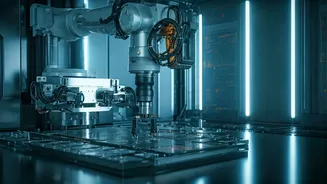
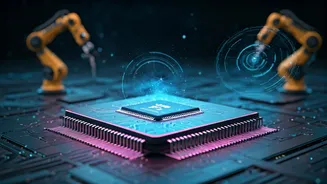
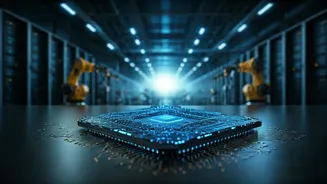
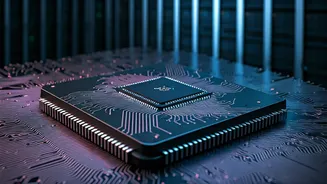
This collaboration is designed to forge powerful processors essential for Musk's forward-thinking ventures, encompassing both advanced robotics and expansive data center infrastructure. The news generated considerable market interest, with Intel's stock experiencing a notable uptick following the announcement. Images circulated showing key figures from both entities engaging, underscoring the seriousness of this alliance. This partnership emerges after Musk had previously outlined Tesla's intent to construct a substantial AI chip fabrication facility, a project that Musk hinted could involve Intel's expertise. The involvement of Intel is expected to significantly hasten Terafab's objective of achieving an annual compute output of one terawatt, a critical capacity for future breakthroughs in artificial intelligence and robotic technologies.
Revolutionizing Manufacturing
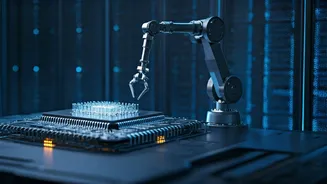
The CEO of Intel expressed profound optimism regarding the partnership, highlighting Musk's demonstrated ability to transform entire sectors. He emphasized that such innovative thinking is precisely what the current semiconductor landscape requires. The Terafab project is envisioned as a paradigm shift in the future construction of silicon logic, memory components, and packaging. This development comes shortly after Musk detailed plans for two state-of-the-art chip manufacturing facilities, slated for a sprawling site in Austin, Texas, to be operated by SpaceX, which has recently integrated with his AI firm xAI, and Tesla. One of these facilities is earmarked to support the sophisticated needs of electric vehicles and humanoid robots, while the second is intended for the development of AI data centers for space applications.
Boosting Confidence and Turnaround
For Intel, a company that has faced challenges in the competitive AI chip arena, this alliance is poised to bolster investor confidence as its recovery efforts gain momentum. The company's financial performance has shown improvement, bolstered by rising demand for its processing units. Analysts view this collaboration as a crucial validation, stating that Intel must demonstrate its capacity to serve major clients with their most critical projects, a feat seemingly achieved with this Tesla collaboration. This partnership is considered an essential stride in the chipmaker's ongoing restructuring process. The CEO, who has been at the helm for over a year, is implementing a vigorous overhaul strategy aimed at stabilizing the company's finances through measures such as workforce reductions and asset divestitures. The firm has also secured substantial investments from entities including Nvidia and the U.S. government, which now holds a significant stake.
Foundry Focus and Future Tech
A cornerstone of Intel's strategic revival plan involves its contract manufacturing division, known as Intel Foundry, which, despite its significance, has continued to incur substantial financial losses. In 2025, this segment reported an operating deficit of $10.32 billion, even as its revenue saw a modest increase of 3 percent. Nevertheless, the company is now concentrating its efforts on its advanced 18A manufacturing technology. Intel indicated recently that this cutting-edge process, which was primarily utilized internally last year, might become available to external clients. This strategic pivot underscores Intel's commitment to leveraging its manufacturing prowess and exploring new avenues for growth within the rapidly evolving AI ecosystem.