








A New Era for Chipmaking
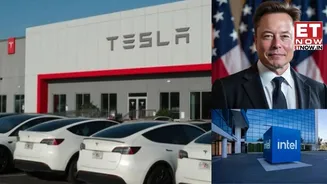
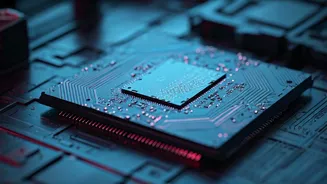
In a significant development for the semiconductor industry, Tesla has announced its intention to utilize Intel's forthcoming 14A manufacturing process
for the advanced chips powering its ambitious Terafab AI complex. This groundbreaking agreement represents a crucial win for Intel, as it secures its first substantial external customer for this cutting-edge technology. The collaboration is a major step forward in Intel's broader strategy to establish itself as a formidable competitor to industry leader TSMC in the realm of sophisticated chip fabrication. Intel's leadership has previously emphasized the critical nature of attracting external clients, with the company's future in contract manufacturing hinging on such partnerships. While Intel has been engaged in discussions with potential clients regarding its 14A technology, Tesla's commitment marks the first publicly acknowledged major external endorsement, a development that has already garnered positive attention in the market. The Terafab project itself, envisioned by Tesla's leadership, is designed to be a state-of-the-art facility dedicated to producing artificial intelligence processors, essential for powering everything from electric vehicles to expansive data center networks and next-generation robotics.
Strategic Alliances and Future Vision
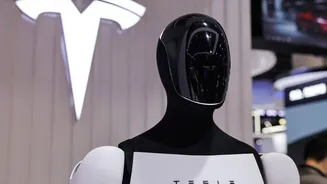
The synergy between Tesla and Intel extends beyond the 14A process, with Intel actively participating in the development of Tesla's Terafab AI chip complex. This collaboration aims to fuel the ambitious visions of its visionary leader, encompassing advancements in robotics and data center infrastructure. Tesla has recently amplified its capital investment forecasts, underscoring the necessity of these expenditures to support its projected revenue growth. However, this aggressive financial strategy has met with mixed reactions from investors, impacting the company's stock performance. The leader of Tesla has consistently captivated stakeholders with grand promises concerning ubiquitous humanoid robots and interstellar data centers. Yet, these ambitious pronouncements have also faced scrutiny due to often-unrealistic timelines and missed deadlines. The Terafab initiative itself is a monumental undertaking, with plans to construct two sophisticated chip manufacturing plants. One facility is earmarked for powering vehicles and humanoid robots, while the other will cater to data centers designed for space applications. Many intricate details concerning the Terafab project, including funding for the expensive manufacturing equipment, operational management, and projected operational timelines, remain undisclosed. Nevertheless, the aspiration is to achieve an unprecedented annual computing capacity of one terawatt, a staggering increase compared to the current total across the United States.
Confidence in Leading-Edge Tech
For Intel's investors, this partnership brings a much-needed boost of optimism. The leader of Tesla expressed confidence that by the time the Terafab facility reaches full operational scale, Intel's 14A technology will be well-established and ready for widespread adoption, making it an opportune choice for their needs. He further highlighted the strong existing relationship between Tesla and Intel as a key factor in this decision. Industry analysts recognize the potential significance of Intel's 14A technology, suggesting it could prove to be more impactful than initially anticipated for the chip manufacturer. The involvement of early design partners like Tesla is considered invaluable, as they play a crucial role in refining the technology and identifying necessary improvements at the forefront of chip innovation. Given Tesla's projected scale, they represent an ideal first major client outside of Intel's internal operations. Experts believe that even if Tesla's ambitious long-term chip volume projections for its robots don't fully materialize, securing chips for its current business operations would still represent a substantial accomplishment for Intel. While not comparable to the chip volumes required by giants like Apple or Nvidia, this partnership represents a tangible customer with the potential for significant production runs.