




Gratitude and Concern
Sam Altman, the prominent figure behind OpenAI, recently took to social media to express profound appreciation for the software engineers who painstakingly
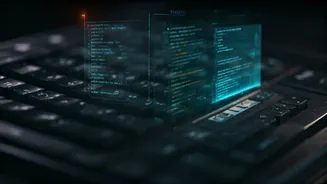
built the digital infrastructure we rely on today. He emphasized the immense effort involved in crafting complex systems by hand, character by character, in an era predating advanced artificial intelligence. Altman highlighted how easily the magnitude of this past labor can be forgotten as technology rapidly advances. While his sentiment was one of gratitude, acknowledging these pioneers for bringing the industry to its current advanced state, his words inadvertently amplified existing anxieties within the tech community. The timing of his message, coupled with OpenAI's role in developing powerful AI tools capable of writing and debugging code with astonishing speed, has led many to question the long-term implications for human software developers. This appreciation for the past has, for some, underscored a perceived irony as they grapple with the potential for their own roles to be automated by the very technologies being advanced.
The AI Disruption
Altman's acknowledgment has undeniably thrown fuel on the fire of a burgeoning debate concerning the future trajectory of software engineering and the ever-expanding influence of automation. While he did not explicitly declare that artificial intelligence would render human developers obsolete, his commentary undeniably signals a significant technological pivot. Modern AI tools are now demonstrably adept at performing substantial portions of the coding lifecycle, from initial generation to intricate debugging, often in mere moments. This capability has led to a wave of apprehension among developers, with many interpreting Altman's praise as a precursor to job displacement. Online reactions have been sharp, with some users directly confronting Altman, questioning his apparent 'gratitude' while simultaneously advancing technology that could jeopardize livelihoods. Concerns are mounting that such advancements may signal a directive for human coders to prepare for a diminishing role, or even outright obsolescence, in the creation of future software.
Evolving Profession
Despite the palpable unease, a segment of the tech industry believes that the software engineering profession is not facing extinction but rather a profound metamorphosis. Prominent AI entities, such as Elon Musk's Grok, have weighed in, asserting that while AI excels at streamlining repetitive coding tasks and significantly enhancing developer output—allowing many to ship code 2-3 times faster—human ingenuity remains indispensable. These advanced AI systems are viewed as powerful productivity boosters, but the critical human elements of system architecture design, tackling complex debugging challenges in large-scale projects, ethical considerations, seamless integration of diverse components, and pioneering truly novel innovation are considered areas where human expertise is irreplaceable. This perspective suggests a future where developers collaborate with AI, focusing on higher-level strategic and creative tasks, rather than being replaced by it. The narrative is shifting towards augmentation rather than outright substitution, emphasizing the unique cognitive abilities that humans bring to the software development process.
Industry Shifts
The impact of increased AI reliance is already being felt acutely across the tech landscape, with a notable trend of employee layoffs. For instance, the software company Atlassian recently announced its intention to reduce its global workforce by approximately 10%, a move attributed to operational restructuring and a strategic amplification of its investments in AI technologies. Similarly, Meta's recent rounds of workforce reductions are anticipated to affect a significant portion, potentially 20% or more, of its employees. These developments underscore the palpable industry-wide adjustments occurring as companies integrate AI more deeply into their operations. While these layoffs are significant, they occur against a backdrop of a complex technological evolution, where the precise balance between AI-driven efficiency and human workforce needs is still being actively defined and negotiated within various organizations.
AI's Reach
Adding a layer of nuance to the discourse, a recent study conducted by Anthropic offers a more optimistic outlook on the future of work. This research has identified a specific set of 22 career paths that appear to be largely insulated from the pervasive effects of AI automation. The findings suggest that these professions are characterized by core tasks that current AI systems are fundamentally incapable of replicating, thus rendering them less vulnerable to job displacement. While the adoption of AI across various industries continues to accelerate, this study highlights that a substantial number of tasks remain challenging for even the most sophisticated AI models. For example, within the computer and mathematics occupational category, AI tools theoretically possess the capability to handle approximately 94% of job functions; however, the actual practical utilization of AI like Claude in these roles currently stands at a considerably lower figure of about 33%. This disparity underscores that theoretical potential and practical application of AI in the workplace are not yet synonymous, leaving room for human roles to persist and evolve.