






A Cosmic Merger
In a significant development, SpaceX has integrated Elon Musk's artificial intelligence firm, xAI, in a private technology transaction valued at an astonishing
$1.25 trillion. This strategic move, with SpaceX holding an estimated $1 trillion stake and xAI valued at $250 billion, is poised to pave the way for a potential initial public offering later this year. The combined entity is envisioned as the "most ambitious, vertically-integrated innovation engine," signifying a profound evolution beyond what was previously conceived for both SpaceX and xAI's overarching missions. This isn't merely the next phase of their journey; it represents an entirely new narrative, driven by the shared goal of advancing humanity's capabilities both on Earth and among the stars, aiming to understand the universe and extend consciousness far beyond our current reach.
The AI Power Crisis
Current advancements in artificial intelligence are heavily reliant on expansive terrestrial data centers, which consume enormous quantities of electrical power and necessitate complex cooling systems. The escalating demand for electricity driven by AI development is rapidly outpacing what can be sustainably provided by ground-based solutions. This presents a significant challenge, as even in the near future, meeting these energy needs could impose considerable strain on communities and the environment. The fundamental limitation lies in the Earth's finite resources and energy infrastructure, suggesting that a long-term, scalable solution for AI computing must look beyond our planet's surface to ensure continued progress and avoid detrimental impacts.
Space: The Ultimate Data Hub
Looking towards the future, the only viable pathway to significantly scale AI capabilities lies in utilizing space-based infrastructure. The sheer magnitude of energy required for advanced AI computation is immense; even harnessing a minuscule fraction of our Sun's output would demand vastly more energy than humanity currently consumes. Therefore, the logical and most effective solution is to relocate these resource-intensive computational operations to an environment offering virtually limitless power and abundant space – the cosmos itself. Space offers a consistent, abundant source of solar energy with minimal operational and maintenance costs, making it the ideal location to host data centers and fuel the exponential growth of AI, ensuring a sustainable and scalable future for computation.
Orbital Data Centers Emerge
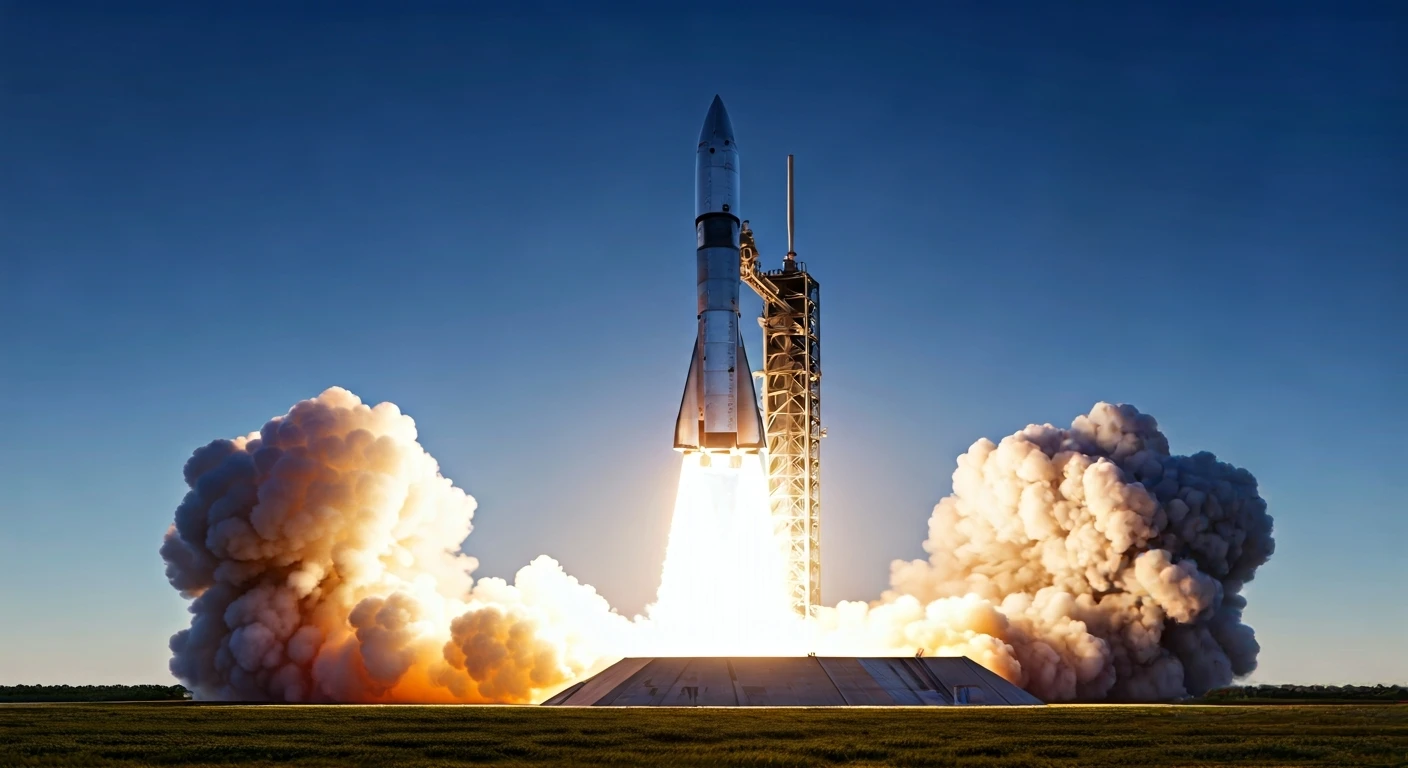
The establishment of space-based data centers, capable of launching millions of tons of mass, represents a monumental leap beyond previous achievements in spaceflight. While even in 2025, the most prolific launch year, only approximately 3000 tons of payload were orbited, primarily Starlink satellites, the demand for space-based AI infrastructure necessitates a paradigm shift. The need to deploy thousands of satellites was a catalyst for the Falcon program's evolution, driving relentless improvements in launch capabilities. With Starship, capable of delivering over 20 times the capacity of current Falcon launches and designed for hourly flights carrying 200-ton payloads, the goal of deploying millions of tons annually into orbit and beyond becomes attainable, enabling a future where humanity truly explores the stars.
AI Compute in Orbit
The vision for space-based AI compute centers involves launching an astronomical number of satellites, with the potential to add 100 gigawatts of AI compute capacity annually, assuming each launched ton generates 100 kW of power and requires no ongoing operational or maintenance costs. The ultimate goal is to achieve an annual launch rate of 1 terawatt of compute power from Earth. Projections suggest that within two to three years, space will become the most cost-effective environment for generating AI compute power. This economic advantage will empower innovative companies to accelerate AI model training and data processing at unprecedented scales, fostering breakthroughs in scientific understanding and technological development for the benefit of humankind. This new orbital infrastructure will build upon the proven sustainability strategies of existing satellite systems, including responsible end-of-life disposal.
Beyond Earth Orbit
While the immediate focus is on deploying AI satellites from Earth, the advanced capabilities of Starship extend far beyond. Through technologies like in-space propellant transfer, Starship can deliver massive cargo loads to the Moon, facilitating the establishment of permanent bases for scientific research and manufacturing. Lunar factories, leveraging local resources, could produce satellites for deployment further into space. By employing methods such as electromagnetic mass drivers and lunar manufacturing, it's conceivable to deploy 500 to 1000 terawatts of AI satellites annually into deep space. This would represent a significant step in ascending the Kardashev scale, allowing humanity to harness a substantial portion of the Sun's energy. The capabilities unlocked by space-based data centers will ultimately fund and enable self-sustaining bases on the Moon, the development of a Martian civilization, and ultimately, the expansion of humanity throughout the universe.