

Musk's Founding Role
Elon Musk presented himself as a foundational figure, emphasizing his initial contributions to OpenAI's inception. He detailed how he conceptualized the
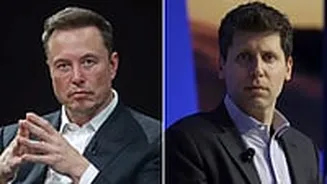
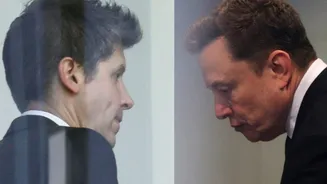
company, recruited key talent, and provided the initial financial backing, including a significant personal investment of $38 million. Musk expressed regret, calling himself an "idiot" for his perceived naivety regarding the company's subsequent valuation and trajectory. During cross-examination, he appeared visibly frustrated by questioning he felt was designed to ensnare him, leading to a tense exchange where opposing counsel acknowledged his brilliance while probing his involvement. This narrative frames Musk's perspective as that of a wronged benefactor whose original vision for AI's future was perhaps misunderstood or disregarded by those who took the reins.
Altman's Counterclaims
Sam Altman, OpenAI's CEO, adopted a more stoic demeanor throughout the initial proceedings, initially appearing in formal attire in stark contrast to his usual casual style. When his turn came on the stand, Altman addressed questions about truthfulness by admitting to past instances of not being entirely truthful. However, he swiftly pivoted to counter Musk's narrative, alleging that in 2017, Musk demanded an overwhelming "90 percent of the equity" and refused to formalize power-sharing agreements in writing. Altman justified this stance by stating that the organization's objective was to prevent a single individual from controlling advanced artificial general intelligence, suggesting Musk's demands were incompatible with OpenAI's core mission and democratic governance principles.
Brockman's Detailed Notes
Greg Brockman, president and co-founder of OpenAI, meticulously documented the company's journey through extensive notes on yellow notepads. These journals became a focal point during his testimony, with Musk's legal team highlighting entries that revealed personal ambitions and concerns. Brockman's writings explored his desire to achieve a "$1B" net worth and his aspiration to transition OpenAI to a "B-corp" structure, intentionally excluding Musk from that shift. He also recorded internal discussions about potentially "stealing the non-profit" from Musk, which he later characterized as "morally bankrupt." Despite the sensitive nature of these excerpts, Brockman defended their content, asserting he had nothing to be ashamed of, while also recounting a dramatic incident where he felt Musk was physically threatening, leading Musk to remove a Tesla painting before departing abruptly.
Zilis: The Key Intermediary
Shivon Zilis, a figure connected to both Musk and OpenAI, played a significant role, particularly due to her positions as a colleague at Neuralink and a friend of Altman, while also being the mother of four of Musk's children. Her court appearance, shrouded in curiosity due to her usually private life, focused on her interactions with both parties. Zilis served on the OpenAI board from 2020 to 2023, a period of crucial development. Her testimony aimed to clarify her position and relationships. OpenAI has suggested Zilis acted as a mole for Musk. When questioned about her relationship with Musk, Zilis responded with nuanced answers, calling it a "relative term" but admitting to "romantic moments." Her communications with Musk and Altman were presented as critical evidence, potentially demonstrating that Musk was aware of OpenAI's direction much earlier than he claimed, which could impact the validity of his lawsuit.