






Robots on the Assembly Line
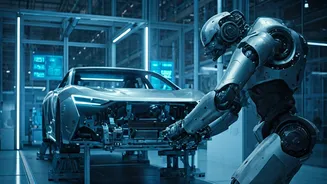
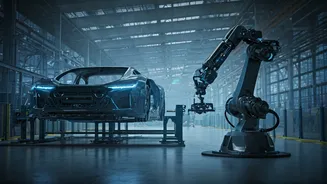
Kia is set to usher in a new era of automotive manufacturing with the planned deployment of advanced humanoid robots in its United States factories starting
in 2029. This strategic move, spearheaded by the adoption of the Atlas robot from Hyundai's Boston Dynamics, is designed to significantly elevate both operational safety and production efficiency. Initially, these sophisticated robots will handle straightforward manufacturing duties, but their capabilities will rapidly expand. Leveraging artificial intelligence for learning, they are poised to take on increasingly complex and higher-value tasks. This integration of robotics is a critical component of Kia's broader strategy to modernize its production facilities and stay ahead in a highly competitive global automotive landscape, ensuring a more robust and adaptable manufacturing ecosystem.
Software-Defined Vehicles Arrive
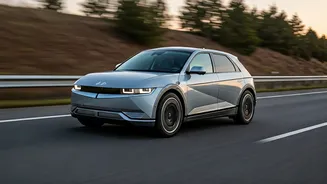
The automotive industry is undergoing a profound shift towards software-defined vehicles (SDVs), and Kia is accelerating its participation in this evolution. The company aims to complete the development of its inaugural software-defined vehicle by the close of 2027. This groundbreaking vehicle will feature Level 2 driving automation, enabling it to navigate highways autonomously. Furthermore, an even more advanced iteration, capable of operating on regular roads, is slated for release in early 2029. This transition to SDVs is crucial for future revenue generation, allowing for continuous income streams through software subscriptions, thereby enhancing profitability per unit and potentially reducing repair expenses over the vehicle's lifespan. The market for SDVs is already substantial, valued between $250 billion and $300 billion, with projections suggesting it could exceed $1 trillion in the next decade, underscoring the strategic importance of this technological pivot.
AI and Future Investments
To power this ambitious vision, Kia is committing substantial resources to enhance its artificial intelligence capabilities. The automaker plans to invest over $500 million specifically to strengthen its physical AI infrastructure and develop sophisticated vision-language-action models. This investment also facilitates deeper collaborations with leading technology giants such as Google's DeepMind and Nvidia Corp. These strategic partnerships are vital for accessing cutting-edge AI advancements and integrating them seamlessly into both manufacturing processes and vehicle technology. This comprehensive technological push is not only about improving current operations but also about building a foundation for future innovation, ensuring Kia remains at the forefront of automotive technology and artificial intelligence integration.
Revised Sales and Electrification Outlook
In light of evolving market dynamics and technological advancements, Kia has recalibrated its sales targets. The company has adjusted its annual electric vehicle (EV) sales goal for 2030, setting it at 1 million units, a reduction from the previous target of 1.26 million. Concurrently, Kia is expanding its hybrid vehicle lineup to include 13 distinct models, with a target of selling 1.1 million units by 2030, a slight increase from its earlier projection. The overall global sales target for 2030 has been revised to 4.13 million units, down from 4.19 million previously anticipated. The US market is a key focus, with an aim to sell 1 million units there, alongside a significant push into emerging markets, particularly India, where 1.5 million units are targeted. This strategic adjustment reflects a balanced approach to electrification and market expansion.