







The AGI Declaration
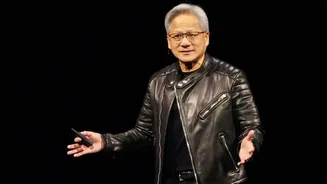
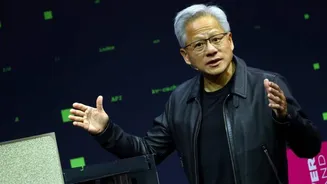
In a recent podcast appearance, Nvidia's Chief Executive, Jensen Huang, put forth a provocative assertion: that Artificial General Intelligence (AGI) has,
in his view, already been attained. This concept, which generally refers to artificial intelligence systems possessing capabilities on par with or surpassing human intellect, remains a subject of intense discussion and varying interpretations within the tech industry. Despite some industry figures reportedly steering clear of the term, AGI continues to be a cornerstone of conversations about AI's trajectory and is even integrated into crucial commercial pacts between major entities. Huang's statement marks a significant moment in the ongoing dialogue about the true state of AI development, suggesting that a long-sought milestone may have already been passed.
Evidence from AI Agents
When pressed to elaborate on his bold claim, Huang pointed to the burgeoning field of AI agents as primary evidence. He highlighted platforms like OpenClaw, where individuals are actively deploying specialized AI agents for a diverse array of tasks. The rapid emergence and potential scalability of novel consumer applications, such as virtual influencers or innovative social interaction tools, further bolster his argument. These developments suggest a decentralized, user-driven adoption of AI capabilities that, taken together, paint a picture of intelligence approaching generalist levels. The speed at which these agents are being integrated into daily life and business processes underscores the transformative potential and the ongoing evolution of AI's practical applications.
Crucial Limitations Acknowledged
Despite his initial emphatic declaration, Huang was quick to temper his remarks by acknowledging the present limitations of AI systems. He observed that while certain AI-driven tools might gain initial traction, many struggle to maintain momentum over extended periods. Critically, he emphasized that the likelihood of these agents independently undertaking and successfully managing the complex, large-scale endeavor of building a company akin to Nvidia remains exceedingly low. This nuanced perspective underscores that while AGI might be present in nascent forms or specific task-oriented capabilities, the comprehensive, self-sustaining, and highly adaptive intelligence envisioned by many is still a distant prospect, requiring further advancements and overcoming significant hurdles.