




Encryption: The Core Defense
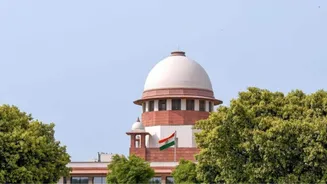
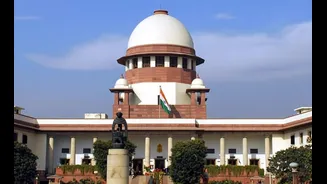
WhatsApp presented a strong defense before the Supreme Court, emphasizing that user privacy is paramount due to its end-to-end encryption technology. This
advanced security feature ensures that personal messages and calls remain inaccessible to anyone outside the conversation, including WhatsApp itself and its parent company, Meta. The company's legal representatives asserted that this robust encryption means there is no possibility of violating existing laws concerning user data. This point was crucial in countering allegations raised by the Competition Commission of India, which had previously suggested that users were compelled to share personal information for continued access to the messaging service. WhatsApp specifically refuted claims that user data was being shared with other Meta platforms, aiming to clarify any misconceptions about their data handling practices and reinforce their commitment to user privacy.
Consent Framework Under Fire
The Supreme Court's bench, led by Chief Justice of India Surya Kant, expressed significant reservations about WhatsApp's approach to user consent for data collection. During a prior hearing, the court critically described the consent framework as a "decent way of committing theft of private information," suggesting that users effectively 'pay' for the supposedly free service with their personal data. This skepticism stems partly from directions issued by the National Company Law Appellate Tribunal (NCLAT). The NCLAT had previously highlighted the importance of user choice, stating that individuals should retain the right to control what data is collected, for what purposes, and for how long. The tribunal further recommended that any collection or cross-use of non-essential data, such as for advertising, should only proceed with explicit and revocable consent from the user, underscoring the need for a more transparent and user-centric data privacy model.
Data Sharing Compliance
In response to the court's concerns and in an effort to address the legal challenges, WhatsApp submitted an affidavit detailing how the platform operates. This document reiterated the critical point that all personal messages and calls are secured by end-to-end encryption, ensuring that even WhatsApp cannot access the content of these communications. Furthermore, during the proceedings, WhatsApp formally agreed to adhere to the directions previously stipulated by the NCLAT concerning user privacy and data sharing with Meta. While WhatsApp and Meta had initially argued that users had the option to 'opt-out' of certain data-sharing provisions, the court remained unconvinced and continued to press for stronger protections. Representing the Competition Commission of India, senior advocate Madhavi Goradia Divan pointed out that data sharing encompasses multiple dimensions, including not only privacy and protection but also market and consumer safeguarding, which is a distinct and equally important consideration.