





Moon Over Mars
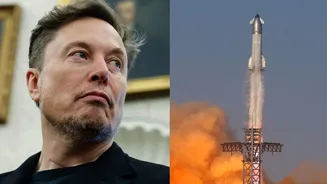
Elon Musk has recently revealed a pivotal shift in SpaceX's long-term objectives, with the company now dedicating its primary efforts towards the creation
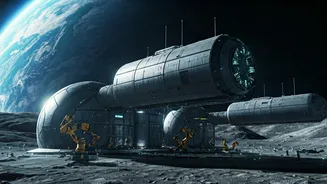
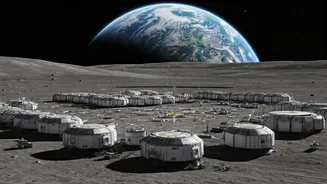
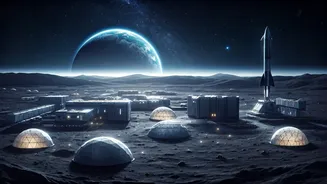
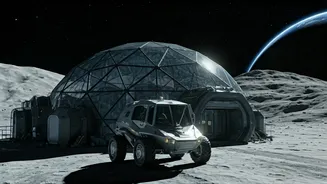
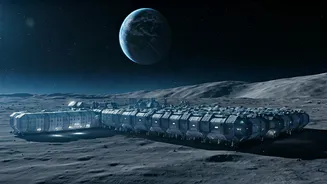
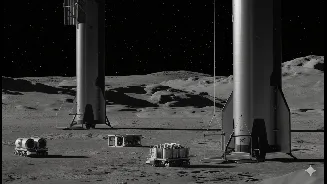
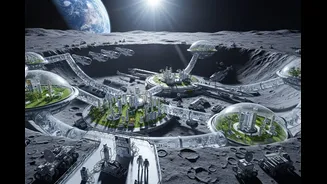
of a "self-growing city" on Earth's natural satellite, the Moon. This ambitious lunar project is envisioned to be realized in under ten years. While the aspiration to establish a city on Mars remains on the company's roadmap, slated for commencement within the next five to seven years, Musk emphasized that securing the future of civilization is the overarching priority, and the Moon presents a more accelerated pathway to achieving this. This strategic recalibration aligns with recent reports indicating that SpaceX has informed its investors of this renewed focus on lunar exploration, with a targeted uncrewed landing attempt on the Moon set for March 2027. This stands in contrast to earlier projections, where Musk had previously aimed for an uncrewed mission to Mars by the close of 2026, highlighting the significant re-prioritization currently underway.
Global Space Race
The United States, through SpaceX, finds itself in a heightened state of competition with China concerning the return of human presence to the lunar surface within the current decade. It is important to note that no human has set foot on the Moon since the conclusion of the Apollo 17 mission in 1972, marking a significant gap in human lunar exploration. The timing of this strategic shift also coincides with recent major developments, including Musk's announcement less than a week prior regarding SpaceX's acquisition of xAI, the artificial intelligence company he also leads. This acquisition positions the rocket and satellite firm at a valuation of $1 trillion, with the AI entity valued at $250 billion. Enthusiasts of this merger suggest it will significantly bolster SpaceX's endeavors in developing space-based data centers, which Musk believes offer superior energy efficiency compared to terrestrial facilities, especially given the escalating demand for computing power driven by advancements in artificial intelligence.
Future Funding & Diversification
Looking ahead, SpaceX is anticipating a substantial financial injection through a public offering scheduled for later this year, with projections indicating a potential fundraising of up to $50 billion. Should this target be met, it could mark the largest public offering in history. Amidst these significant reorientations in its space exploration strategy, Musk is also concurrently steering his publicly traded automotive company, Tesla, in new directions. Following its pioneering role in establishing the global electric vehicle market, Tesla is now allocating an impressive $20 billion this year towards a significant pivot towards autonomous driving technologies and robotics. To accelerate this transition, Musk recently disclosed that Tesla is discontinuing the production of two specific car models at its California manufacturing plant. This strategic decision is intended to free up valuable space and resources for the production of its Optimus humanoid robots, underscoring a broader diversification and technological advancement across Musk's ventures.