




Mind's Amazing Plasticity
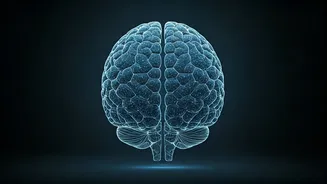
The human brain, an incredible organ, is not a static entity; it is remarkably plastic. This means the brain has the inherent capacity to reorganize itself
by forming new neural connections throughout life. This neural adaptability allows the brain to adjust to new information, experiences, and even damage. When we encounter something that contradicts our existing beliefs, our brains don't just passively accept it. Instead, intricate processes kick into motion. The initial reaction might be cognitive dissonance – a mental discomfort stemming from holding conflicting ideas. The brain then begins to evaluate the new information, assess its validity, and weigh it against current knowledge. This evaluation frequently occurs in the prefrontal cortex, the brain region associated with higher-level cognitive functions, including decision-making and planning. Consequently, if the new information proves compelling, the brain starts reshaping itself. Neural pathways that once reinforced the initial belief begin to weaken, while new pathways supporting the revised viewpoint are forged. This reshaping process underscores the brain's plasticity, demonstrating its ongoing ability to learn and adapt.
Dopamine's Influential Role
Dopamine, often associated with pleasure and reward, also plays a crucial role in cognitive change. This neurotransmitter is released when we learn something new, experience a 'Eureka!' moment, or find that a new idea resonates with us. Dopamine facilitates learning and reinforces these shifts in beliefs. When new information aligns with our existing understanding or when it brings a sense of clarity, our brains release a surge of dopamine, thus signaling that the change is beneficial. This release strengthens the neural pathways associated with the new information, making it easier to recall and integrate it in the future. The anticipation of dopamine release is also a motivator. When individuals are open to change, they are more likely to seek out experiences and information that can cause cognitive shifts. It creates a feedback loop, the positive experience further reinforcing this open-minded approach. Dopamine is not a direct cause of cognitive change; instead, it works by reinforcing the brain's natural plasticity and motivating the mind to engage with potentially contradictory information.
Overcoming Cognitive Bias
Cognitive biases are systematic patterns of deviation from norm or rationality in judgment. These biases can greatly impede the ability to change one's mind. Our brains tend to favor information that confirms pre-existing beliefs, a phenomenon called confirmation bias. This can result in an automatic rejection or downplaying of conflicting evidence. Overcoming cognitive biases requires active effort and awareness. First, individuals need to recognize the existence of biases and acknowledge their influence on thought processes. Subsequently, people can actively seek diverse sources of information and consider multiple perspectives. Critical thinking skills are extremely crucial, teaching individuals to analyze information carefully, question assumptions, and look for inconsistencies. Deliberately seeking out information that challenges existing beliefs is another crucial step. It helps in actively challenging the cognitive biases and promoting more balanced decision-making. By being aware of these biases and actively employing strategies to counteract them, individuals become better equipped to change their minds when presented with new and compelling information.
Embracing Cognitive Flexibility
Ultimately, changing one's mind is a skill that can be developed and practiced. The key is to embrace cognitive flexibility – the ability to adapt thinking and shift perspectives when faced with new information. Start by cultivating curiosity. Ask questions, seek different viewpoints, and be willing to consider alternative explanations. Recognize that changing your mind is not a sign of weakness or inconsistency. It's often a sign of growth and improved understanding. Practice reflective thinking. Take time to analyze your own beliefs and how they have evolved over time. Regularly assess how external information has shaped your current perspective. Develop a growth mindset, which suggests that intelligence and abilities are not fixed but can be developed through effort and learning. Individuals with a growth mindset are more open to new experiences and more likely to embrace challenges. By embracing cognitive flexibility and actively engaging with new information, one can create a more adaptable and resilient mindset, fostering lifelong learning and development.