








Robots Learn by Doing
The race to create advanced artificial intelligence is evolving beyond purely digital realms. A growing consensus in the tech industry suggests that future
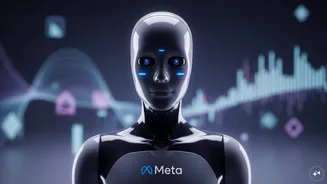
AI systems must engage with the physical world to unlock their full potential. Instead of solely processing data, machines are increasingly expected to learn through active participation and interaction, much like humans do. This shift signifies a move towards AI that can not only think but also act and adapt in real-time environments. The acquisition of Assured Robot Intelligence (ARI) by Meta underscores this industry-wide belief. ARI, a startup focused on developing sophisticated AI for humanoid robots, brings valuable expertise in creating machines that can understand and respond to human behavior. This strategic move by Meta is designed to bolster its capabilities in the burgeoning field where artificial intelligence and robotics converge, aiming to build intelligences that are capable of physical tasks and dynamic adaptation.
Intelligence in Motion
Assured Robot Intelligence (ARI) has been at the forefront of developing foundational AI models specifically for humanoid robots. This approach diverges significantly from conventional robotics, which typically relies on pre-programmed sequences. ARI's systems are engineered to allow robots to learn continuously from their surroundings, enabling them to adapt to changing conditions and unexpected events. The ultimate aim is to equip robots with the ability to perform everyday physical tasks, such as assisting with household chores, while seamlessly navigating dynamic and unpredictable environments. Achieving this requires more than just precise mechanical movements; it necessitates a deep understanding of context, human intentions, and the inherent unpredictability of the real world. ARI's technology focuses on enabling robots to interpret complex behaviors, anticipate potential outcomes, and refine their actions instantaneously, marking a crucial step toward creating more versatile machines capable of operating outside highly controlled laboratory settings and into the complexities of everyday life.
Key Expertise Joins
The acquisition of ARI brings a highly skilled team into Meta's AI division, Superintelligence Labs. Notably, the founding team members, including Xiaolong Wang and Lerrel Pinto, are set to join Meta, contributing their extensive knowledge and experience to the company's advanced robotics initiatives. Wang, with a background that includes work with Nvidia and a research role at the University of California, San Diego, brings significant academic and industry insight. Pinto, who previously founded a robotics startup that was acquired by Amazon, adds valuable entrepreneurial and practical development experience. Meta anticipates that this influx of talent will significantly accelerate its efforts in developing sophisticated robotic systems. The focus is on creating machines that can learn autonomously and function effectively in real-world conditions, moving beyond theoretical advancements to practical, applied intelligence in physical form. This strategic integration of ARI's team is poised to be a catalyst for Meta's progress in embodied AI.
The Embodied AI Bet
Meta's long-standing investment in artificial intelligence is now taking a more pronounced direction towards robotics, reflecting a broader industry shift in how progress toward powerful AI systems is perceived. Many researchers now contend that truly advanced intelligence cannot be fully realized through text-based data alone. Instead, the next major breakthroughs are anticipated to emerge from "embodied AI" – systems that learn and develop through direct interaction with the physical environment. In this paradigm, robots serve a dual purpose: they are both active learners and essential testing grounds, accumulating crucial insights through movement, touch, and direct engagement. While Meta has not yet unveiled any consumer-ready humanoid robots, reports indicate that the company is exploring both hardware and software development avenues. This comprehensive approach aligns with a growing trend across the tech industry, where major players are developing integrated systems that combine advanced AI models with physical robotic platforms, paving the way for a future where intelligent machines are an active part of our physical world.