





A New Era Dawns
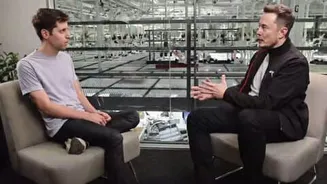
In a significant move to bolster its position in the rapidly evolving AI landscape, a major chip manufacturer has announced its participation in Elon Musk's
ambitious Terafab project. This collaboration, involving entities like SpaceX and Tesla, is designed to accelerate the development and production of advanced artificial intelligence processors. The announcement sent positive ripples through the company's stock, underscoring investor confidence in its strategic direction. The partnership aims to harness cutting-edge manufacturing capabilities to meet the escalating demand for computational power required by next-generation robotics and vast data center infrastructures. It represents a forward-looking approach to semiconductor fabrication, integrating logic, memory, and packaging solutions in novel ways. This venture is poised to redefine the future of silicon manufacturing, aligning with a vision for substantial advancements in AI and robotics technology, pushing the boundaries of what's currently possible in the industry.
Forging the Future
The strategic alliance will facilitate the creation of advanced chip factories, with a focus on powering both autonomous vehicles and sophisticated humanoid robots, as well as establishing expansive AI data centers. One facility is earmarked to support the operational needs of electric cars and the development of advanced robotic systems, while the other will be dedicated to creating substantial AI data center capacity. This move is part of a larger vision to build a colossal AI chip fabrication complex. The endeavor is expected to be a game-changer, enabling the production of an immense amount of compute power, potentially reaching 1 terawatt annually. This scale is crucial for realizing the full potential of artificial intelligence and robotics, addressing complex computational challenges and driving innovation across multiple sectors.
Turnaround Gains Traction
For the chipmaker, this collaboration is a crucial development, signaling a robust turnaround effort after facing challenges in the competitive AI market. The partnership is anticipated to significantly enhance investor trust as its strategic restructuring initiatives begin to yield positive results. The company's financial performance has shown improvement, coinciding with an increased demand for its processing units. Analysts view this as a vital step, demonstrating the company's capacity to support the most critical projects for its largest clients, a testament to its ongoing transformation. Led by its current CEO for over a year, the company has been implementing a comprehensive restructuring plan, involving significant operational adjustments and the divestment of certain assets. Furthermore, it has secured substantial financial backing, including investments from key players and governmental support, solidifying its position in the market.
Foundry's Next Chapter
A cornerstone of the company's revitalization strategy is its contract manufacturing division, known as Intel Foundry. Despite currently facing significant operating losses, reportedly around $10.32 billion in 2025, with revenue growth modest at just 3%, this segment is being repositioned for future success. The company is placing considerable emphasis on its advanced 18A manufacturing technology. This cutting-edge process, which was primarily utilized internally last year, is now being considered for broader external customer adoption. This strategic shift in its foundry business aims to attract new clients and leverage its manufacturing prowess to compete more effectively in the global semiconductor market, driving innovation and profitability.