





Canine Art Creators
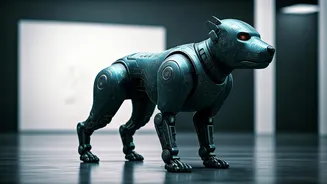
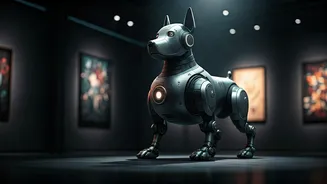
At Berlin's Neue Nationalgalerie, an intriguing exhibition by artist Beeple, whose real name is Mike Winkelmann, has introduced a unique set of robotic
dogs. These aren't ordinary machines; they are equipped with remarkably lifelike silicone heads modeled after prominent figures like Elon Musk, Mark Zuckerberg, Jeff Bezos, Andy Warhol, and Pablo Picasso. These robotic dogs are programmed to move around the museum space, equipped with cameras that capture their surroundings. Their peculiar output mechanism involves "pooping" printed images of whatever they've just recorded, effectively turning them into mobile picture-making devices. This innovative setup challenges traditional notions of art creation and audience interaction within a museum setting, prompting contemplation on the intersection of technology and art.
AI's Artistic Lens
The generated prints from these robotic artists are not mere reproductions of reality; they undergo transformation through artificial intelligence. Each AI-altered image reflects the distinct artistic style associated with the celebrity head adorning the robot dog. For instance, a dog with a Picasso-esque head produces images rendered in a Cubist fashion, characterized by fragmented perspectives and geometric shapes. Similarly, a Warhol-themed robot dog creates visuals reminiscent of pop art, known for its bold colors and mass-culture motifs. This aspect of the installation powerfully illustrates how algorithms and AI can reshape the interpretation and presentation of the same visual input, leading to vastly different artistic outcomes and highlighting the malleability of perception in the digital age.
Perception and Power
The core message of this exhibition, titled 'Regular Animals,' delves into how modern technology and algorithms profoundly influence our understanding of the world. Beeple suggests a significant power shift from traditional influencers like artists to contemporary tech leaders. He posits that these leaders wield immense control over the algorithms that curate what information and imagery people are exposed to, often without their full awareness. This pervasive influence, he argues, is a force that can be rapidly deployed and altered, bypassing established governmental and societal structures. The exhibition encourages viewers to critically examine this shift in influence and its implications for shaping public discourse and individual perception.
Artist's Vision & NFTs
The artist himself, Mike Winkelmann, is also represented among the robotic figures, adding another layer to the self-referential nature of the exhibit. Curator Lisa Botti emphasizes that artificial intelligence is a dominant force shaping contemporary life, and museums serve as crucial spaces for societal reflection on these changes. 'Regular Animals,' which debuted at Art Basel Miami Beach in 2025, not only presents AI-generated art but also engages with the burgeoning world of NFTs. The printed images produced by the dogs were distributed with certificates humorously labeled '100% organic GMO-free dog shit.' Some prints even contained QR codes that granted recipients free NFTs, opening avenues for potential monetization of these digital artworks and further blurring the lines between physical and digital art ownership.