



ISS Docking & Astronaut Returns
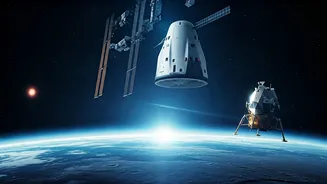
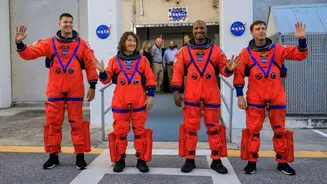
The Crew 10 Dragon spacecraft recently achieved a successful docking with the International Space Station (ISS), carrying four individuals. This mission
was notably expedited to ensure a prompt return for astronauts Sunita Williams and Barry Wilmore. In preparation for their departure, Sunita Williams had previously relinquished command of the orbital outpost to Roscosmos Cosmonaut Alexey Ovchinin. This docking signifies a crucial step in NASA's efforts to manage astronaut rotations and the return of long-duration crews, especially in light of previous delays involving other spacecraft. The successful docking demonstrates the operational capabilities of the Dragon spacecraft for crew transport and underscores the ongoing international collaboration in space.
Lunar Mission Successes
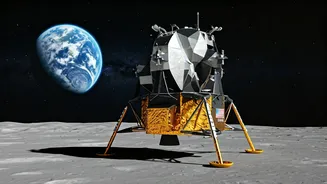
The private space sector is making significant strides in lunar exploration, highlighted by Firefly Aerospace's Blue Ghost mission. This probe achieved a historic first by landing upright on the lunar surface, capturing high-resolution video of its descent and touchdown. Firefly Aerospace has released footage showcasing the deorbit burn and controlled landing, demonstrating the vehicle's ability to softly contact the surface. Beyond this achievement, Intuitive Machines also successfully launched its second commercial probe, Athena, aboard a SpaceX Falcon 9. These missions are vital for advancing lunar science, testing new technologies, and supporting NASA's broader Artemis program, which aims to establish a sustained human presence on the Moon. The data collected from these landers will provide invaluable insights into the lunar environment and pave the way for future missions.
Unveiling Cosmic Mysteries
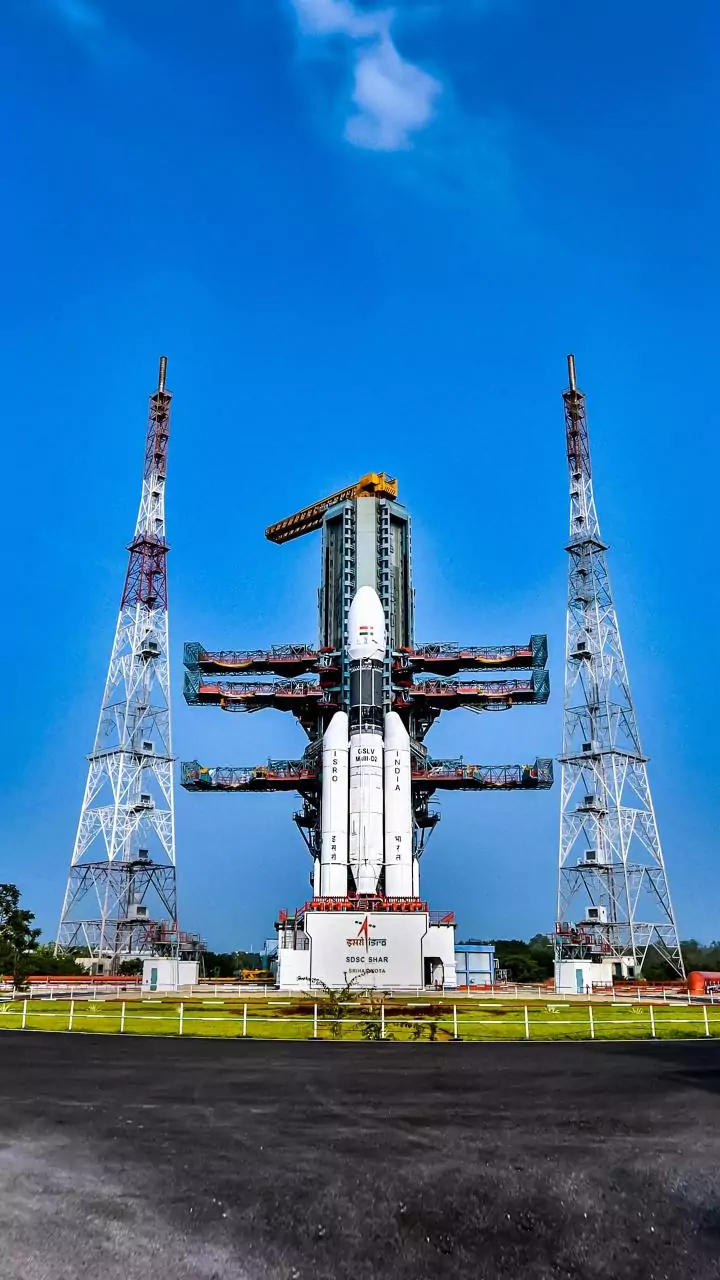
Cutting-edge scientific missions are pushing the boundaries of our understanding of the universe. NASA's SPHEREx space telescope, launched on a SpaceX Falcon 9, is designed to map the cosmos in infrared light, a crucial step in deciphering cosmic origins. Concurrently, the PUNCH solar probes are studying the Sun's outer atmosphere, the corona, and the solar wind, aiming to improve our comprehension of space weather phenomena that can impact Earth. Furthermore, ISRO's Aditya-L1 spacecraft has captured unprecedented images of the 'kernel' of a solar flare in the Sun's lower atmosphere during Solar Cycle 25's peak, offering new insights into these powerful bursts of energy. Astronomers have also identified a substantial number of black holes residing in dwarf galaxies, significantly expanding the known population of potential intermediate-mass black holes and offering new avenues for astrophysical research.
Challenges and Setbacks
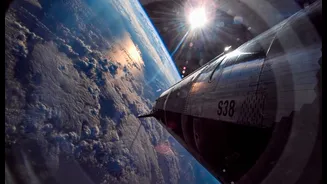
Space exploration is not without its challenges, as evidenced by recent events. NASA astronauts Butch Wilmore and Sunita Williams faced an extended stay in orbit, over eight months, due to technical issues with Boeing's Starliner spacecraft, which experienced thruster malfunctions and helium leaks. This extended duration forced a shift in their return plans, utilizing a SpaceX Dragon capsule instead. SpaceX itself encountered a setback with the scrubbed Crew-10 mission due to a hydraulic issue, delaying astronaut returns further and sparking political discussions about the pace of space missions. Additionally, a Starship test flight ended in an in-air explosion, marking a significant failure that raises questions about the reliability of future SpaceX endeavors, including their ambitious lunar and Martian objectives. Even ground operations faced hurdles, with a cell phone tower in Bengaluru causing interference with ISRO's deep space network, impacting communications for an asteroid mining mission.