






Beyond Engineering
In a notable shift for the artificial intelligence landscape, Google DeepMind has broadened its research horizons by integrating philosophical expertise.
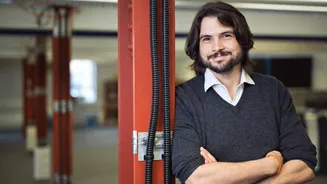
The recruitment of Henry Shevlin, a philosopher, signifies a departure from solely technical pursuits, emphasizing the burgeoning importance of exploring the deeper implications of advanced AI. This strategic hire underscores a growing industry recognition that the development of sophisticated AI systems necessitates grappling with complex questions about machine consciousness, ethical frameworks, and the eventual preparedness for artificial general intelligence (AGI). As AI capabilities continue to advance at an unprecedented pace, the industry is increasingly looking beyond the purely functional aspects to understand the profound societal and existential questions these technologies present. This move by DeepMind suggests a proactive approach to anticipating and addressing these multifaceted challenges, bridging the gap between rapid technological innovation and critical philosophical inquiry. The integration of philosophical thought is seen as crucial for navigating the evolving relationship between humans and increasingly powerful AI.
From Academia to AI
Henry Shevlin brings a distinguished academic background to his new role at Google DeepMind, having previously served as the Associate Director (Education) at the esteemed Leverhulme Centre for the Future of Intelligence at the University of Cambridge. His scholarly pursuits have extensively covered the intricate fields of cognitive science, the ethical considerations surrounding AI, and the philosophical study of consciousness itself, making his expertise exceptionally relevant to DeepMind’s expanded research agenda. Shevlin’s transition to the forefront of AI development offers a unique opportunity to apply his long-standing academic interests within a leading AI research environment. His academic journey commenced with foundational studies in Classics and Philosophy at the University of Oxford, followed by doctoral work at the CUNY Graduate Center in New York, where he also contributed to teaching at Baruch College. This interdisciplinary foundation, stretching from classical philosophy to cutting-edge cognitive science, and encompassing interests in animal cognition, neuroscience, game theory, and even science fiction, positions him ideally to address the multifaceted and novel questions that will arise at DeepMind.
Industry's Philosophical Turn
Google DeepMind's strategic decision to hire a philosopher is indicative of a broader trend gaining momentum across the artificial intelligence industry. Leading AI organizations are increasingly acknowledging that the creation of advanced AI systems transcends purely technical proficiency. The intricate challenges of ensuring AI alignment with human values, establishing robust ethical guidelines, and fundamentally understanding the nature of intelligence itself demand insights from disciplines traditionally considered separate from engineering. This trend is exemplified by similar appointments, such as Anthropic's recruitment of an in-house philosopher to focus on AI alignment and fine-tuning. These hires signal a growing industry consensus: as AI systems approach more generalized capabilities, the associated risks and implications become exponentially more complex. Questions regarding the potential for machine consciousness, the optimal ways for humans to interact with AI, and proactive strategies for managing the advent of AGI are evolving from abstract academic debates into tangible, practical challenges for the industry. By integrating philosophers, companies like DeepMind aim to bridge the divide between rapid technological advancements and the profound philosophical questions they invariably raise, shaping the future of AI through both code and considered ideas.