



What's Happening?
Mercedes-Benz USA is set to expand its MB.DRIVE portfolio in the U.S., introducing advanced point-to-point driver assistance and hands-free highway driving capabilities to customers by 2027. The MB.DRIVE ASSIST
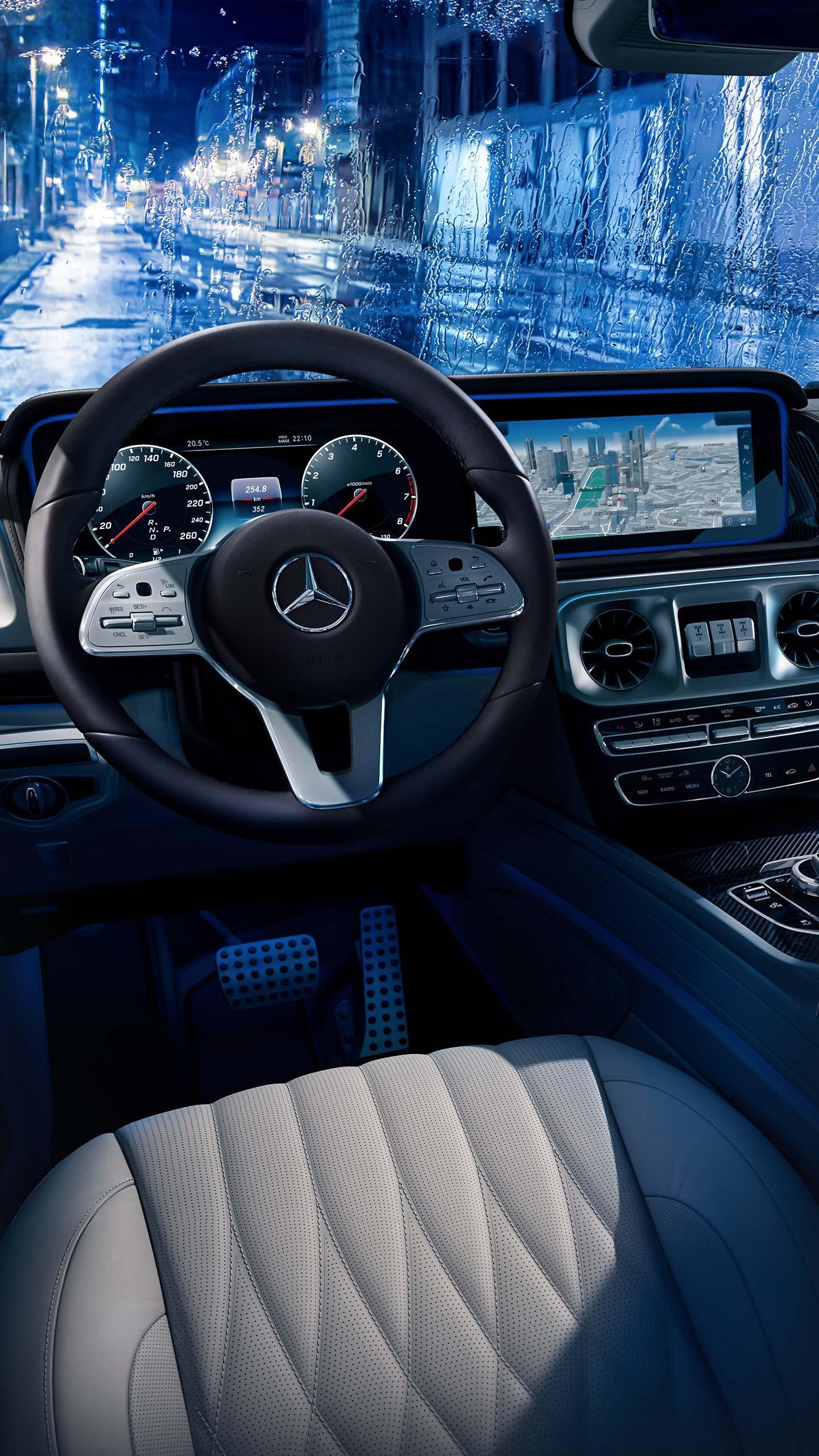
PRO system will support drivers along navigation routes, including complex urban traffic scenarios. Concurrently, the Hands-Free Highway Assist feature will allow drivers to remove their hands from the steering wheel on eligible controlled-access highways at speeds up to 85 mph. These systems are designed to reduce the routine workload for drivers and enhance comfort during journeys. An Early Access Program for these features will commence in California in December 2026, followed by a broader U.S. rollout in spring 2027 for select eligible models. The required hardware for MB.DRIVE ASSIST PRO is already installed in certain eligible 2027 vehicles, including the CLA Electric, GLE, GLS, and S-Class, with more vehicles across the Mercedes-Benz passenger car portfolio in the U.S. to be equipped starting in model year 2028.
Why It's Important?
The introduction of these advanced driver assistance systems by Mercedes-Benz USA signifies a significant step forward in automotive technology within the U.S. market. By offering SAE Level 2 hands-free highway driving and point-to-point assistance, Mercedes-Benz aims to enhance vehicle safety and driver convenience, potentially setting new benchmarks for luxury automotive features. This development could influence consumer expectations for advanced driver-assist technologies across the industry, pushing other manufacturers to accelerate their own autonomous driving initiatives. The flexible purchase options, including digital acquisition via the Mercedes-Benz Store and over-the-air updates, highlight a shift towards software-defined vehicles and new revenue models for automakers. This move also positions Mercedes-Benz as a leader in bringing sophisticated driver assistance systems to the U.S., Germany, and China, making it the first automaker to offer this type of advanced point-to-point system across these key markets.
What's Next?
Following the Early Access Program in California starting December 2026, Mercedes-Benz USA plans a broader U.S. rollout of its MB.DRIVE ASSIST PRO and Hands-Free Highway Assist systems in spring 2027. The company intends to make these features available on select eligible models, with the necessary hardware already integrated into certain 2027 vehicles and more models to follow in 2028. Customers will have the flexibility to purchase these features through various subscription periods, including three-year, one-year, or one-month options, or as a one-time purchase, depending on the model year. Mercedes-Benz also aims to achieve over 330,000 U.S. sales in 2027, indicating an aggressive market strategy that likely integrates these new technological offerings to attract and retain customers. The continuous development and over-the-air updates, facilitated by MB.OS, suggest ongoing enhancements and new functionalities for these systems.
Beyond the Headlines
The deployment of advanced driver assistance systems like MB.DRIVE ASSIST PRO and Hands-Free Highway Assist raises broader implications beyond mere convenience. Ethically, the increasing reliance on automated driving systems necessitates clear definitions of driver responsibility, especially in SAE Level 2 systems where the driver must remain attentive. Legally, this technology could lead to new regulatory frameworks and liability considerations in the event of accidents. Culturally, the widespread adoption of such systems could gradually reshape the driving experience, potentially reducing driver engagement in routine tasks and altering perceptions of vehicle ownership. The ability to purchase features digitally and receive over-the-air updates also signifies a long-term shift in the automotive industry towards a more software-centric model, where vehicle capabilities can evolve post-purchase, blurring the lines between hardware and software products and creating new opportunities for recurring revenue streams.