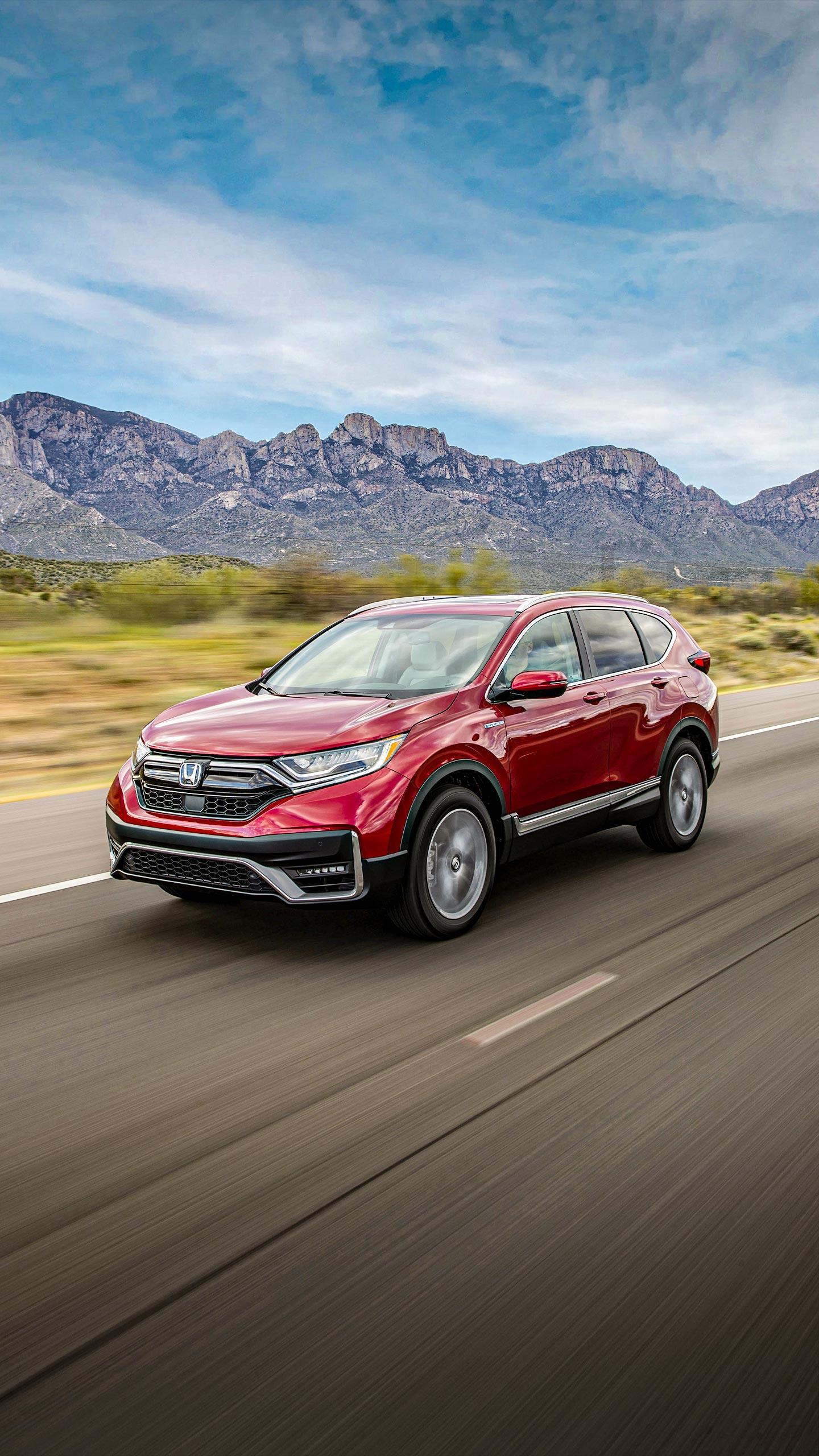




What's Happening?
Honda's bestselling CR-V model will undergo a significant transformation for its 2028 model year, becoming exclusively a hybrid vehicle. This move aligns with the trend set by its main competitor, the Toyota
RAV4, which also transitioned to a hybrid-only lineup. The 2028 CR-V will introduce Honda's new hybrid powertrain, featuring a redesigned 2.0-liter Atkinson-cycle four-cylinder engine paired with two electric motors. This fifth generation of Honda's two-motor hybrid system aims for improved power and efficiency, targeting a 10 percent increase in fuel economy compared to the current hybrid model. The vehicle is also expected to feature a completely new exterior design, including slim daytime running lights and a full-width rear light bar, and will likely be the first U.S. model to sport Honda's new 'H' logo. The interior is anticipated to receive a major overhaul, drawing inspiration from the Asian-market Avancier SUV, with a large dashboard-mounted screen replacing many physical controls.
Why It's Important?
This strategic shift to an all-hybrid CR-V underscores Honda's commitment to electrification and its response to evolving consumer demands and market competition in the compact SUV segment. The CR-V is Honda's most crucial model in the U.S. market, and making it hybrid-only reflects the strong performance of current CR-V hybrid sales, which account for over half of the SUV's total sales. By adopting a hybrid-exclusive approach, Honda aims to maintain its competitive edge against rivals like the Toyota RAV4, Hyundai Tucson Hybrid, and Nissan Rogue Hybrid. The introduction of a new, lighter, and stiffer modular platform will also allow for greater parts sharing across Honda's lineup, potentially reducing production costs and enhancing vehicle performance. This move could also influence other automakers to accelerate their hybrid or electric vehicle transitions in popular segments.
What's Next?
Production of the 2028 Honda CR-V is slated to commence in April 2027 at Honda's manufacturing facilities in East Liberty, Ohio, and Greensburg, Indiana, with sales expected to begin shortly thereafter. The new model is projected to have a starting price around $38,000, a slight increase from the current CR-V Hybrid's starting price of $37,580. Honda will need to ensure that the new hybrid powertrain delivers on its promises of improved efficiency and performance to meet consumer expectations and outcompete rivals. The transition to a largely screen-based interior interface could also be a point of scrutiny for traditional Honda buyers who prefer physical controls. The success of this hybrid-only strategy will be closely watched as it could set a precedent for future model updates across Honda's portfolio and within the broader automotive industry.
Beyond the Headlines
The decision to make the CR-V hybrid-only reflects a broader industry trend towards sustainable mobility and away from purely internal combustion engine vehicles. This move by Honda, a major player in the U.S. automotive market, signals a significant step in the mainstream adoption of hybrid technology. It also highlights the increasing pressure on automakers to meet stricter emissions regulations and consumer preferences for fuel-efficient vehicles. The potential shift away from physical buttons in the interior could also spark a debate among consumers regarding usability, safety, and the overall driving experience, as many drivers still prefer tactile controls. Furthermore, the introduction of a new modular platform suggests a long-term strategy by Honda to streamline its production processes and potentially accelerate the development of future electrified vehicles, including fully electric models, by leveraging shared components and architectures.