
What's Happening?
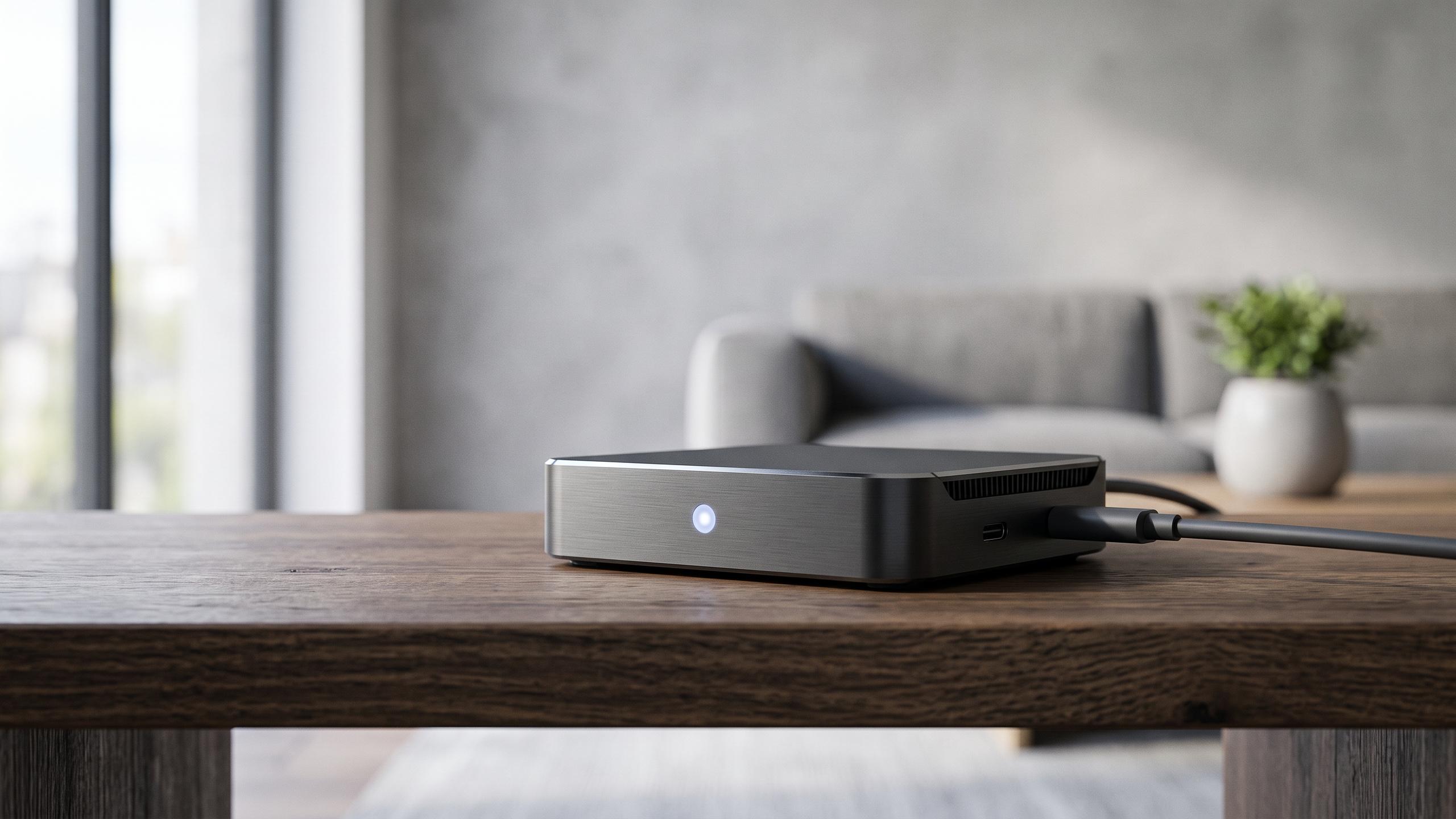
SONOFF has launched the Dongle-MP10, a new flagship device in its Dongle Max lineup, designed to enhance multi-protocol smart home setups. This device introduces USB Passthrough, allowing users to connect
compatible USB dongles (such as Zigbee, Z-Wave, or Thread) to a smart home host over a local network, rather than directly plugging them into the host. This innovation addresses limitations of traditional setups, including restricted placement options, limited USB ports on hosts, and the potential for wasted hardware during upgrades. The Dongle-MP10 enables a single host to manage devices using different protocols simultaneously by passing through up to two compatible USB dongles. It features a high-performance dual-chip architecture with a TI CC2674P10 for Zigbee/Thread and an ESP32-S3R8 for Wi-Fi, offering enhanced processing power and memory. The device supports multiple connection options, including Power over Ethernet (PoE) or USB power, and Wi-Fi connectivity, along with open-source firmware compatibility for DIY enthusiasts.
Why It's Important?
The SONOFF Dongle-MP10 is a significant development for smart home enthusiasts and integrators, particularly those utilizing open-source platforms like Home Assistant. By enabling remote USB dongle connectivity, it offers unprecedented flexibility in smart home network design, allowing users to optimize signal strength and coverage by placing dongles in ideal locations, away from the host. This innovation directly tackles common pain points in multi-protocol environments, making it easier to integrate diverse devices without being constrained by physical proximity to the central hub. For the smart home industry, this product promotes greater interoperability and efficiency, potentially accelerating the adoption of more complex and robust smart home systems. It also supports sustainability by allowing users to reuse existing USB dongles, reducing electronic waste and upgrade costs, which is a growing concern for environmentally conscious consumers.
What's Next?
The SONOFF Dongle-MP10 is poised to facilitate more advanced and flexible smart home deployments. Users can expect improved wireless coverage and reduced interference for their Zigbee, Z-Wave, and Thread devices, leading to more reliable smart home automations. The device's compatibility with open-source firmware like ESPHome and Tasmota suggests continued community development and customization options, further enhancing its utility. SONOFF will likely continue to expand compatibility with various USB dongles and integrate new features through firmware updates, leveraging its dual-chip architecture. This product could also influence other manufacturers to develop similar solutions, pushing the industry towards more distributed and flexible smart home architectures, ultimately benefiting consumers seeking more robust and customizable home automation systems.
Beyond the Headlines
The introduction of the SONOFF Dongle-MP10 signifies a deeper shift in smart home architecture, moving towards more distributed and modular systems. This approach challenges the traditional centralized hub model by allowing critical components like protocol dongles to be physically separated from the main host, optimizing network performance and resilience. This modularity could foster greater innovation in smart home design, enabling more specialized and efficient deployments for different home layouts and user needs. Ethically, by promoting hardware reuse, it aligns with principles of sustainability and reducing electronic waste, which is increasingly important in the tech sector. Legally, as smart home networks become more distributed, questions around network security and data integrity across multiple connected components may become more complex, requiring robust security protocols and user awareness. Culturally, it empowers advanced users and DIY enthusiasts with greater control and customization, fostering a more engaged and technically proficient smart home community.