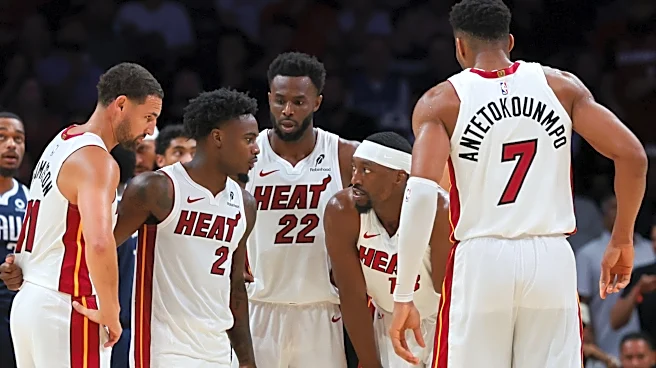


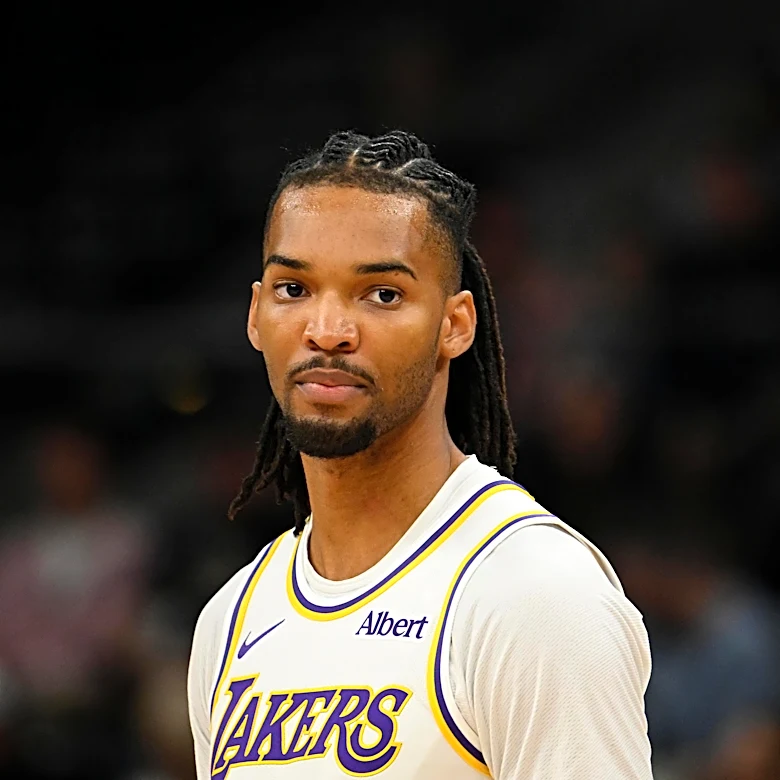


Through four games, Davion Mitchell has arguably been Miami’s most consistent and best player alongside Giannis Antetokounmpo, averaging career highs of 18 points and 7 assists while shooting 54 percent from the field and 45 percent from three. His fast start could turn into a career year and Mitchell holds himself to those expectations.
In an interview with HoopsHype, he opened up about the summer he spent working on himself, the lessons he carried from Sacramento and Toronto, training alongside Stephen Curry, why he believes the game is 90 percent mental and more.

How do you mentally help yourself and your teammates this season?
Davion Mitchell: I’m trying to do my best to encourage them. I’m trying to help them with a different mindset and not look at this as a bad thing. Look at this as a good thing because
when we lose, we can tend to look at bad things, and it can just get worse. It can just get worse. And we’re just uptight, and I think that if we play free, then the misses, the turnovers, they don’t matter as much. I think when we’re uptight, a miss kind of means more in your mind than just a regular miss. Everyone misses shots; everyone turns the ball over. We’re looking at the media, and all the other sh*t that comes up in life, and people have opinions or whatever. So I think we just gotta play free and have fun. Just realize it’s just basketball. It’s a game. It’s a game that we play for our families, for ourselves, ’cause we love the game and just look at it like that.

How have you grown as a leader, and how did you develop your leadership approach?
DM: I think this summer was a big one for me, just working on myself in general. I had to know who I am before for me to be a leader and just to be myself in all situations. I think I was worried about other people more than myself, and that’s when I tend to probably hold stuff in because I know how someone’s gonna feel, but I just start taking emotions out of everything, and it’s really not that big of a deal, but I said we’re playing basketball. We all love this game. But we lost; we got 78 more games to go. I saw this thing on Twitter; it was like we can’t go 78 and 4 without losing four, and that’s a dope way to look at it.

How do you apply lessons from your career stops in Sacramento, Toronto, and Miami to your role here?
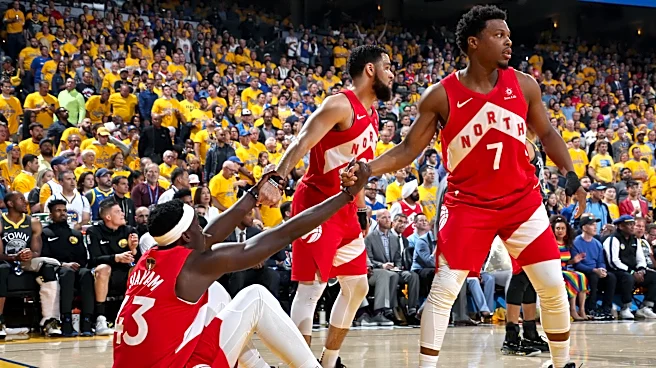
DM: Every part of my career was preparing me for something. And I didn’t realize it at first until you really look at the grand scheme of things in every situation I was in. Even with the Kings, I had to learn how to play more off the ball. When I was in college, I had the ball in my hands more, I got to do what I wanted, whatever. Be the kind of type of guy which is needed to win games and then I had to be off the ball for us to win games and then it just taught me different things that I didn’t have in my game, because what’s the best way to learn something than actually going through it? I can’t just say I can learn how to play off the ball if I’ve never done it, right? So the Kings helped me in that way, and then Toronto helped me just by being a leader, watching them, how they go through things, how they bring everything as a team. Even the pain camp this summer, I got from Toronto because they do a lot of stuff in the summer where they’re all together. And that’s why those teams are always so close. I’m still close with a lot of those people today because it was like a brotherhood. It wasn’t just like, oh, they’re the Toronto Raptors, we got this name. We’re really close friends. So that’s what I took away from them. And then my first year here, it was a shock at first. Then I realized that I belong here. Before I got drafted, somebody asked me what team you want to be drafted to if you could, and I said Miami. I literally said Miami, because I know how they play, I know how their culture is, I know they play hard, I know everything about, I knew about their system in a way before I even got here. And it was just better than what I expected for real.

What is the hardest part about continuing to develop in the NBA?
DM: I would just go back to the times when I was in Sacramento and Toronto, where I was getting DNPs. I was the ninth pick when I’m thinking that I’m gonna play a lot. I’m a Top 10 pick. I was on top of the world, obviously everyone gets in the NBA, but I accomplished something that I’m like dang, I didn’t expect me to be the ninth pick in the league or whatever, but then I had to look at it like these DNPs taught me something. It taught me more about myself, that just because I’m in this situation right now doesn’t, it doesn’t make me who I am. I still work on my game. I played in my mind, like, oh, I gotta play tonight, so I gotta work extremely hard. I worked a little bit harder because I knew I probably wasn’t playing, so in the moment, I just didn’t get down on myself. I just looked at this situation and thought that my opportunity is gonna come somewhere, someplace. Maybe if it’s not the NBA, maybe it’s just a lot of things you can do to get better at.

How does growing in the league later in your career differ from when you first arrived?
DM: One thousand percent. Honestly, I feel like I had all the tools. That’s why I have this thing called Trust My Work, Trust Your Work. That’s kind of just been my thing, just believing, because honestly I feel like I’m the hardest worker in the league. I think mental was the biggest part, and it helped me just because I had to go through a lot of those things for me to even realize that it’s all mental. It was never physical; it was never that I couldn’t shoot, it was never that I wasn’t big enough, strong enough, didn’t jump high enough. It was none of that. It was just always the mental part.

How did you realize your biggest challenge was mental, not physical?
DM: Nah, I just knew I was doing the work, and I knew I was killing it in practice; I was killing it in the workouts, I’m killing it in one-on-ones because I’m not thinking about other things. I’m just, all right, this is practice, so I get the hoop, I’m not thinking of other things, and then when I got in the game, I felt like I was trying to play perfect. And then I knew it was mental because I’m like, I didn’t try to play perfect in practice. I didn’t try to play perfectly when I’m playing one-on-one. I’m just out there playing free, and then I realized that damn, like I’m really putting this game, a basketball game, instead of like practice, I’m making it bigger than what it is. I’m still doing the same thing. It’s still the same goal; it’s still the same ball. It’s just me looking at the whole situation and putting emotion on it, and I had to stop doing that.

How do you guard against complacency and stay hungry?
DM: I don’t think I’m ever gonna be like I’m good. That’s just my opinion. I think there’s always something where I can work on something to get better. Even though I have the best numbers in my career or whatever, I still, like, there’s always room to improve no matter what. So I just think even in the mental aspect there’s always more room to improve, because even I caught myself the other day, I think we played Orlando in preseason, but I missed a couple and I kept going back to 'I have to make a shot, I have to make a shot,' and I’m like, 'no, you really don’t have to make a shot.' You just gotta shoot the shot and kind of, you believe in your work and if it goes in, it goes in. If it doesn’t, it doesn’t, right? It’s just like, miss or make, you’re putting so much emotion on one shot, now I’m tensed up. Now I’m shooting the ball, I’m not, I’m trying to make it so bad that like I’m not even just being free. And I think that being free is, I’m gonna make more shots being free than tensed up and telling myself I gotta make a shot.

Who is Davion the basketball player versus Davion off the court?
DM: Yeah, I created this. I mean also, I have a life coach named DJ, and he helped me create this different mindset, the person that’s on the court. It’s like an alter ego where people call me 'Off Night', but I really call myself 'Off Night' when on the court. I feel like I’m a different player. I’m a different person when I’m on the court than I am off the court. That’s the way I look at it. It helps me because it makes me take out all the history that I have done before. Now I’m just a new person on the court.

Yeah, that’s a good way of thinking.
DM: And he taught me that too, and I’m like, damn, like if I can just have that mindset each game, I’m a new person each game. And each quarter is a new game. That’s the way I look at it. I don’t look at it like, oh, the first quarter I played bad, the second quarter I gotta play bad. I said, no, it’s a new game. It’s a new game. It’s a new game. If I keep telling myself that, then, and I think that it just makes the game just, I’d play free. I have no baggage. I turned the ball over last quarter, I turned it over three times in the first quarter, I missed four open layups in the first quarter? No, it’s like a whole new game. And I know that when I play a new game, I don’t take another game, and I don’t take it with me to the next one. I know I just have a [expletive] short-term memory. I don’t take the last game that we just played against Dallas to Atlanta. I know it’s a whole different game, everything’s gonna be different. And me off the court, I think that me just being free to just, man, just enjoying life and realizing that we do just play a basketball game. It’s literally basketball, right? It’s a game. The most beautiful thing in the world is seeing kids grow up because they have no emotions toward the outside world. They're literally just being themselves. And I can, if I can be a kid off the court and even on the court, I’m free, dude.
I guess when you said you’re reborn, like, it’s so simple. I don’t know if you’ve ever heard of Occam’s razor. The simplest explanation, or the most assumptions are the simplest.
DM: Oh, okay. Yeah.
It’s like you realize that most answers are the simplest.
DM: Wow, that’s crazy. Yeah, yeah.
So when you say that, it’s like being a phoenix. Phoenixes are reborn in their ashes. They catch on fire, they turn into ash, they’re born out of the ashes.
DM: That’s crazy, that’s crazy.
I like that thought process. It’s the next-game mentality: leave everything behind.
DM: Yeah.

Do you think the mental component is the biggest factor for players, given they already have the physical resources to be great?
DM: For sure. It’s all mental. I think that it's probably 90 percent mental and 10 percent physical. I think that, think about the players that, like the Steph Currys of the world, where he’s not the most athletic, he’s not the fastest. The reason why he can shoot so well is because he just doesn't care about if he misses or makes. So he just shoots free. Everything’s just free to him, when he shoots it’s free and he makes most of the shots, where he makes the shots that people like 'oh, that’s crazy,' for him it’s like 'I¡ve been shooting that shot for the rest of my life. I've been working on it. Why do I need to put so much pressure on this shot? If I miss it, I miss it. It’s not the end of the world. If I make it, I will make it.' He kind of just stays neutral and I've trained with Steph over the summer, and I sawhis workouts. Like you never see him like '[expletive], I missed' or just like, he never puts so much on a miss, and I used to do it too and I used to realize when I do it my next shot is probably not gonna be a make, or if it is, it’s just like one of those makes where I’m like, oh, I made it because like I like forced my way into making it, instead of like just being free and just being like, I don’t care if I make or miss a shot. I just gotta shoot it. It’s what a lot of people gotta have, just like a different mentality of how we look at the game of basketball. It’s not supposed to be played perfectly. We’re not supposed to make every shot. It’s the reason why Curry only shot 40 percent. It’s the reason why the best players shoot 30-something percent. It’s like, it’s the reason why the [expletive] best players have the most turnovers, because they’re playing free. They’re playing aggressively. I realize when you don’t really have that many turnovers, because I was doing this last year and people were looking at it as a good thing. For me, I looked at it as if I wasn’t being more aggressive. I didn’t have enough turnovers for me. I was being aggressive, but I was being more passive-aggressive. I wasn’t being aggressive to score and then, oh snap, he’s open, make the play. And I think I'm doing a better job, especially at the beginning of this year, where the assist-to-turnover ratio, that doesn't get you anything. I mean it’s good, it’s good for stats, but it is what it is. If we win the game and I play aggressively and I make the right play for the most part, I’m gonna turn the ball over. I’m human. And I try not to turn the ball over, but I don’t care if I do.
And then circle back, circle all the way back, to the start: it’s just mental. Like you said, instead of everyone pointing to the media, all that, it’s just mental.
DM: It all is mental. That’s why one of my life coaches, his motto is 'life is mental.' When you really think about it, like dang, this life is all mental. We can look at things where it can be really negative, but we also can turn it into a positive. Whatever it really is, negative, you can always, you also turn it into a positive, right? You don’t also have to, even the worst thing that can happen to you, you can look at it like, oh, this is a positive. Something happened. You don’t have to look at it like damn, I feel bad, they’re doing this to me, it shouldn’t happen to me, but nah, like I don’t even look at it like that.
As you said, you can't go 78-and-4 without losing four.
DM: I'm trying to tell you, yeah.
You can follow Cyro Asseo (@CyroAsseo) on X, formerly known as Twitter, or Bluesky. Email me comments, thoughts, or ideas to CAsseo@usatodayco.com.
This content may be blocked in parts of Europe due to GDPR. To use it, connect your VPN to a non-EU country and try again.
We highly recommend that you add HoopsHype as a preferred source on Google. You just have to click here.
This article originally appeared on Hoops Hype: Davion Mitchell Q&A: 'I feel like I’m the hardest worker in the league'