



Italian forward Danilo Gallinari built a 14-season NBA career on elite shooting and resilience, averaging 15.1 points across eight teams after being selected sixth overall in 2008 and reinventing his game following back surgery and two ACL tears. In an exclusive interview with HoopsHype this week, 'Il Gallo' discussed overcoming stereotypes about European players, the Nuggets' 2012-13 season, the Hawks' run to the Conference Finals, the free agency decision he regrets most, his post-playing ventures and more..

How would you say your experience as an international player differed from the current wave of young overseas players entering the NBA?
Danilo Gallinari: I think back then there were more stereotypes about European players. I don't think that nowadays the European guys that are coming up have to go through those stereotypes, and that would be the biggest difference.
Do you think the stereotypes were overplayed, and why did they become so mainstream before being disproven?
DG:
I don't know. It must be something that maybe was born back in the old days of the NBA to have those kinds of stereotypes, culture-wise, to the view that there was in the States looking at guys coming from Europe. But I don't know why. It was more probably a cultural thing back in the day.

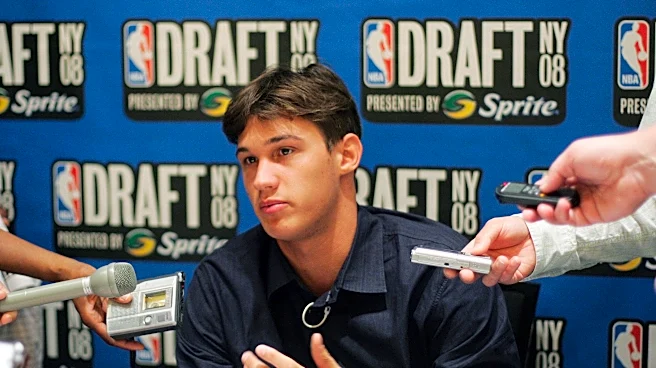
Were you shocked when Knicks fans booed you at the draft. How did you get through that as a young player?
DG: It wasn't a shock because my agent told me, 'Listen, if you get picked by the Knicks, they're going to boo you.' And so I was like, well, okay, I don't care. I was not that I cared much about. I never cared much about what other people said about me, and I knew what kind of player I was. I was very confident, and I was just using it as motivation to show everybody that I was the guy, and so, but he told me I knew it was so.
How did your father's relationship with Mike D'Antoni and the pressure of representing your country help your transition to the NBA?
DG: The process was that they played together. They were very close to each other, so the relationship definitely helped my transition to the NBA. So my transition was smooth also because of Mike, and he helped me a lot transitioning. So I'm glad that I had him as soon as I came to the NBA. And my transition was not easy because I had an injury my first year. I had back surgery my first year, so when you get picked by the Knicks, that also doesn't help because there is a lot of pressure, and I wanted to show right away the kind of player I was, but I had to wait until my second season. But it was a smooth transition because of Mike, tough transition because of my injury, but I think I did in my short time in New York I did a good job.

Do you ever think about how your career might have differed if you had stayed in New York and the Carmelo Anthony trade never happened?
DG: No, I sometimes talk about it. I think about it just with friends and family when we sometimes talk about basketball and my career. We think about it, or when I come back to New York and I talk to my fans or people in New York that still work for the Knicks, we talk about it, but there is a lot of, unfortunately, because of my injuries, there is a lot of what-if in my career. I don't know, I'm probably the biggest what-if guy in the history of the game, maybe. But it's part of an NBA career. It happened to me, unfortunately, more than any other athlete probably, as far as injuries, but I don't think about it too much.
After the Melo trade, did you feel you had to justify being traded for him, and how did you face the challenges in Denver, including the 57-win season, George Karl's Coach of the Year award, and his subsequent departure?
DG: Yeah, when Masai Ujiri and coach Karl talk about it, they blame it on me because I tore my ACL right before the playoffs that season, and then we lost against Golden State, and we were supposed to go all the way to the Finals, and so after the season, if I don't get injured, the season goes differently, and coach Karl being the Coach of the Year and Masai being the GM of the Year maybe they have a different path. The Nuggets have a different path, but that's another huge what-if. But I had a great time in Denver; it was the only team that I played for more than two years. I played there six and a half seasons, so it's definitely the city and the team that I'm closer to. And so I had a great time in Denver.

How did your game evolve after the back injury and first ACL tear? How did you reinvent yourself post-knee injury?
DG: Well, I'm fortunate, of course. I was a great athlete before I got all these injuries, but I was very gifted skills-wise, and so my skills helped me hide a little bit of the wear and tear that my injuries gave to my body. And so there is basketball. There are so many things that you can do, especially offensively, to just make sure that you are an effective player without jumping and dunking like LeBron James. I was always that player in Denver, and so it was great to be able to just be free and play for all those years. Unfortunately, I have never experienced probably my prime because I don't know what my prime could have been. I had back surgery my rookie year, and then I would say my prime was in Denver. When I was in my prime, I had the ACL, so after that, yes, you can come back and still be a very good athlete and player, but I don't know if you can still experience what your prime could have been without injuries. But I definitely had a great time in Denver.
When you played alongside Nikola Jokic in Denver, did you sense that he would become a superstar?
DG: Yeah, I knew he was gonna be a great player. I didn't know he was gonna be a three-time MVP, but I knew he was gonna be a great player, and you could see that the franchise wanted to go in that direction. And it was great to be part of winning teams in Denver, but it was also great to be part of a rebuilding situation. My situation never changed because I was always playing in the starting lineup and being the best player on the team. So nothing changed for me, but it was all great to see these young players develop.

What factors with the Clippers allowed you to have some of your best seasons, despite only making the playoffs once?
DG: It was a situation where it was another rebuilding situation at the beginning; it was not, but then they traded a lot of players during my first year, and so it became a rebuilding situation where, again, overachieving is definitely a motivation, and just being free and being able to play the way that I wanted to play it was a great situation for me.
What was your reaction to being traded to Oklahoma City in the Paul George deal. Did you see superstar potential in Shai Gilgeous-Alexander early on, similar to what you saw in Jokic?
DG: Yeah, you could see it from Shai too that he was going to be a very, very good player. I was older, so I wasn't shocked as I was for my first trade. So I took it just as business, you know, going to the other city and just going to play basketball in another city for another team, so I wasn't as shocked as the New York trade.

What changed under Nate McMillan that sparked Atlanta's Eastern Conference Finals run, what made that run so special, and did you believe Atlanta had a real shot at reaching the Finals?
DG: Once they signed a couple of other players and me, the goal was not rebuilding anymore. It was clear from the team and from everybody that the goal was to be a playoff team. You can expect to win in my first season because playoffs are the goal, but they hadn't been in the playoffs for so many years that already the playoffs would have been a great result.
But then, in my first season, we went to the Conference Finals, and you believe that you can win a championship. So, even more pressure. My second season, having been in the Conference Finals meant you had to be a team that either goes straight to the Conference Finals or to the NBA Finals. Unfortunately, we only made the playoffs and lost the first round, but it was an amazing run. The team was good. But then again, in my third season, they decided to change everything... which wasn't a great choice by the Hawks, but just part of the business.
In your opinion, what was the key difference between Lloyd Pierce and Nate McMillan that turned the team from struggling into one of the best offenses and a clicking unit?
DG: I think we had clearer roles. Nate was very clear on who was going to do what. Role players for us were great, and being able to help Trae Young in the transition, it was great.
From your perspective, was that game where Trae Young sent New York home as wild as everyone makes it seem?
DG: Trae played amazingly. I think that we got to the playoffs with so much confidence that, especially winning the first game in New York, gives you another boost of confidence, and we had the confidence that we could win against everybody.

Is that Atlanta run your favorite career moment or do you have another specific moment you look back on as awesome?
DG: I would say the Atlanta run to the Conference Finals was definitely an amazing moment.
Was there a specific moment in your career when you truly felt like you had arrived in the NBA and realized, 'Damn, I'm in the NBA'?
DG: Maybe my first season. I only played 28 games, so it wasn't my second season that was really the moment where I was able to play a full season and really experience the NBA and especially understand the level and my level. So my second season was more an NBA welcome moment than my first one.

Looking back, do you have any regrets or moments that still sting because you were so close to something bigger?
DG: I think it is all related to injuries, so I always go back to not my back injury with the Knicks, but I always go back to my two ACLs. The two ACL injuries that happened to me happened in the only two times where I played for a championship-caliber team because it happened my third season in Denver and when I signed with the Celtics, which was my only second chance to get to the championship, so those are the only two moments that were not based on something that I did. I got injured, but I couldn't control can't control injuries that much. So it would be those two moments.
Which of your two ACL comebacks was harder, and in your opinion, is the mental or physical process more difficult when returning from such an injury?
DG: I think the second one was definitely tougher because I did it at 34 instead of 24. So when you do it at 24, your body reacts in a different way, so the second one was tougher. And the mental part, I think, is always tougher than the physical part because the body will adapt, will react, but the mind sometimes goes back to the same move that you did that you got injured with, and so it's the mental part.

Did you expect the Celtics to trade you, or did you hope to return and contribute to that team, especially since you felt it was a perfect fit for you?
DG: Yeah, that was really probably the best, yeah, the perfect fit. It was the perfect fit for the way that the team was built, my role off the bench, the way that we lost against Miami that year. It was just the perfect situation. And unfortunately, it would have been great to just play one of the last seasons with the Celtics and win a championship. It was team-wise, and it was the perfect match.
Did the Celtics' trade catch you off guard?
DG: No, they caught me off guard. I didn't expect it, but at the same time, as I said before, being in the business for so long, it wasn't shocking. It's not easy. I told the Celtics too. I said, listen, guys, I would have done the same if I were you. You have a 34-year-old guy coming back from a second ACL, and you had the chance to get Kristaps Porzingis. To me, it was a no-brainer. I would have done the same, so I understand it's no problem, and I actually kept practicing with the Celtics in their facility for months after the trade. They gave me the chance to still rehab in there, so they were very open, and I have a great relationship with Brad Stevens. I would have done the same thing.
Looking back, what was that final season like, playing center for the Wizards and Pistons, joining the Bucks, and being traded multiple times?
DG: It was terrible. That's not the way that's not the way that I wish any player to finish their last season, the way that I finished it. I couldn't control any of it but to play at the five, which I never did and I never will, not even in my dreams. That's not my position. I never played it, and I will never play it, as I said, not even in my dreams, so it was a very tough situation for me to be not just a player on the court but also being in two rebuilding situations like Washington and Detroit.
And then one of the biggest regrets that I have in my career is the choice that I made to go to Milwaukee for one year instead of signing two years with the Clippers, which I don't know if a lot of people know about. I had the chance to sign two years with the Clippers, and I signed one year with Milwaukee. So it's probably, when I think about it, the biggest regret; that would probably be the biggest mistake that I made. Any other choice that I did in my career was, I think, great; that choice, contract-wise and team-wise, was probably the biggest mistake.

Which teammates from your career do you remember most fondly and still stay close with today?
DG: Honestly, a lot of them. I can tell you names from every team that I played for that I still talk to. It's a long list. With all the European guys, we are pretty close. But even from my first season, I had an All-Star Weekend with Al Harrington, who played with me in Denver and New York; Jamal Crawford or Blake Griffin or Giannis Antetokounmpo. I talked to Giannis a couple of weeks ago. I'm pretty close with a lot of guys.

In your opinion, how has European basketball evolved since your time playing there and what differences do you see in the game now?
DG: It looks like there is more talent and, at the same time, more accessibility to the NBA and college.
Do you think NBA front offices still make mistakes when evaluating or bringing over European players?
DG: Yeah, it happens all the time. I talk to Tim Connelly all the time, and he's like, 'Well, they think I'm the best because I was able to get Nikola Jokic, but then I make a mistake, and all of a sudden I'm not the best anymore.' It happens to everybody. When you are evaluating, that's the toughest, maybe the toughest thing to do: evaluate, see the potential, and predict how a player is going to be in, I don't know, three, four, five years. And so it's always tough to do, but sometimes you're right, and sometimes you're wrong.

What do you think has held the Italian National Team back from taking the next step and keeping pace with countries like Germany and France since your generation?
DG: That's a great question, and it's tough to have a clear answer. When I think about the clubs that I played for when I was a young kid, I would say that there were more investments in young programs. The investments now are less, and so when you have fewer investments is a chain where the coaches don't spend enough time with the kids. They have a second job, and basketball is not the main focus anymore. My coaches were with us 24/7. Basketball was what we did other than school. That's what we did all day. So it's tougher to get talent out of the country every year. And then Italian players that are supposed to play minutes in the league, they're not given the chance to play in the first league and go through mistakes and develop. That's another huge problem.
How do you want people to remember your legacy as a player?
DG: I think just a guy who gave everything to basketball and played basketball the right way, a great teammate. And a player that hopefully is a role model for younger generations.
What are you doing now after your playing career, and what projects or aspirations are you currently pursuing?
DG: I have a lot of projects that I'm part of that I'm working on. I work for a company that does study abroad programs. I'm an advisor at Morgan Stanley. I have a tequila company. It's like an exclusive, membership-only tequila. And then I do all these things, being a FIBA ambassador and NBA ambassador. I travel around the world for activities and competitions. There is a lot of stuff.
You sound like a busy man.
DG: And I have three kids, which is the main job.

Who was your GOAT growing up?
DG: Michael Jordan.
Why is that?
DG: Because I guess I grew up in an area where all of us were MJ fans. So it was the guy, and he's still the guy in my opinion.
Who are your current top five players in the league?
DG: Current Top 5, I always, I guess I always go with the old heads first: Stephen Curry, Kevin Durant, and LeBron James. And then I put Anthony Edwards and Nikola Jokic.

Who are your all-time Top 5 players?
DG: I would go with John Stockton; at two, MJ; at three, LeBron James, then Bill Russell, and Jokic.
You can follow Cyro Asseo (@CyroAsseo) on X, formerly known as Twitter, or Blue Sky. Email me comments, thoughts, or ideas to CAsseo@usatodayco.com.
This content may be blocked in parts of Europe due to GDPR. To use it, connect your VPN to a non-EU country and try again.
We highly recommend that you add HoopsHype as a preferred source on Google. You just have to click here.
This article originally appeared on Hoops Hype: Danilo Gallinari Q&A: 'I'm probably the biggest what-if guy in NBA history'