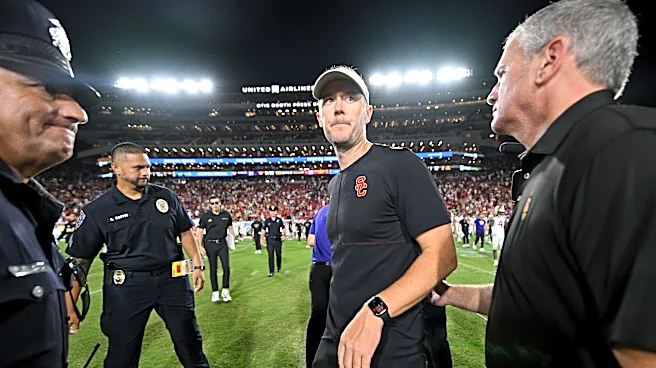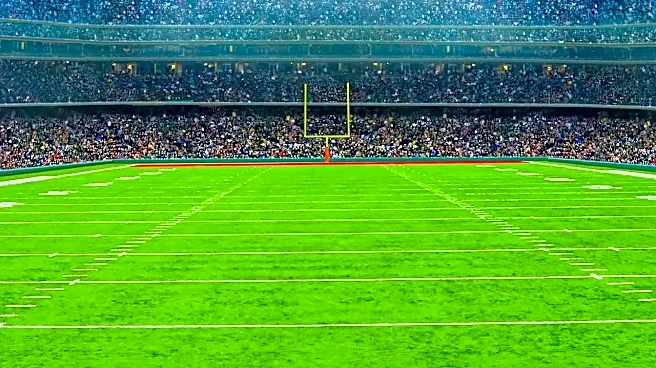

Penn State's whiteout week is here and USC will be making its first trip to Beaver Stadium in over 30 years. While Penn State has been scuffling through the last two weeks and slumping out to a 0-2 start in Big Ten play, USC has had their own concerns this season. USC may not have the same degree of problems Penn State is working through right now, but the pressure may be on for head coach Lincoln Riley and the Trojans.
We reached out to Trojans Wire to get a little bit of a behind the scenes look at this week's opponent for Penn State. Lead writer Matt Zemek was kind enough to spend some time providing some answers to questions we had about USC coming into this weekend's matchup in Happy Valley under the lights. Here is what Matt had to say
about USC.
Nittany Lions Wire: USC's defensive struggles have seemed to be a consistent theme this season. Is Gary Patterson in over his head with the Trojans or is it just a work in progress?
Matt Zemek: Gary Patterson is inheriting a broken Lincoln Riley culture. Lincoln Riley has never taken defense seriously, and now that he's not at Oklahoma in a weak Big 12 where Texas is not good (that was the situation he had in 2017, when the Longhorns were stumbling), he is running into a brick wall in the Big Ten. Lincoln Riley came to college football as a gifted offensive coordinator who could win games 59-52. In his prime years as the head coach at Oklahoma, he could still win that way. No Big 12 defense was good enough to stand up to him.
Now, in the Big Ten (and this was true in the Pac-12 with Utah and Oregon), Riley can't win 59-52 games anymore. They don't exist. The defenses are better. So, Riley has his shootout-centric style of play in a conference which won't allow for it. Riley doesn't demand elite toughness or physicality on defense. Gary Patterson is being asked to work within a broken model. That's what is truly going on here. The head coach has to insist on defense. Riley does not. It really is that simple.

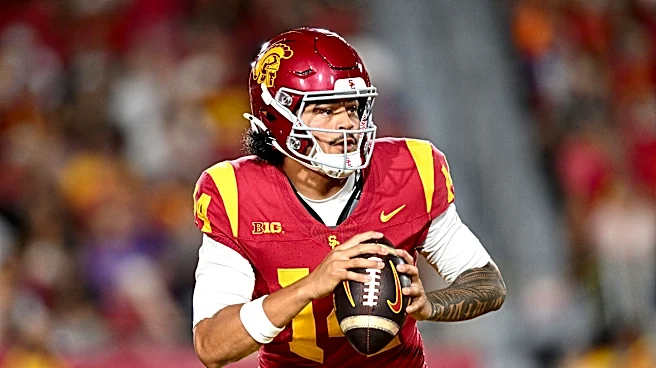
NLW: Jayden Maiava continues to rack up Big Ten-leading passing numbers, but what concerns (if any) may there be this week against Penn State?
Matt: Jayden Maiava looked off against Washington. He wasn't hitting precise targets. He wasn't on the same page as his receivers. USC really misses Trent Mosley, a dynamic and electric receiver who dazzled in the first few weeks of the season but missed the Rutgers, Oregon and Washington games. The Trojans badly need him against Penn State, so watch for his name on the injury report. He had a Jordan Addison-like ability to gain separation from corners and stretch the field so that secondaries became scattered. The other player who missed the Washington game, and whom Maiava really needs back, is tight end Mark Bowman. He isn't the playmaker Mosley is, but he blocks, he gets open on shorter routes, he draws the attention of linebackers and safeties to free up receivers elsewhere on the field, and he has improved as the season has gone along. If neither Mosley nor Bowman can play at Penn State, I like the Nittany Lions' chances.
NLW: As a team, USC's overall rushing numbers are actually below Penn State's so far this season (yards per game, average yards per rush), but King Miller is among the Big Ten's leading rushers. What role does the run game serve for USC, which is seemingly reliant on the passing game?
Matt: You have hit on something very important with the USC run game. King Miller bulked up in the offseason. He is a stronger, tougher runner who pounds out two yards on 3rd and 1, and that's obviously a good thing, but the bulk has come at the expense of less speed. USC running backs are not hitting home runs this year. It's one of USC's biggest offensive problems. This team doesn't hit 70-yard touchdown runs, and it doesn't get 70-yard touchdown passes, either. The offense has very few plays of over 40 yards through five games. It's far too much three yards and a cloud of dust. USC really misses projected starting center Kilian O'Connor, who was knocked out for the season with an injury in August, before the season began. The offensive line just doesn't have its five best players and its best overall configuration. The running game has paid a price. Right now, it's definitely a pass-first offense, and the running game's job is to convert 3rd or 4th and 1.

NLW: Wide receiver Kayden Dixon-Wyatt has wasted no time leaving his mark in the USC offense. Just how dangerous is he?
Matt: Dixon-Wyatt was amazing with Mosley on the other side of the field to demand attention from opposing secondaries. When Dixon-Wyatt and Mosley are both on the field, secondaries have to pick their poison, and KDW was able to get open often. If you watched the Washington game, Dixon-Wyatt wasn't nearly as effective with Mosley and the aforementioned Mark Bowman out. The field shrank, and Washington - for all of its many problems and its many roster deficiencies - is annually strong at cornerback. That's the one roster spot the Huskies always manage to figure out each year. Dixon-Wyatt and the other USC receivers did not gain separation from the Washington corners. This magnifies how important it is for at least one of Mosley or Bowman to be back for the Penn State game.
NLW: It is time to address the obligatory Lincoln Riley hot seat topic. How much pressure is he under to reach the Big Ten championship and/or College Football Playoff this season?
Matt: It's Year 5. That's the center of the conversation right now for Lincoln Riley. Imagine Penn State or Ohio State or Alabama or Oklahoma or Georgia going five years without making the playoff. That would rightly be considered unacceptable at those schools. USC can't be taken seriously if Riley misses the playoff yet again and gets a Year 6 in 2027. It really is that simple. The buyout is believed to be near $70 million, which is of course prohibitive, but athletic director Jennifer Cohen should obviously be in the process of negotiating that buyout down significantly.
The Washington win was a terrible game for Riley and USC. Students were chanting "Fire Lincoln!" during the game, especially when Washington took a 21-10 third-quarter lead. No rational person would say USC, despite its 5-1 record, looks like a playoff team. Ohio State and Indiana look four touchdowns better than USC right now. If the Trojans do beat Penn State (which I doubt they will), they will still have to beat one of OSU or Indiana plus Bob Chesney's UCLA to make the playoff. That doesn't seem likely. The pitchforks are out, and they should be.
NLW: What would be the biggest concern for USC this week against Penn State? Also, what is its biggest advantage over the Nittany Lions, from a USC perspective?
Matt: The biggest concern going to Penn State is that Lincoln Riley's USC teams have been absolutely awful in Big Ten road games. Remember: Riley lost at Maryland in 2024. He lost at Minnesota. He lost at Illinois last year. Even when USC has won Big Ten road games, the team has never played well. Last year's road win at Purdue was an ugly, sloppy performance. The same goes for this year's seven-point win over a terrible Rutgers team Indiana drilled Saturday night. USC just does not play well in Big Ten road games. Lincoln Riley has been flailing and failing for two-plus seasons, and this year's Rutgers game offered zero evidence anything will change in USC's third year in the Big Ten.
The biggest advantage USC has over Penn State is very simple: talent. USC has guys who will play on Sundays, mostly on offense. Jayden Maiava is a better quarterback than Arch Manning (and a lot of others are, too, but Maiava should be included). Elijah Paige is an NFL-caliber offensive lineman. If Mosley and/or Bowman play, those are two future NFL studs. Meanwhile, I never really bought into Penn State going into this season. Iowa State was not that great a year ago, and crucially, Jon Heacock - Matt Campbell's trusted and proven defensive coordinator with the Cyclones - retired instead of joining Campbell in Happy Valley. Heacock was a huge part of ISU's success, so Campbell's inability to bring him along to State College struck me as a big deal. USC clearly has more talent, but the Trojans under Riley regularly lose Big Ten road games to less talented teams, so I'm picking Penn State. It's a game in which Lincoln Riley has earned zero benefit of the doubt. He has to prove that a leopard can change his spots.
NLW: If you have a prediction or final thought to share, fire away!
Matt: My main overall thought about this game is that it really is the perfect test for both coaches. Lincoln Riley has the talent but can't do jack squat in Big Ten road games. It's the kind of game which, if he loses it, should get him fired. It's the precise kind of test Riley has flunked often at USC, so if he wants to keep his job, he needs to finally pass this test in Happy Valley. Meanwhile, Matt Campbell went against Lincoln Riley often in the Big 12 when Iowa State played Oklahoma. Iowa State frequently gave OU and Riley problems (though that was with Jon Heacock as the defensive coordinator going up against a Riley Sooner offense).
Campbell is used to coaching against Riley with less-talented players. It's in some ways a sweet spot for him. He loves coaching against Riley as an underdog. It's the perfect "get right" game for Penn State, playing a team which historically steps on a rake every time it plays a Big Ten road game. Penn State fans are right to be angry at the state of the program right now, but USC could be the ideal get-well tonic for the Nittany Lions and their first-year coach. It's going to be a fascinating game because both coaches are under heavy fire, and we are all waiting to see how they respond (and how well they prepare their teams for battle).
Thanks to Matt Zemek of Trojans Wire for helping us out this week with our Behind Enemy Lines series. For more coverage of all things USC, be sure to check out Trojans Wire.
This article originally appeared on Nittany Lions Wire: Behind Enemy Lines: USC expert talks Penn State's next opponent