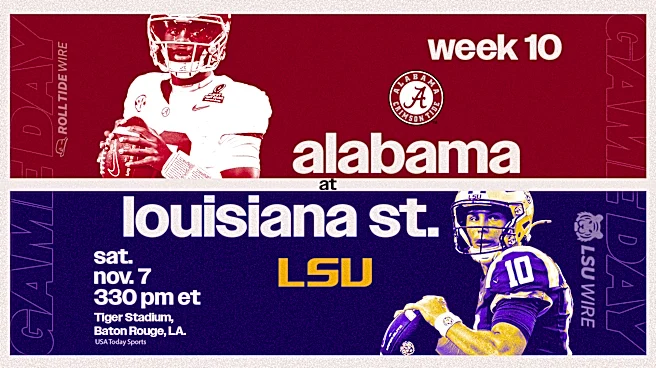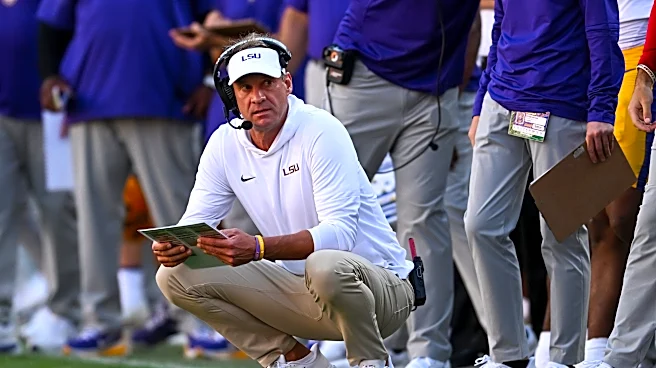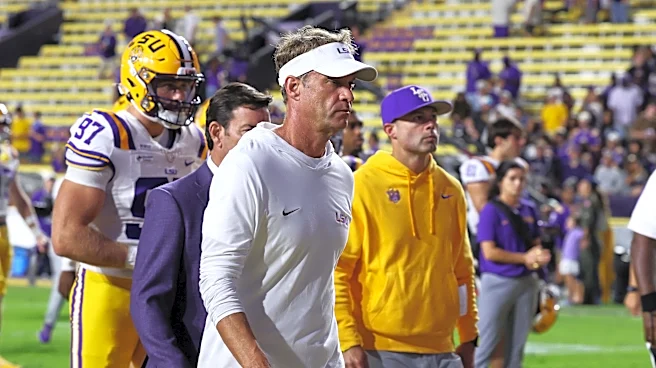

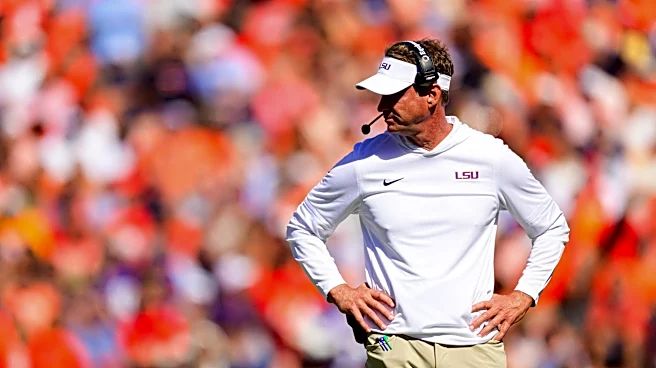
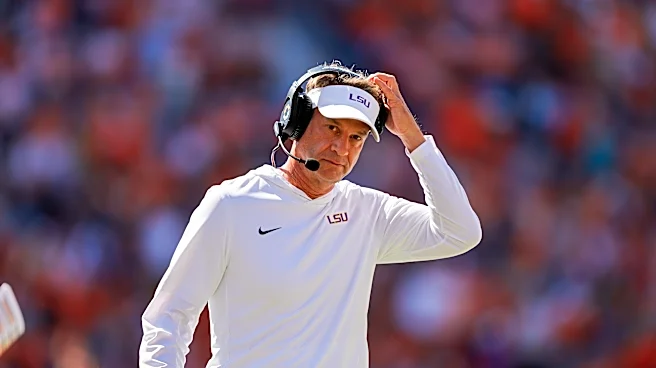
LSU's offense played its worst game of the year vs. Alabama. The Tigers only scored 13 points -- the previous season low was 24 points. LSU posted a negative EPA/play, which was a first for Lane Kiffin's 2026 offense.
LSU finished the day with 457 total yards, but it was a lot of empty production. LSU didn't finish in the red zone, and when LSU needed to make clutch plays in the second half, the offense went quiet.
A lot went wrong for the LSU offense. From poor offensive line play to an inconsistent quarterback, it's hard to pin this loss on one thing. This was a group effort.
LSU's offense has a lot to figure out before another staunch defense rolls into Tiger Stadium next week. A 7-2 Texas team is on the schedule in Week 11, and Will Muschamp's
Longhorn defense is arguably the best in the SEC.
Before the page is turned to next week, let's take a look at where things fell apart for the LSU offense vs. Alabama.
LSU regrets not finishing its first drive
LSU drove the field on its opening drive and was in position to score with goal to go. Instead, the Tigers settled for a field goal. This has been an issue for LSU all year -- the Tigers rank outside the top 100 in converting goal-to-go situations into touchdowns. This is confusing given how effective this unit is elsewhere on the field.
On first and goal, Alabama stuffed and LSU run with right guard William Satterwhite getting beat. LSU tries a QB draw on second and goal, but left guard Aliou Bah gets beat, and LSU can't block Caleb Woodson at the second level. On third and goal, Alabama DC Kane Wommack dials up a blitz, and Alabama gets an unblocked blitzer coming off the edge. That speeds up the play, and Leavitt throws it away.
On three straight plays, Alabama's front seven got the best of LSU. Consistent red zone teams often rely on the offensive line as they approach the red zone. LSU's front five isn't good enough to count on right now, and it was the crux of LSU's failure to finish the opening drive with a touchdown.
Pass protection was an issue
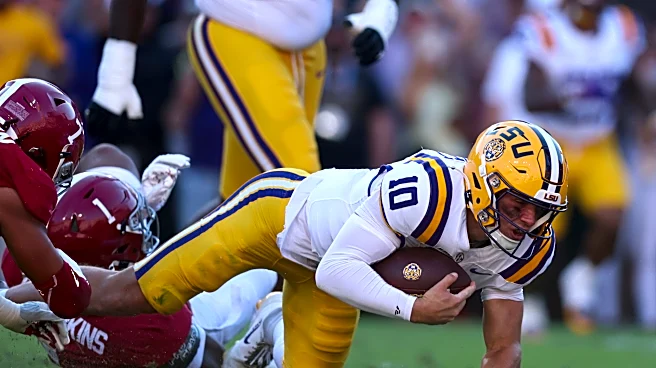
LSU's offensive line struggled to keep Sam Leavitt clean. LSU's second drive stalled when Leavitt was sacked on second down inside Alabama territory. Bama got home despite only rushing three.
LSU's fourth drive ended when Alabama rushed six on fourth down, and an unblocked Bama defender tipped Leavitt's pass. This wasn't necessarily Alabama's DL beating LSU's offensive line, but Bama was in the right call, and LSU didn't have the numbers to pick up the rusher.
In the second half, when LSU went for it on fourth and long inside its own territory, Alabama iced the game with a sack.
When Leavitt was kept clean, he averaged 9.3 yards per attempt with an adjusted completion percentage of 91.7%. Under pressure, Leavitt averaged just 2.6 yards per attempt and threw a pick.
Leavitt will get a fair share of the criticism for LSU's offensive letdown, but the offensive line wasn't up to the task.
QB Sam Leavitt left yards on the table
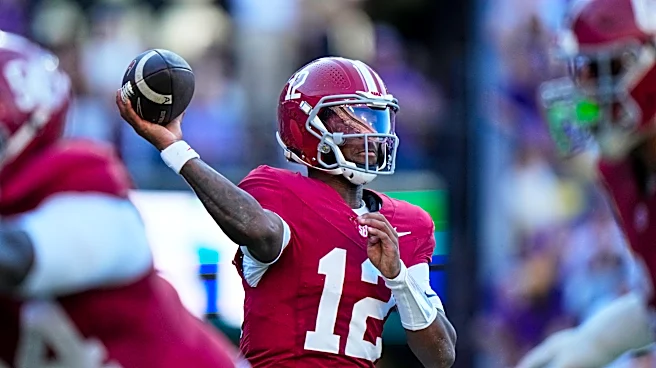
Now for the role Leavitt played. Sam Leavitt threw for 380 yards, but this was far from his best outing. Let's go back to the sack on LSU's second drive. Yes, the line shouldn't let a three-man rush sack the quarterback. Yet, the sack came after Leavitt missed an open Trey'Dez Green on a shallow crosser.
Watching the film, it looked like Leavitt's process was sped up, and with a little more patience, Leavitt would have seen Green and delivered the ball for a first down.
I think Leavitt played better than the social media narrative suggests, and the offensive line was a much bigger problem. Still, LSU could have used some big-time throws from Leavitt on Saturday.
The drive after Alabama went up 17-13
LSU took the lead in the second half, going up 13-10 with a Dilin Jones touchdown run. The lead didn't last long with Bama responding and going up 17-13.
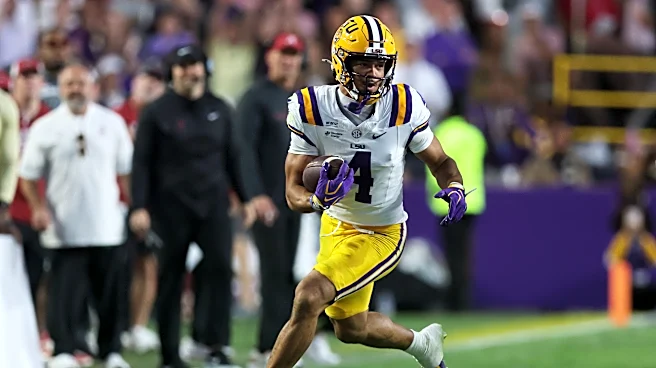
LSU's offense got the ball back, and for a moment, the Tigers were in business. Leavitt found Jackson Harris for a nice gain on a dig route. A few plays later, Harris moved the chains again with a catch-and-run.
But after LSU crossed the 50, the drive stalled. Alabama LB Luke Metz went unblocked on a second-and-five run. On third and five, Metz was unblocked again, this time on a QB draw. That set up a critical fourth down. Like LSU's failed fourth down earlier in this game, Leavitt's pass was tipped by a Bama blitzer.
This series was critical. If LSU converts, the Tigers are driving the field with the chance to take the lead back, or at least put three more points on the board. Even if LSU only gets a field goal here, Alabama's next touchdown keeps it a one-score game. Instead, it was another trip inside Alabama territory resulting in zero points.
Alabama's defense gets critical short-yardage stop
LSU's defense held after the aforementioned drive and got LSU's offense the ball back, with the Tigers still down four. However, a three-and-out gave the ball right back to the Crimson Tide, and that's when Alabama took its two-score lead.
On the third down in question, LSU went to its typical wildcat look. Alabama knew what was coming, and Dilin Jones was stuffed at the line of scrimmage. The Alabama defensive interior line caved in LSU's offensive line, and there was no room for Jones to even get a yard.
LSU's failure to establish a consistent run game hurt the Tigers all day. LSU finished the game with just 2.3 yards per rush, which put all the pressure on the passing game.
This article originally appeared on LSU Wire: Five things went wrong for LSU football's offense in Alabama loss