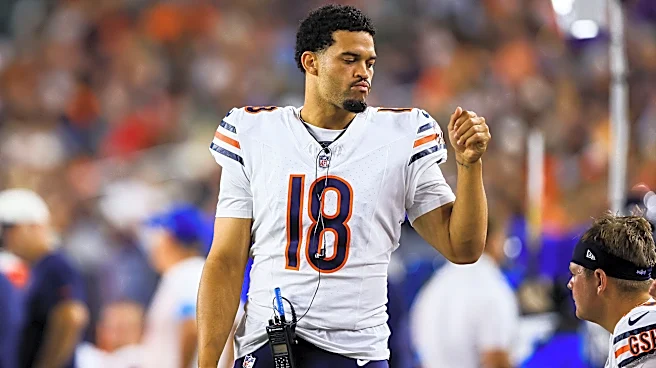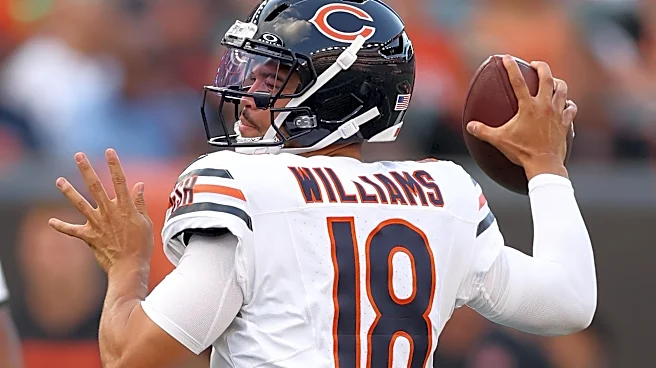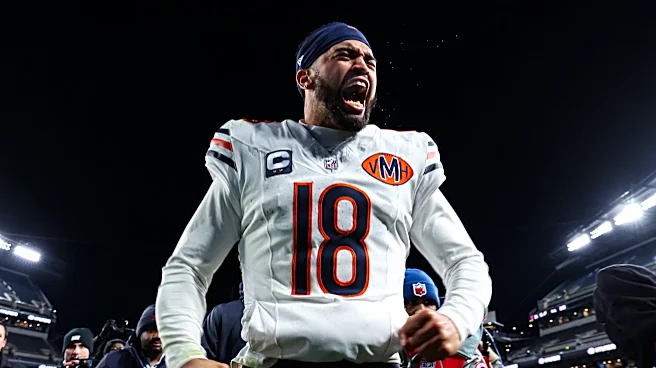



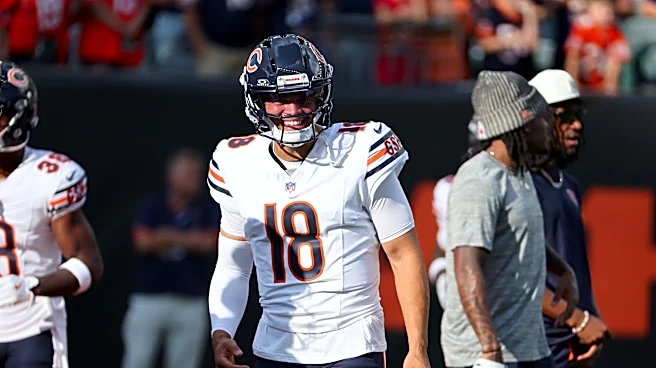
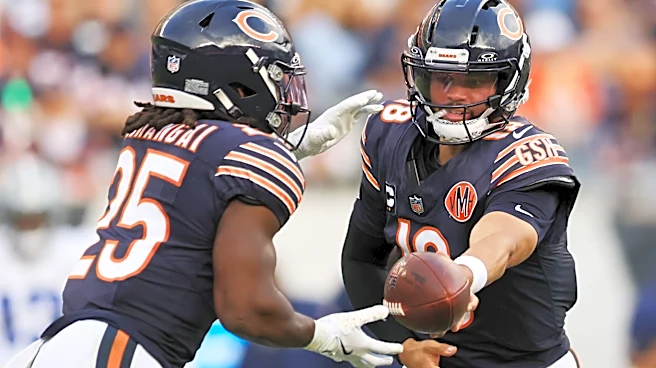
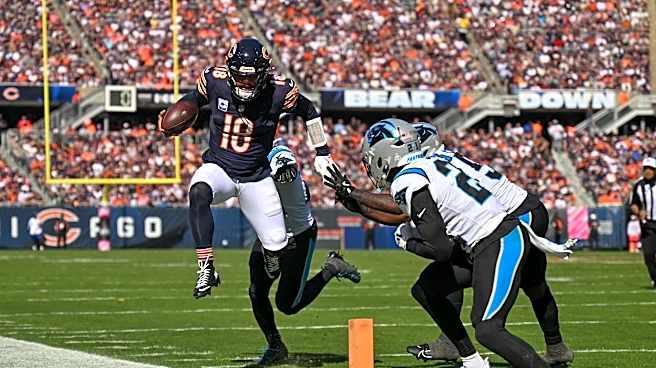
A serious team requires serious stats by which they'll be evaluated. Over the last calendar year, the Chicago Bears have become a serious team led by a serious head coach in Ben Johnson and a serious quarterback in Caleb Williams. Which means that the world of analytics in football will be more relevant for them in 2026 than we have perhaps seen in years past.
While not as robust (or widely utilized) as their counterparts in the baseball world, advanced stats have progressively become more relevant for the NFL and its players in recent years. Pro Football Focus is sort of a driver of this increase, and it's here that we begin our journey into this world.
PFF, as it's known colloquially, assigns a grade for every action that a player completes
on the field. These grades occur on a scale from +2 to -2, with zero representing the average in between the two ends of the spectrum. These grades don't just occur in a vacuum, either. Positional context and the game situation itself are each taken into account as part of where a given play lands on the scale.
From there, an intricate process (above our paygrade) converts their raw score into a bigger grade on the 0-100 scale which makes our lives easier for the purpose of ranking and comparison between players at a given position both within an individual game and over the course of a season.
As far as individual Bears go on this scale, Caleb Williams' overall grade of 76.9 last season had him tied with Bo Nix at 13th for the position. As a passer, though, he ranked 19th (72.2) while he sat third when putting his legs to use (82.1). Other relevant grades for the Bears in 2025 include D'Andre Swift (ninth among running backs at 83.0), Colston Loveland (third at tight end with an appropriate 84.0 grade), and Montez Sweat (37th among edge defenders at 72.4).
Each week, we'll take a look at where key players and individual standouts fell on gameday. But the analytics fun doesn't end there.
NFL Savant plays host to a number of stats that help to quantify play in a way that isn't always completely visible on the stat sheet. Expected Points Added (EPA) has become a noteworthy stat in the NFL community, measuring how a play impacted a team's expected points. It's a context-driven stat that takes into account the game situation as well as the result of the play itself.
While EPA represents the most comprehensive way to evaluate a player's performance, each position also features a fair bit of nuance. Quarterbacks can be broken down into such qualifiers as EPA per dropback or expected completion percentage, giving us ways to evaluate Caleb Williams in Year 3 beyond the standard items. Backs and receivers are measured in this sense by such concepts as their rushing yards over expected attempt and separation, respectively. Explosive plays are also a factor here.
The NFL's Next Gen Stats is a third resource we'll incorporate over the course of the season. There's plenty of overlap here with the information provided by NFL Savant, but there are a couple of notable differentiators. First is the fact that we'll be able to navigate some unique outcomes during the Bears' season. Fastest ball carriers, fastest sacks, longest plays, and remarkable rushes (characterized as rush yards over expected) are all elements that will come from Next Gen Stats.
Additionally, Next Gen Stats has a couple of new metrics rolling out this season. Noteworthy among them are run scheme classification & an upgraded version of their route classification model will allow us to get beyond pure outcomes and look at how process unfolded in the most tangible way possible.
Each week at Bears Wire, we'll parse through many of the analytics from the team's most recent game. Individual standouts, worrisome performances, and what impacted the Bears' fate on a given week will be an area of focus as we traverse the analytical sphere. Worry not, as context will be provided each time out both in terms of the language and the decision of which tools will be used each week.
Follow Bears Wire on Twitter, Facebook and Instagram
This article originally appeared on Bears Wire: Advanced stats you need to know for the 2026 Chicago Bears