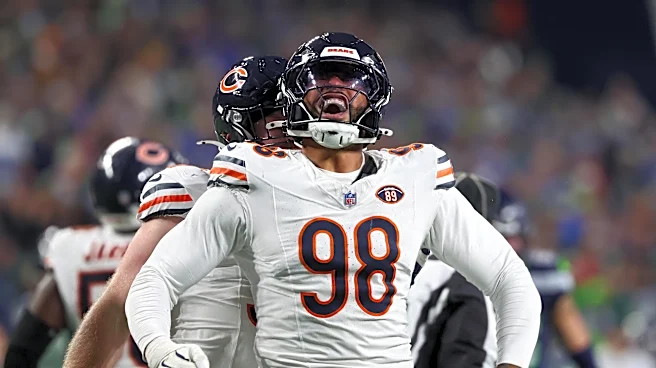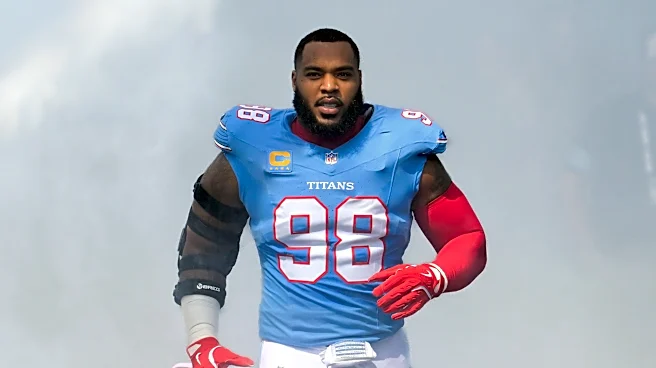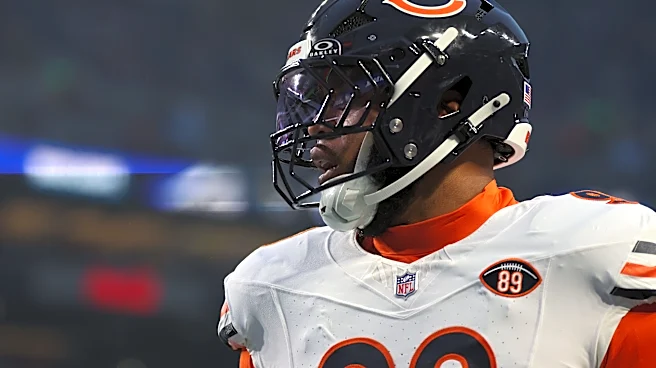


One would be hard-pressed to find something that didn't go well for the Chicago Bears in their Monday night victory over the Seattle Seahawks, regardless of phase. But given the magnitude of the trade they made the Thursday prior in acquiring defensive tackle Jeffery Simmons, much of the focus coming in & out of that game came on the defensive side of the ball.
For their part, the defense very much did their job in the 34-17 win. They stifled the run game entirely and were consistently in the face of Sam Darnold, never allowing Seattle to gain traction in their offensive operation. A heavy volume of that, whether tangible or not, can be attributed to Simmons. Luckily, we have exactly the sort of numbers that can help us to quantify just what
his impact looked like in his Bears debut.
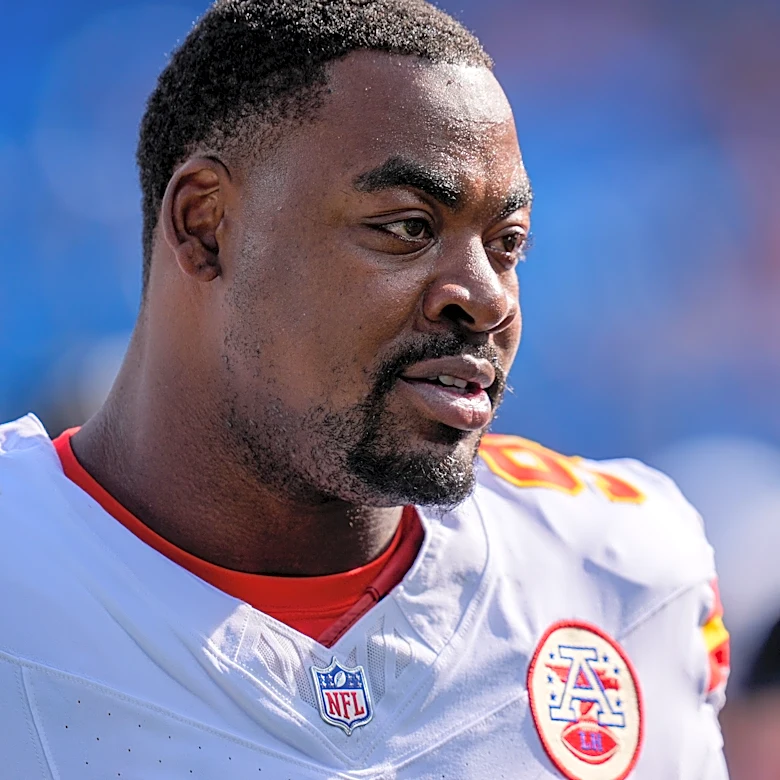
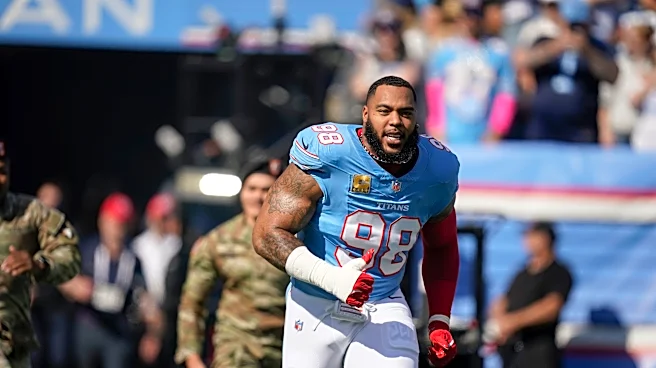
Simmons logged work on 85.7 percent of the snaps (48 of 56 defensive snaps). As far as individual output goes, he had six tackles, a sack, and a QB pressure at the close of business. Four of those tackles were deemed "stops" wherein Simmons prevented the Seahawks from staying on schedule or adding to their success rate. It's a solid start made even more impressive by the fact that Simmons was double-teamed 13 different times.
Obviously, that individual performance — and the intangible quality of the energy provided by his addition — translated into success for the collective. The Bears held Seattle to -0.28 EPA per pass play and -0.17 EPA per rush attempt. They were at -0.16 EPA per play overall, with an offensive success rate of just 31.6 percent (they're at 40.9 percent for the year).
Schematically, defensive coordinator Dennis Allen was far less inclined to blitz than we'd seen in the weeks prior. The Bears only blitzed at a 20.5 percent clip; they were up over 30 percent the week prior and blitzed more than 50 percent of the time two weeks ago. It's a telling stat that changes the entire complexion of how Allen can run his defensive moving forward.
More than anything, Monday's game was indicative of just how essential Simmons presence can be moving forward. When Simmons was on the field, the Bears allowed just 3.0 yards per play and a 25.0 percent success rate. When he wasn't, the Seahawks managed to generate 13.3 yards per play and a 62.5 percent success rate.
It's hard to overstate just how impactful Jeffery Simmons was for the Bears from the jump. With another primetime game on deck this week and a difficult schedule beyond that, replicating that performance (both on Simmons' part and the collective) will be absolutely essential.
Follow Bears Wire on Twitter, Facebook and Instagram
This article originally appeared on Bears Wire: Breaking down the numbers from Jeffery Simmons' Bears debut