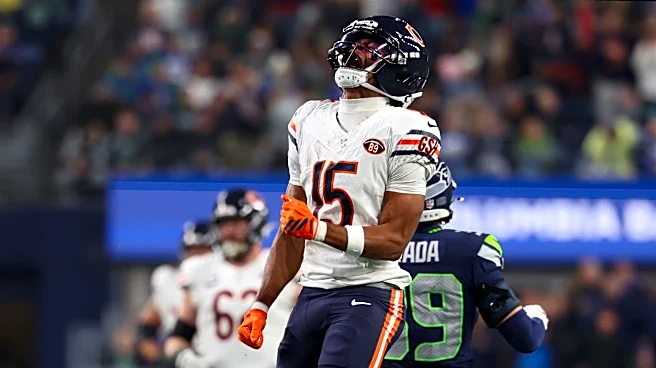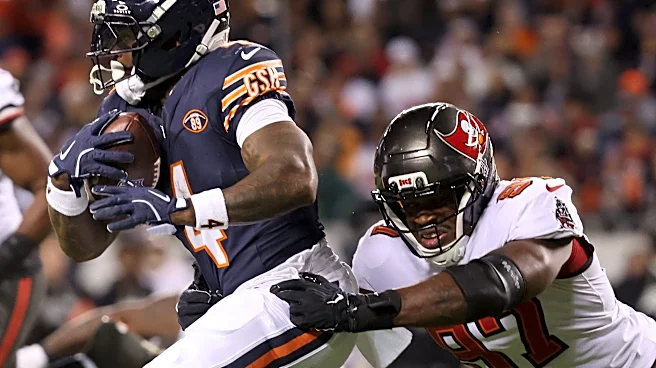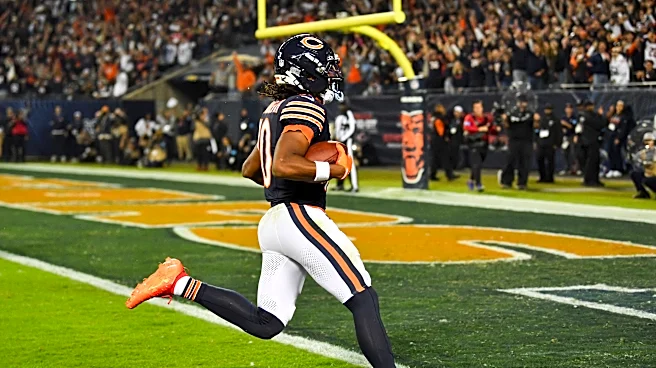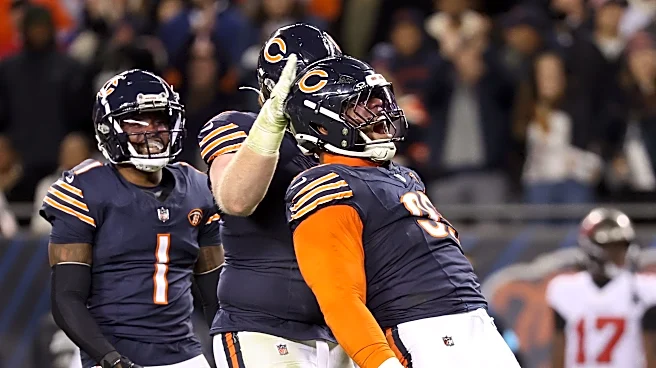


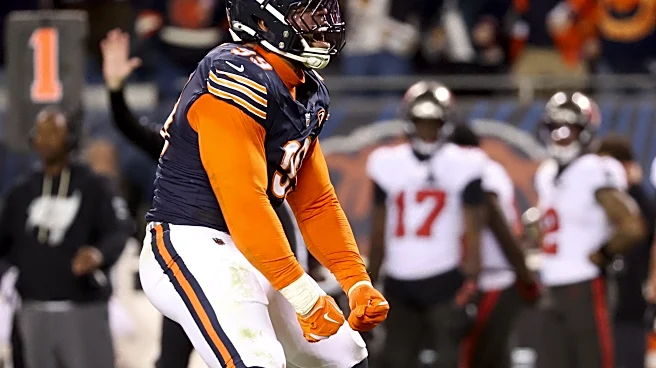
The Chicago Bears may have hit their bye week with one of their worst offensive performances of the year, but that shouldn't completely overshadow what had otherwise been an exceptional first half of the season for the unit.
As of this writing, the Bears rank first in the NFL in total yards (3,447), seventh in passing yards (2,169), second in rush yards (1,278), and third in points (241). They're in the middle of the pack (15th) in yards per play (5.4) while sitting 13th in EPA per pass play (+0.07). They also rank 11th in explosive plays (9.8 percent) and eighth in overall success rate (47.0 percent). It's an upper tier unit by a number of metrics with plenty of room to grow as players like Kyle Monangai get healthy and the team adjusts to the key
absence of a player like Cole Kmet.
Given our spot in the calendar, let's take a look at where the Bears offense sits in each phase through an analytics lens.
Quarterback
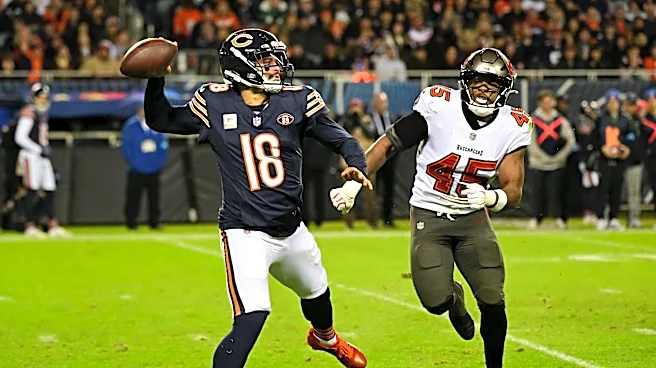
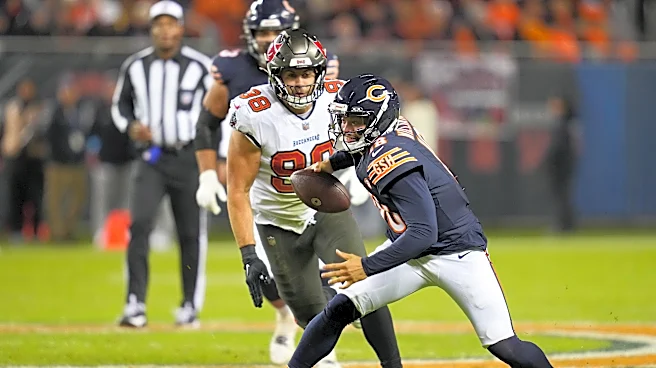
One of the more notable outcomes of 2026 thus far is the untrustworthiness with which Pro Football Focus grades have been treated given where they rank Caleb Williams through his first six games of the season. While Williams missed three games with a hamstring injury, PFF's 20th overall grade among signal callers reads as particularly unfavorable against what the eye test has shown us throughout that early sample. Interestingly, it's Williams' run grade (59.7) that has him pinned down more than the pass (73.8). That speaks to more on-schedule plays and a mild reluctance to run following the injury, but also provides at least some confirmation about how tough it can be to lend merit to those grades
Regardless, there are more tangible aspects of the analytics that can illustrate Williams' impact through six games. He ranks ninth in EPA (+28.0) and seventh in EPA per dropback (+0.12). His 68.7 percent completion rate trails only Joe Burrow & Brock Purdy among qualifying quarterbacks while his +3.0 completion percentage over expected checks in at the eighth spot.
Williams has also been blitzed more than any other quarterback in the league (51.5 Blitz%) while operating under pressure 38.9 percent of the time (10th). That he sits near the bottom of the league in tight window throws and is still putting up such overwhelmingly positive EPA figures speaks to his increasing comfort in the system as well as the success for which Ben Johnson's scheme sets him up.
While his two backups (mostly) did well to hold down the fort in his absence, neither of Tyson Bagent (-0.12 EPA/Dropback) or Case Keenum (-0.15 EPA/Dropback) offered too much in the way of noteworthy contributions. Their two wins in three games will have to do in analytics' stead.
Running Back
It's difficult to get a clear picture of the Bears' run game in the continued absence of Kyle Monangai. While they do sit near the top of the league in rush yards overall, much of that work was also done early when each of D'Andre Swift & Monangai were consuming the majority of the team's carries.
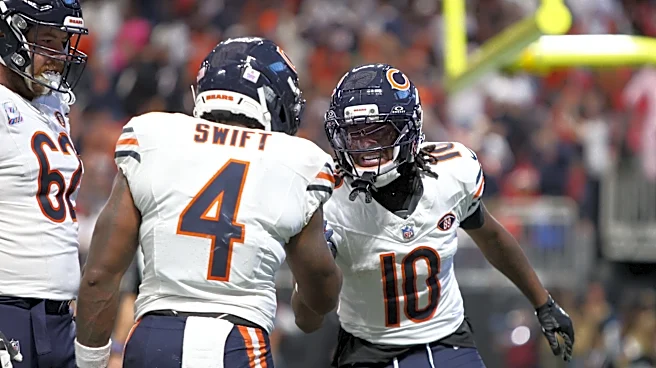
Without his running mate over the last five weeks, Swift has struggled. His rush yards over expected is at -75 overall and -0.5 per attempt. His overall rush EPA sits at -17.0 (-0.11 per attempt). His 39.4 percent success rate has him narrowly in the bottom half of the league (22nd of 43 qualified backs). It's been tough sledding without the contrast that Monangai offers in the power run game.
When Monangai was healthy, he was posting much more favorably in the eyes of the metrics. He was at +66 ROYE (+1.2 ROYE per attempt) and featured a 3.7 EPA (+0.06 per attempt). His overall carry average sits at a very appealing 5.4 to Swift's 3.7. He also hadn't lost a fumble in his work prior to the injury while Swift had lost two.
The point isn't to compare the two of them. Their combination is a collaboration rather than a competition. However, it does speak to the impact that his absence has had on Swift. Without Monangai, the Bears are operating with a smattering of various fill-ins. That leaves Swift to handle the runs that aren't necessarily within his skill set. Monangai's return should help to get this unit back on track considering where his individual metrics land.

Wide Receiver/Tight End
Without even looking at the analytics, it feels like pass catchers are a group on which we're still waiting to find their footing. In terms of raw production, though, Luther Burden III ranks 13th in the league in receiving yards (644) while Rome Odunze sits 21st (528). They've accounted for five touchdowns combined, though Burden represents four of those. The metrics for each also look quite favorable.
Burden possesses a catch rate over expected of +6.4 percent while Odunze is at +3.1. Burden carries a +0.03 EPA per target, with Odunze a touch higher at +0.41. The biggest difference between the two outside of those numbers lies in their catch rate. While each has been above average in their ability to reign in catches and make meaningful contributions, Burden's 74.2 percent catch rate sits ninth among qualifying receivers. Odunze, meanwhile, is down at 43rd (62.7). A number like that indicates that Odunze will need to make the routine look a bit more so given some of the more impressive catches we've seen him make throughout the year.
Mixed in with that receiver group is Kalif Raymond, who has been exceptionally solid in the slot for the Bears. He's at +0.24 EPA per target and a 78 percent catch rate. His CROE is also up at 4.8 percent. The difference between Raymond and his comrades in the Bears' receiving corps is his role in the middle of the field. Often working with short routes — 28 of his 32 receptions have come at a range under 10 yards — Raymond has excelled.
The biggest struggle from Bear receivers on the analytics side has come out of Colston Loveland. That hardly reads as a surprise given his overall production against what the expectation was. His CROE is below average at -2.6 percent with an EPA per target of -0.09. While he's been able to get more separation than either of Burden or Odunze (3.9 yards on average), it just hasn't translated into the level of production that was expected.
Offensive Line
Linemen represent a more difficult position to gauge in the absence of the kind of stats volume that their peers on that side of the ball possess. PFF grades have at least a little bit of validity here, especially considering the right side of the line each rank in the top five at their position. Jonah Jackson is the league's fifth-ranked guard (83.1) while Darnell Wright sits third among tackles (85.9). Theo Benedet has been thrust into a larger-than-expected role and has held up quite well, checking in at 23rd among 71 tackles (71.3). Joe Thuney has been varying shades of solid as well, sitting 23rd himself among the league's 75 guards (69.3).
Benedet (92 percent) and Wright (90 percent) each sit in the top 11 among tackles in pass block win rate while Thuney sits in ninth among interior linemen (93 percent). Interestingly, center Garrett Bradbury also features in the latter list, sitting 12th (92 percent). What makes that last bit particularly interesting is that Bradbury has represented the team's biggest source of struggle on the line both in terms of his PFF rating (60.8) and his team-leading five penalties.
Overall, the Bears have found success running outside and to the tackle spot on the left, to the tackle spot on the right, and over the right guard Jackson. Each of those areas features a positive EPA per attempt. The struggles tend to manifest in the form of those middle runs to the left and outside to the right. One imagines that the return of Monangai's style should be helpful considering the line's collective success elsewhere.
Follow Bears Wire on Twitter, Facebook and Instagram
This article originally appeared on Bears Wire: Breaking down the Bears' offense at midseason through the analytics