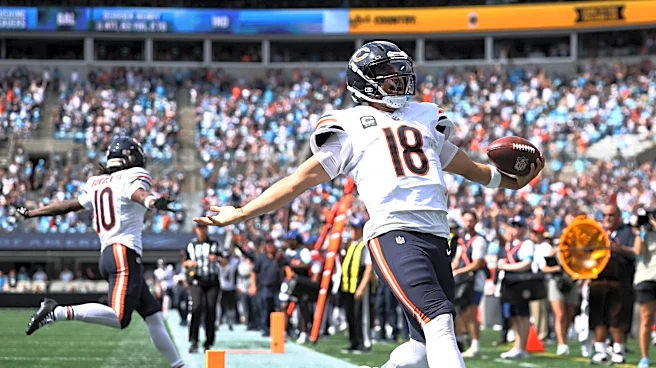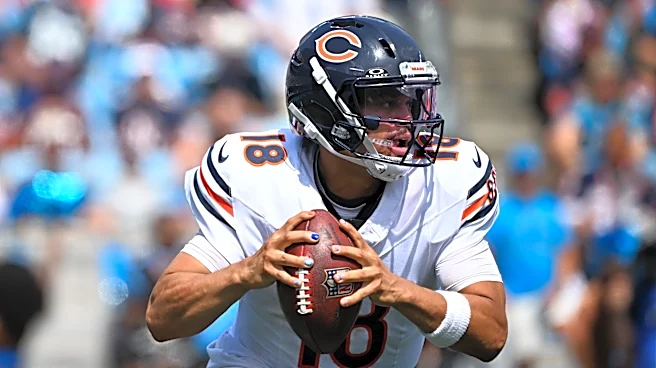



Given how things transpired for the Chicago Bears in their 59-37 victory over the Carolina Panthers in Week 1, just about any number on the stat sheet was going to land in their favor. From the more standard point-of-view, that's widely reflected in their counting stats. It starts to look even better, though, when we move into the more advanced end of the statistical spectrum.
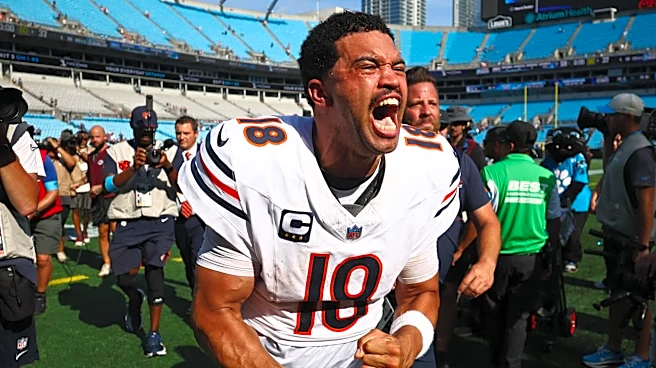
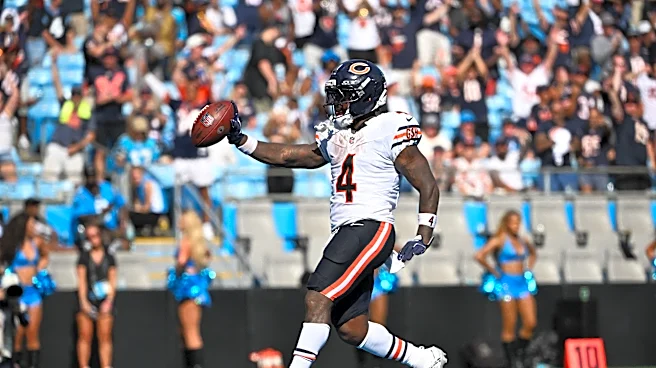
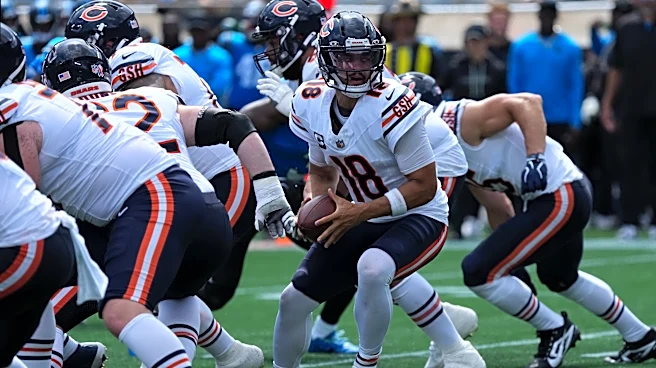
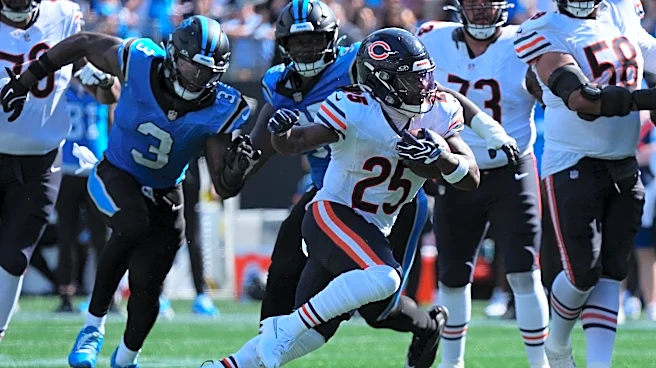
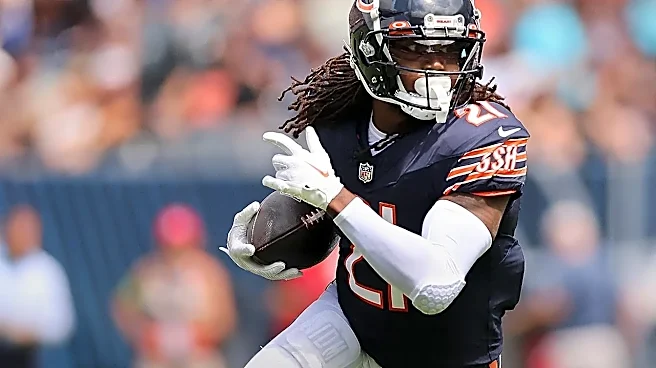
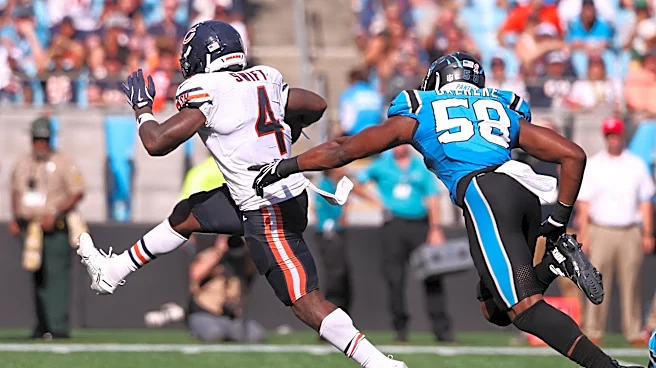
From the standpoint of more traditional numbers, the Bears' 59 points and 552 yards of total offense each top the league after the opening week. Their 271 yards rushing also sit atop the league's offensive groups, with D'Andre Swift's 124 and Kyle Monangai's even 100 ranking fourth & seventh, respectively. Caleb Williams' 269 yards through the air ended up in eighth.
Again,
the regular ol' stats to which we are accustomed certainly do the Bears justice. But the advanced stats love them all the same.
At +0.41, the Bears led Week 1 in offensive EPA per play. They also finished third in passing EPA per dropback (+0.54) and sixth in explosive-pass rate (12.9 percent). Unsurprisingly, each of their rush EPA per play (+0.38) and rush yards over expected per attempt (+3.07) blew everybody else out of the water. Kansas City finished second in the former (+0.22) while San Francisco came in as the no. 2 team behind the Bears in the latter, at +1.41.
Given all of that, it comes as no surprise that the Bears had their two running backs in the top 10 in individual EPA per attempt, with Swift at +0.51 (2nd) and Monangai at +0.25 (10th). In the passing game, Williams landed in fourth in EPA per dropback (+0.45), with each of Jahdae Walker (+1.38), Rome Odunze (+1.34), and Cole Kmet (+1.19) finishing in the top 25 in EPA per target.
As inspiring as the offensive collective and the individual standouts were on the offensive side, the Bears did have some visible issues on defense. Just like the success of the offense allows the eye test and the analytical side to play off of one another, the defensive side plays out much the same.
The 478 yards they allowed were the third-most in Week 1, with the 37 points surrendered to Carolina serving as the fourth-highest. Sure enough, that's also reflected in the advanced stats. The Bears allowed +0.21 EPA per play in total, which was eight-worst among the league's defense. That was probably evident given that, in general, you want a minus in front of the defense's EPA rather than the plus that indicates offensive success. Each of the pass EPA per dropback (+0.31) and EPA per rush attempt faced (+0.06) were in the bottom 10, as well.
It's important to note that coming off just one week of play, though, the analytics landscape is pretty simple. Samples are too small to make any clear declarations or showcase any real tendencies, both of which will continue to add context to these numbers as the season progresses. That's probably especially true on defense, where the rotation at various levels is still in need of sorting and leaves the sample even lower virtually across the board. As the sample grows, a number of other factors come into play beyond EPA.
Nevertheless, the Bears' advanced statistical output in Week 1 should serve as a pretty nice springboard toward being regular darlings in the analytics game throughout 2026 on offense while continuing to offer some cause for concern on the other side of the ball.
Follow Bears Wire on Twitter, Facebook and Instagram
This article originally appeared on Bears Wire: Breaking down advanced stats from the Chicago Bears' Week 1 victory