


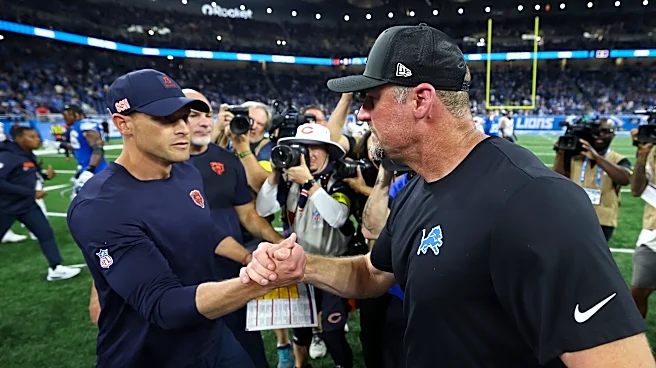
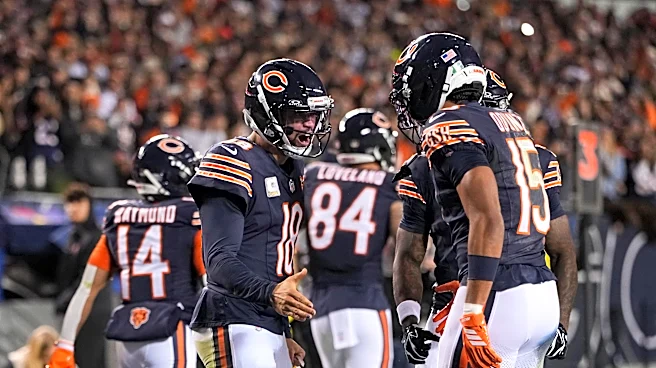
The NFC North has been one of the NFL's true powerhouse divisions in 2026. Three teams in the division carry 7-2 records at present, with the last place Green Bay Packers sitting decent at 6-4. The early success puts the Chicago Bears in good standing for the second half of the year, but considering the gains made by their rivals in the Minnesota Vikings and Detroit Lions both on the field and on the transaction front, it's a difficult road ahead.
Still, record can only tell you so much about a team. Minnesota, for example, was a team that wasn't seen as a particular threat in the NFC (even with an elite record) until they raised the floor of their offense by acquiring Kirk Cousins. Detroit's defense posed significant questions for their long-term
viability early on (and have since lost Aidan Hutchinson for the year). Even Green Bay has an elite deep pass attack that presents challenges for the rest of the league while they also still stand to get Micah Parsons back from last season's ACL injury. The Bears won four in a row prior to their bye, but still face certain questions on the defensive side.
With all of that in mind, let's dig in beyond the record and discuss which of the north's quartet of squads are most poised for success in the second half.
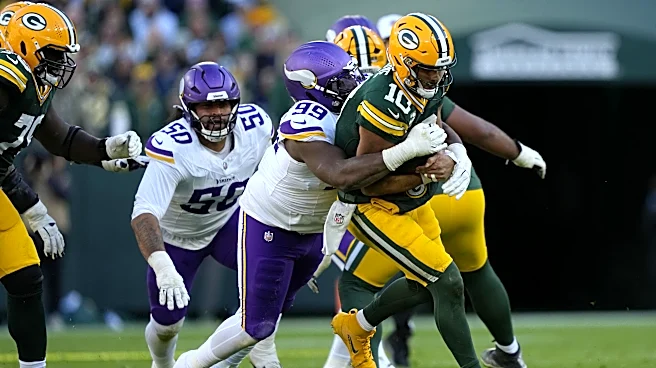
Green Bay Packers (6-4)
For Bears fans, the Packers likely represent something of an enigma. After the dismantling wrought by Jordan Love and the pass game — something that has been repeated on multiple occasions since — there was an assumption that this offense would be posting in the box score in a way that would be difficult for most teams to contain. But the numbers don't love them.
Green Bay is second in the league in pass yards per game (268.1) and ninth in the league in EPA per pass play (+0.08). What isn't happening, however, is a translation of that success into consistent success or points. The Packers are just 26th in the league in success rate (40.6 percent) and 13th in points per game (22.6). Much of that is due to the absence of a run game, where they sit dead last in EPA per rush attempt (-0.28). And even with the air attack doing what it's done on occasion, they're still just 13th in explosive play rate (9.7 percent).
With all that said, they do have a defense that sits third in yards per play allowed (4.9) and figure decently into points allowed per game (22.1). Their EPA per play allowed ranks seventh, at -0.04. Getting Parsons back figures to strengthen those numbers a touch more.
Bears fans are likely to be a bit tepid in how they view the Packers in this race considering what they saw back in Week 5, but it's likely that they're viewed, objectively, as the NFC North team least poised to succeed in the second half by both traditional measures & analytics. That lack of confidence is largely due to the absence of a viable run game, with two of the three others featuring a better defense by EPA and the other (Detroit) representing the division's top offensive team.
Detroit Lions (7-2)
Despite early questions about their defense (and we'll circle back to that side of things in a moment), the Lions represent one of the few teams that can thrive on the merit of their offense alone. As a unit, they're sixth in the league in EPA per play (+0.09) and third in success rate (48.8 percent). Their 11.2 percent explosive play rate ranks fourth.
It's a scary unit led by perhaps the single biggest individual threat the league has to offer in Jahmyr Gibbs. He's already hit 1,000 yards rushing on the year (5.0 YPC) and is nearing 400 more through the air. Add in the other threats (Amon-Ra St. Brown, Jameson Williams, etc.) and it becomes little surprise that this is a team that sits fourth in EPA per pass attempt (+0.19) and sixth in points per game (28.6).
But then comes the big caveat. Despite the fact that the defense had shown marked improvement from their early struggles, the numbers had yet to truly land in their favor. Their EPA allowed per play (0.04) ranks only 24th with point-per-game (22.1) and opposing success rate (43.6) figures that sit firmly in the middle of the pack. And that was before they lost as big of a key cog as their defense has to offer in Aidan Hutchinson. One imagines that those questions that had been temporarily shelved will begin to reemerge, with the Vikings possessing one of the few defenses capable of stifling them and the Bears representing a more balanced squad than they appear to be at present.
Minnesota Vikings (7-2)
Does the addition of Kirk Cousins transform the Vikings from benefactors of a softer early schedule into one of the truest threats the NFC has to offer? Perhaps.
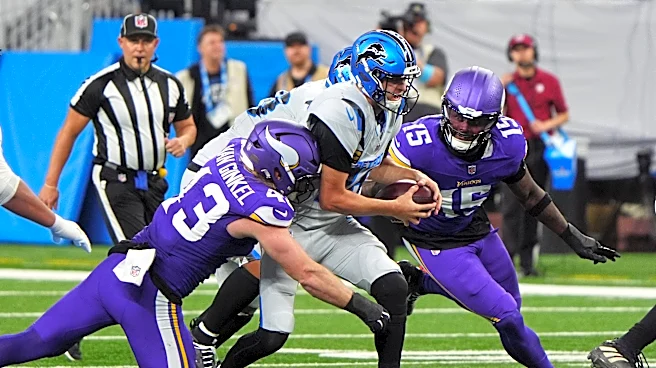
The defensive quality is undeniable. They're first in EPA allowed per play (-0.13), points allowed per game (14.0), pressure rate (27.0 percent), sack rate (12.3 percent), and red-zone stop rate (76.2 percent) while sitting second in opposing success rate (38.5 percent) and third in total yards allowed per game (302.8) and takeaways (17). Weather notwithstanding in their Week 2 tilt, the Bears saw firsthand what this unit can do even again an explosive offense.
Where folks have failed to gain confidence in Minnesota lies in their offensive floor. They rank 29th in offensive EPA per play (-0.10), 25th in points per game (19.6), and 30th in success rate (37.6 percent). Neither phase of their offense has been particularly impressive, with their -0.15 EPA per rush attempt sitting a touch lower than even their unimpressive 26th-ranked EPA per pass play (-0.19). Of course, the Cousins of it all offers a shift in that perspective.
Cousins is top five in passing yards this season (2,547) and 11th in EPA per dropback (+0.11). Kyler Murray was at -0.10 prior to his injury and subsequent demotion. While it's not as if the offense will suddenly take off and become explosive — especially given that Cousins is only 25th in deep pass attempts and they still lack a viable run game — the floor has been raised here. A death-by-a-thousand cuts pass attack matched with elite defensive play is the kind of thing that can cause fits for any opponent in the second half. It's a scary team.
Chicago Bears (7-2)
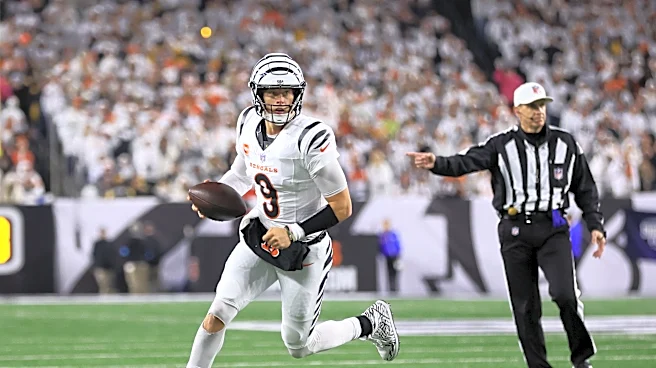
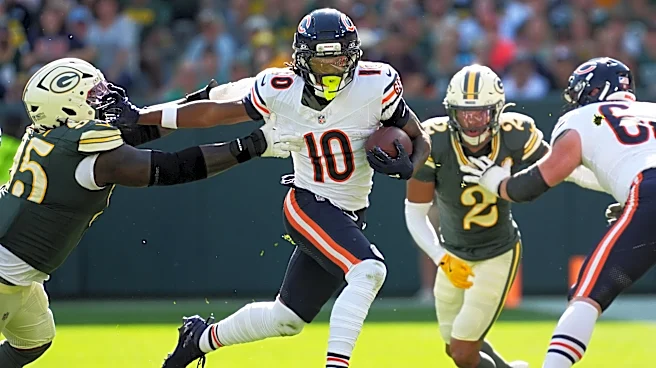
Interestingly, the Bears represent the NFC North team with the most balance. Whether or not that translates into sustained success in the second half will depend at least somewhat on how Caleb Williams rebounds from his four interception game against Tampa Bay prior to the break. Nevertheless, their output before the bye doesn't feature the same sort of disproportionate output as some of their divisional counterparts.
The Bears are 10th in the NFL in offensive EPA per play (+0.04), ranking 12th in EPA per play on pass attempts (0.00) and 13th in EPA per rush attempt (-0.04). One imagines that the latter figure there will be aided by the return of Kyle Monangai, as his power style should offer both a compliment to D'Andre Swift that had gotten lost in his absence and more of a willingness to lean on the run on the part of Ben Johnson. Beyond the EPA numbers, though, they're ninth in the league in success rate (47.0 percent), 11th in explosive play rate (9.8 percent), and seventh in points per game (26.8). It stands to reason that considering Williams' absence followed by Monangai's — to say nothing of slow starts from players like Colston Loveland — we have yet to see the best this offense has to offer.
Defensively, the team has outplayed what might have been expected against their on-paper assembly. They're eighth in EPA allowed per play (-0.02) and points allowed per game (20.4) while sitting ninth in pressure rate (17.2 percent) and third in sack rate (9.0 percent). They haven't experienced the turnover luck of last season (11 on the year), but they've been able to stifle opponents effectively enough without it. And much of that was before the impact addition of Jeffery Simmons.
A particularly notable component of this defense is that they really haven't been on the field. Their 471 plays are, by far, the last amount of any defensive unit in the NFL, with Atlanta's 525 serving as a distant 31st. A 5.9 yards per play allowed doesn't look especially promising, but they've been able to limit team success rates (40.8 percent) and create pressure within a smaller sample. That should bode well for the second half of the season.
In short, the Bears may not have the offense of Detroit or the defense of Minnesota, but they offer more balance between the two than either of those teams. That at least offers a certain level of confidence, but the upcoming schedule featuring teams like Buffalo, Jacksonville, and each of their three divisional opponents presents anything but certainty.
Follow Bears Wire on Twitter, Facebook and Instagram
This article originally appeared on Bears Wire: Which NFC North teams are best set up for second half success?