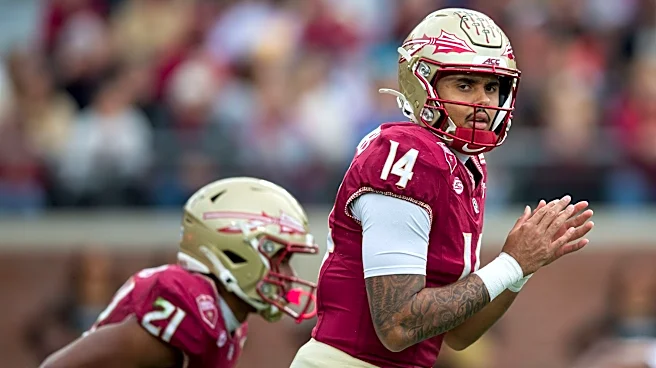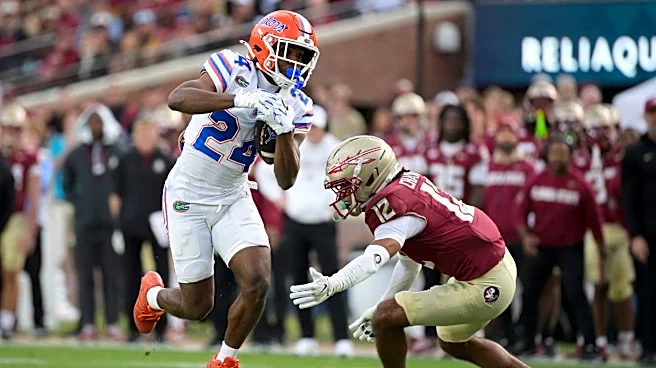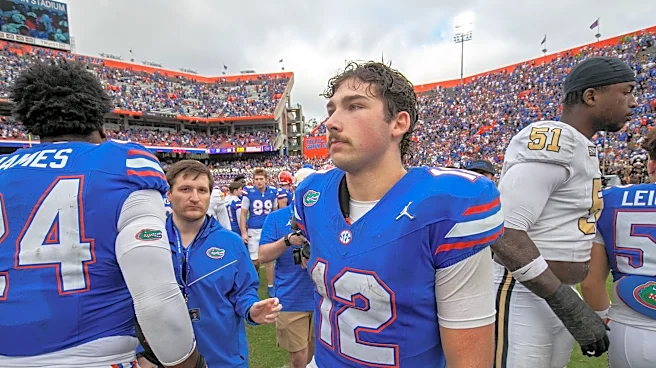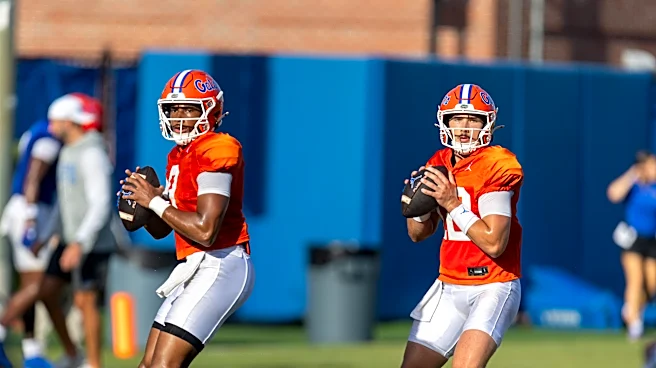


Aaron Philo’s best throws gave Florida something it had a harder time finding with Tramell Jones Jr. at quarterback.
Philo completed 17 passes that traveled at least 20 yards downfield, and those throws accounted for nearly a third of his passing yards. Jones completed two at that depth. Philo also took nearly twice as many dropbacks, so the gap in deep completions reflects both opportunity and what each quarterback did with it.
Philo finished 20.5 points ahead of Jones in overall offensive grade, according to PFF’s Florida passing report. The gap was more pronounced from a clean pocket. Once pressure arrived, both quarterbacks’ passing grades fell, and Jones graded slightly better in that split.
The season numbers tell a clear story about who
played better overall, but the circumstances behind those grades matter.
Overall quarterback grades
Philo’s 84.1 overall grade included some of his best work as a runner. PFF gave him an 83.6 rushing grade, compared with a 74.2 passing grade. Jones also graded better as a runner than as a passer, though neither mark reached 70.0. Philo threw for more touchdowns and fewer interceptions despite attempting 106 more passes.
Wide receiver Kahleil Jackson accounted for the only other pass attempt in Florida’s PFF report, a 48-yard completion.
Clean pockets, pressure and the blitz
A clean pocket produced Philo’s clearest advantage, as expected, but he was arguably worse than Jones when under pressure.
He earned an 83.2 passing grade across 178 clean dropbacks, compared with Jones’ 60.9 across 87. When defenders got pressure, Philo fell to 48.0 and Jones to 54.4. Jones’ edge under pressure. Neither is a particularly good number and represents the weakest split for both quarterbacks.
Sending a blitz still left Philo with the higher grade. He earned a 69.6 when blitzed, compared with 59.3 for Jones. PFF charts blitzes and actual pressure separately, so a defense can send extra rushers and still leave the quarterback with a clean pocket.
Passing depth
Philo’s biggest advantage came on throws of 20 or more air yards. He earned a 91.1 grade on 31 such attempts, producing 595 yards. Jones earned a 71.0 on 11 attempts and produced 65 yards. Philo also graded higher in the intermediate range, while Jones held a narrow edge on throws from zero to nine yards downfield.
Play action and screens
Play action produced more yards per attempt for Philo, who averaged 9.2 on 87 attempts compared with 7.9 without a fake. Jones’ split went the other way. He averaged 5.5 yards on 40 play-action attempts and 6.8 without play action.
Florida got more per attempt from both quarterbacks when they threw something other than a screen. Jones had the wider gap, averaging 4.7 yards on screens and 6.7 on other attempts. Philo averaged 7.1 and 8.9, respectively.
Time in the pocket
Both quarterbacks graded better when spending less time in the pocket. Philo’s passing grade went from 76.1 when spending 2.5 seconds or less in the pocket, compared to 68.4 in the longer split. Jones fell from 65.2 to 51.4.
The sack counts followed the same pattern. PFF charted both quarterbacks for just one sack in the quicker split, compared with 13 for Philo and nine for Jones in the longer split.
The split puts a useful boundary around Philo’s strong season grade. His downfield output and clean-pocket passing separated him from Jones, while Florida’s longer-developing dropbacks were a tougher assignment for both quarterbacks.
Follow us @GatorsWire on X and Bluesky, and like our page on Facebook for ongoing coverage of Florida Gators news, notes and opinions.
This article originally appeared on Gators Wire: How Florida’s quarterbacks graded during the 2026 regular season