

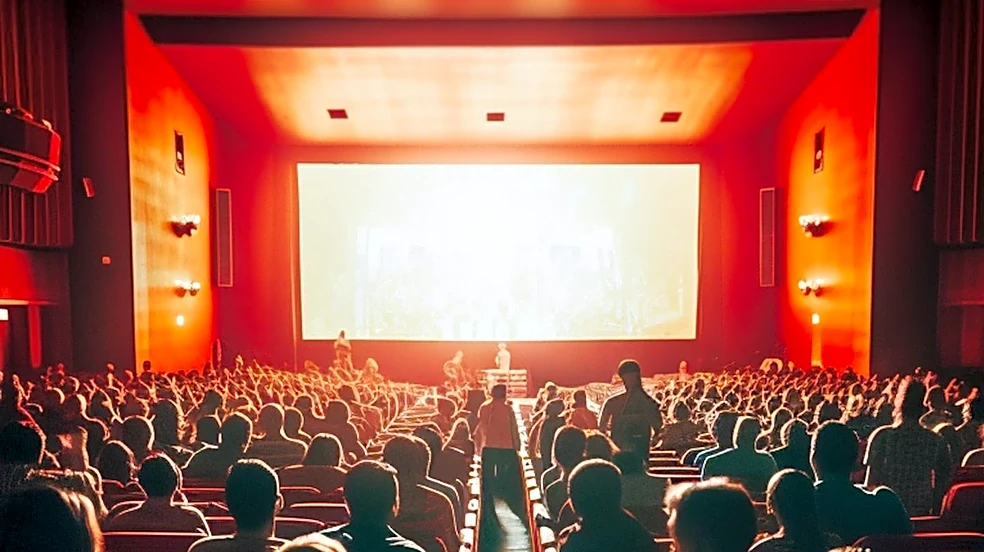

You Can See Everything is a film about deception, about how reliable even our own sense of perception is in the face of deciphering the truths we swear by and the stories we tell ourselves.
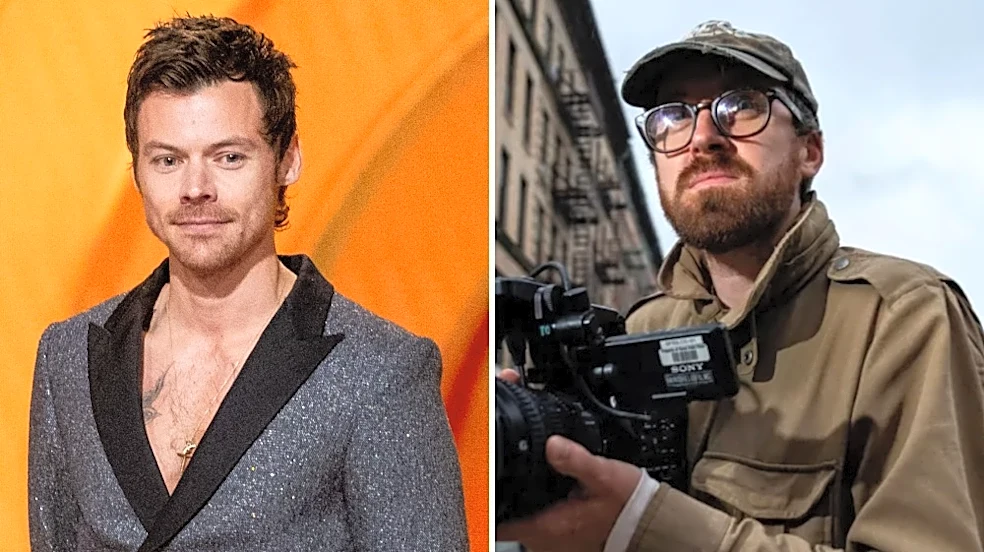
Nathan Fielder and Lance Oppenheim's slippery collaboration is Exit Through the Gift Shop by way of The Social Network and Inception. Vertigo For You, if you will. It's a documentary that toys with the format to push its boundaries and question its limits in finding truth in storytelling, where emotion, perception and memory collide.
It's hard to trust anything you're watching in You Can See Everything, Fielder an F for Fake-era Orson Welles-ian sprite who manipulates reality on reality through the Kaufman method (Charlie or Andy, take your pick) of visual
storytelling. Fielder enjoys messing with his audience and his subjects; he's less malevolent in approach than he is unabashedly willing to take us all on a ride. He's like one of those Dickensian Christmas ghosts; you will experience supernatural unease to reach profound truths, even if you walk within a realm of tricky recall and unstable ground.
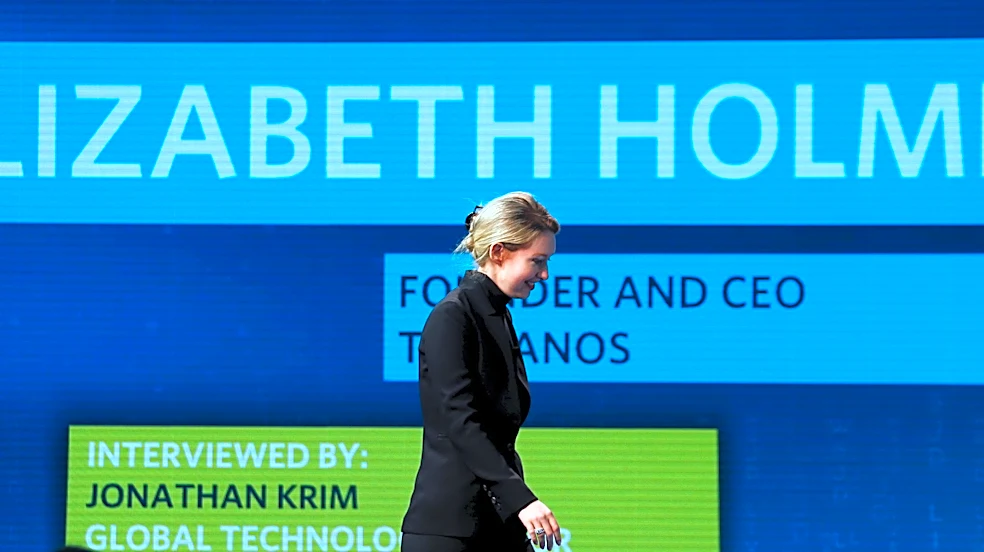
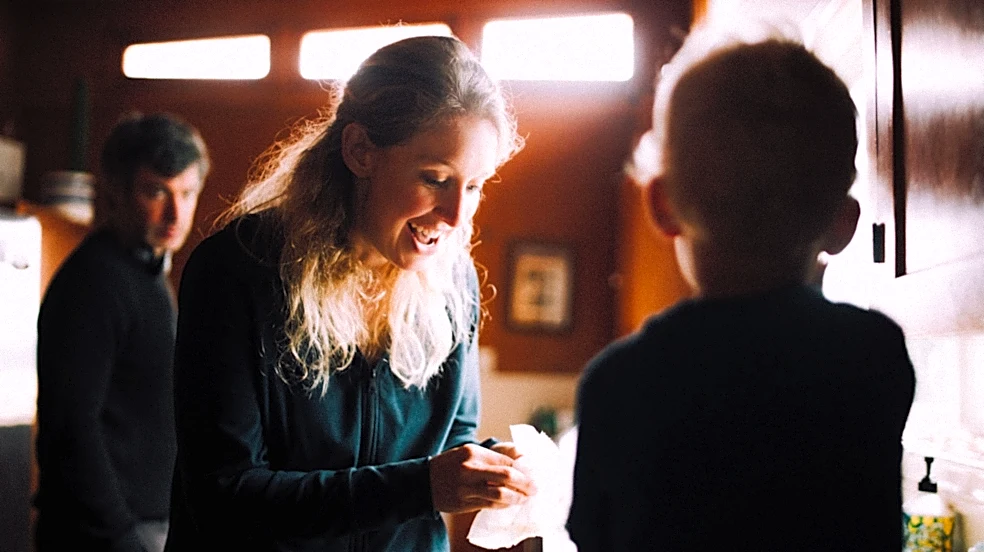
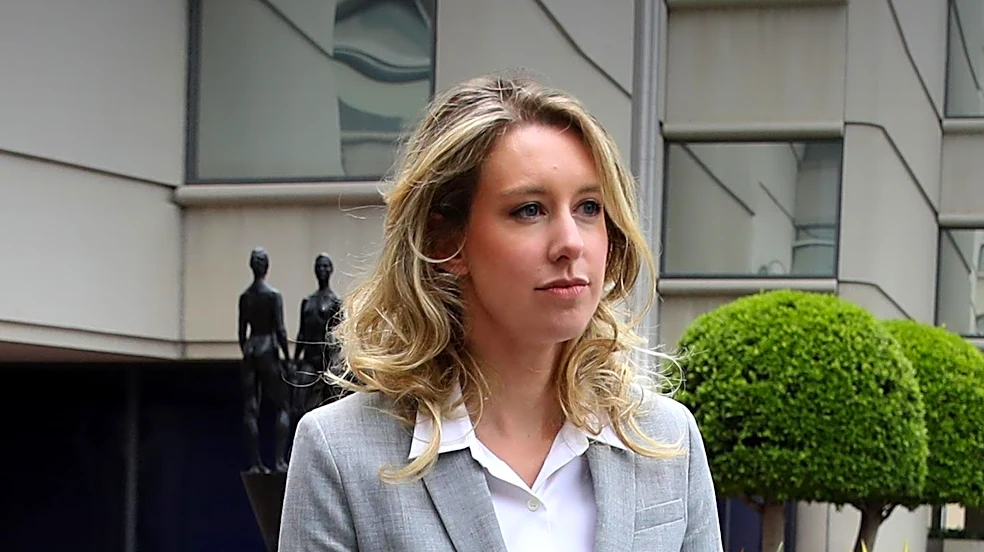
Playing a cat-and-cat game with Elizabeth Holmes, the Theranos founder convicted of defrauding her investors, ahead of her prison stint proves fertile ground for Fielder's chicanery, Oppenheim's dreamlike hover giving way to a jolt of laser focus when the dream starts collapsing. Usually Fielder is in control of his domain, but he knows Holmes is regarded as a generational con artist, someone who weaved a Silicon Valley vision of health utopia for billions of dollars that fell apart once it became clear her technology couldn't live up to its lofty promises. Holmes thinks she didn't do anything wrong; uneasy revelations suggest Holmes, at least in her own mind, might be right about that. All the evidence points to the contrary, but Fielder starts to navigate his own doubts about what he's seeing. Could even a great manipulator of image and motion fall prey for such an obvious manipulator in Holmes? Is she so lost in her own story, driven by alleged horrors beyond her control, that she's actually the one being conned?
You Can See Everything doesn't exist if the world hadn't already made up its mind about who Holmes is. We've got the damning evidence in trial, the blistering journalistic revelations on Theranos' faulty tech and the compelling recreation of Holmes' rise and fall on the Amanda Seyfried-led The Dropout, for starters. There's enough obvious external proof that Holmes is guilty of crime, but Fielder goes beyond trying to figure out if she's a manipulator or not to search in the manipulation of the documentary format and storytelling as vessel for truth. He can't know what's going on in Holmes' head, no one can. Some things are truly a mystery; we will probably never know for sure if she's one of the great tech hucksters of a generation or someone genuinely trapped in a distorted reality, capable of being conned as readily as people assume she's the ringleader on the whole enterprise.
Fielder is capable of masterful manipulation on screen. By the film's end, we're not even sure if we can trust him because he's not even sure if he can trust himself. We're left with one of the great questions of our modern times: In an age where artificial intelligence and rampant conspiracy have taken possibly irreparable hold on reality, what do we trust? Can the documentary save us? Are storytellers just as capable of distorted truth the subjects in the story? Can journalism completely save us from inherent bias? Is reality merely what we're able to cobble together with what we see, hear and feel deep down? In an era of deepfakes and citizen TikTok journalism, who can we trust? Can we even trust the person we're starting at in the mirror to always see clearly what's in front of us? What even is truth in an era where nobody can agree on it? Where are we headed, when we can see everything and still distrust it? Fielder and Oppenheim present a brutal paradox: the truth is right there in front of us, but we can't always trust ourselves to relay it. The questions aren't with truth as much as it is with "truth-tellers." We're our own worst enemy.
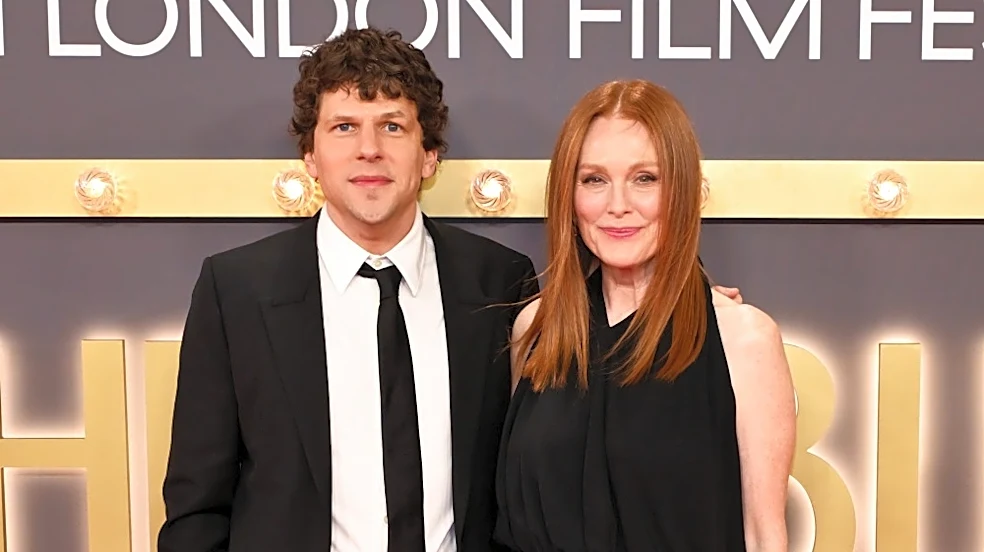
The film is a masterpiece of complication, Fielder and an incredibly special surprise guest we won't spoil ultimately stuck with the rest of us in what they're seeing, what roles they play in relaying that to the public and what the ultimate foundation is in a medium where truth is supposedly the bedrock. Or are they? Could we be the ones getting played at the end, this entire project a Fielder masterclass in messing with our expectations on what we can even trust in a storytelling format that claims to be true? We can see everything, but can we really buy it?
Can this movie get nominated for a Best Picture Oscar?
Well, that's a tough question. On its face, a zeitgeist-y movie that just broke box office records for the format and is getting the best reviews of any film this year should factor into the Oscar race without question. In the new Academy, more artistic swings like this can break through the noise. While a documentary has never been nominated in Best Picture, the formally daring boundary-pushing of Fielder and Oppenheim's documentary might buck the long-term expectation that documentaries have their own category for recognition. It's very possible this film makes Oscar history in January with nominations across the board, including in one of the Best Picture spots.
However, the film's audacious spirit could also alienate more traditional Academy members who look at movies as movies and projects like this as something else entirely. There's no fun in that worldview, but the Oscar voting body is still varied enough to encounter some stiffness. Look no further than the documentary branch, that typically ignores celebrity-focused work and may scoff at Fielder and Oppenheim poking holes in the format's ability to seek truth in difficult subjects. The documentary branch has skewed heavily toward international work and politically-driven projects in recent years, save for that random My Octopus Teacher obsession we'll never fully understand. You Can See Everything could, very plausibly, make it into Best Picture and not Best Documentary Feature Film. Convincing a very particular documentary branch to embrace such a grand departure from the norm could be tricky.
Few will debate this film's merits; the critics will show up for it hard at the end of the year. Audiences may keep flocking to this to balloon its box office totals, making it a financial smash for A24. The ever-changing Oscars may give it the history it deserves in Best Picture (and perhaps elsewhere). However, Best Documentary might be its toughest challenge; can they convince the documentary branch voters to see what everyone else is seeing in it?
This article originally appeared on For The Win: 'You Can See Everything' is a masterpiece. Can it get an Oscars Best Picture nom?