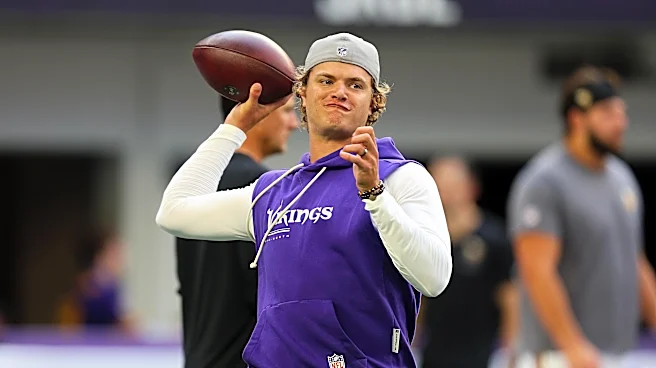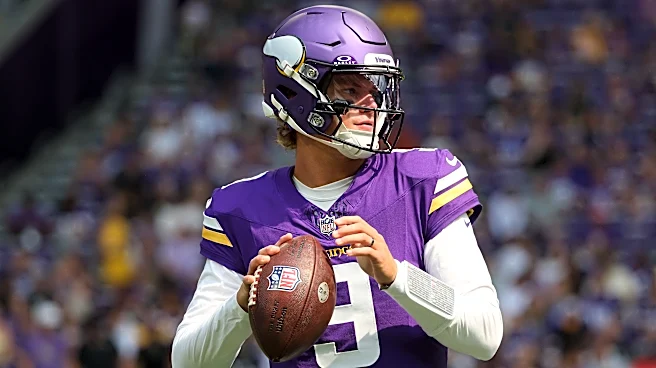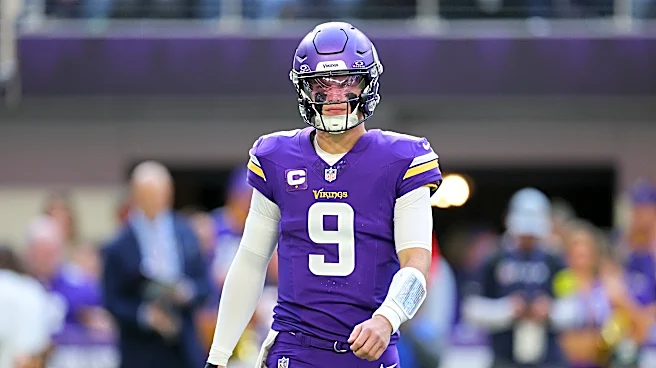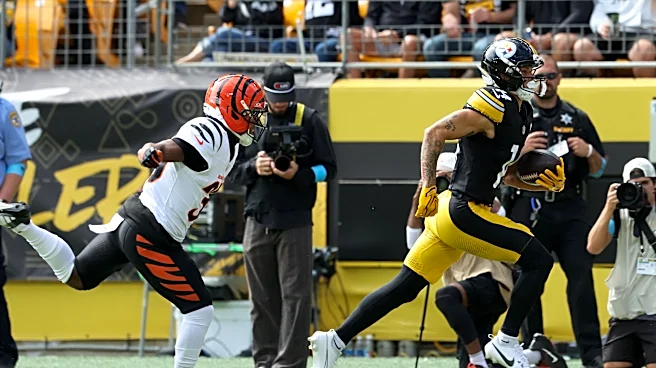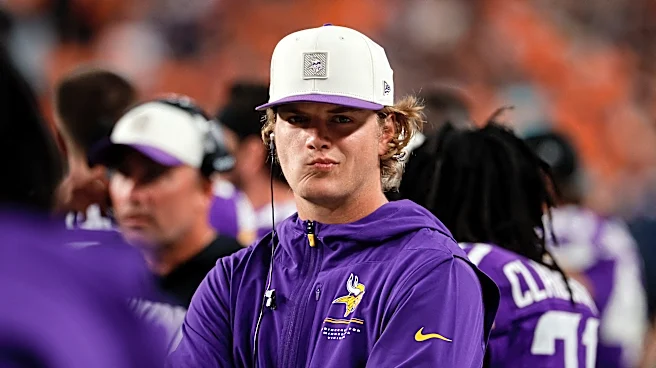

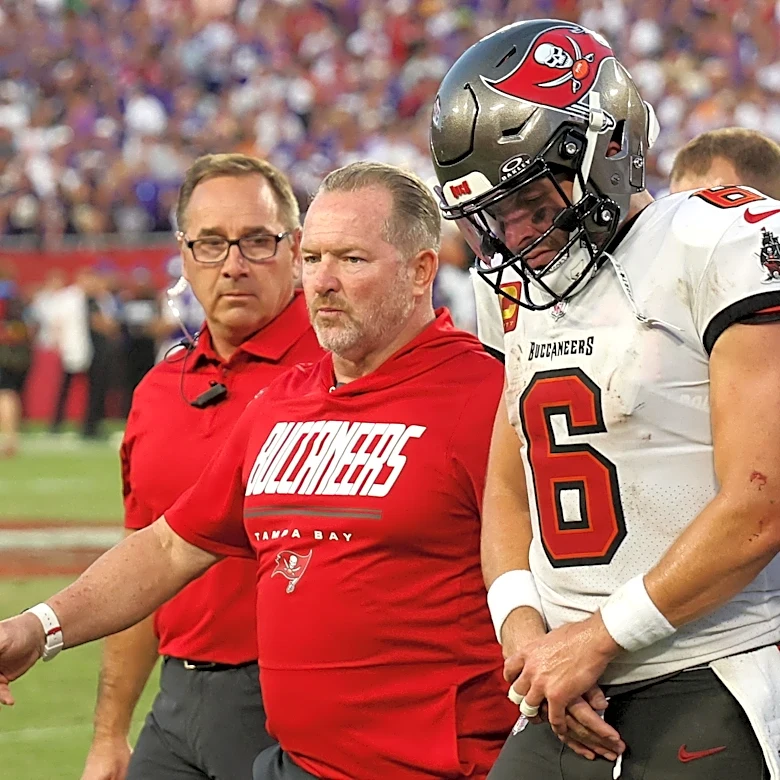

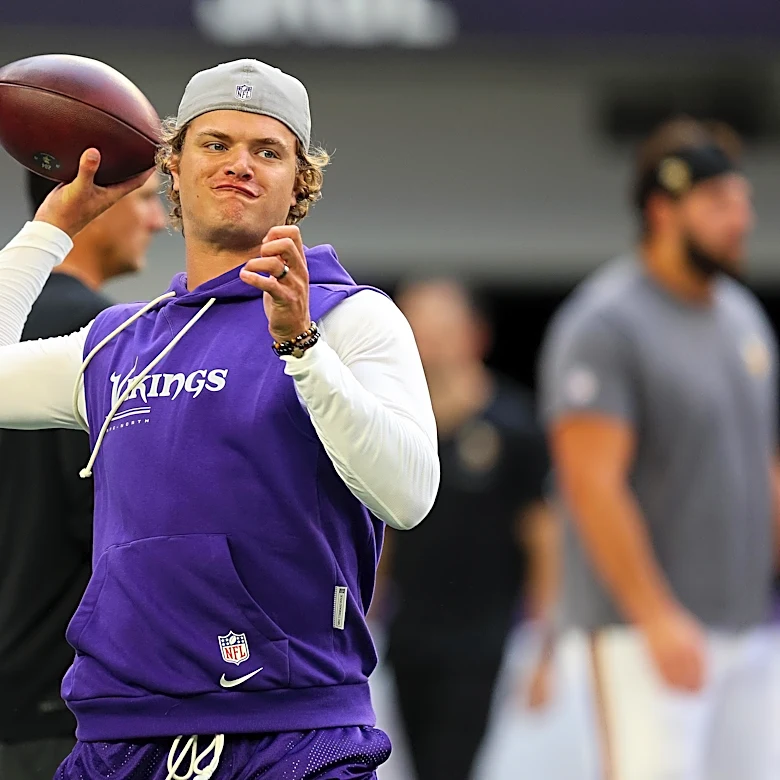
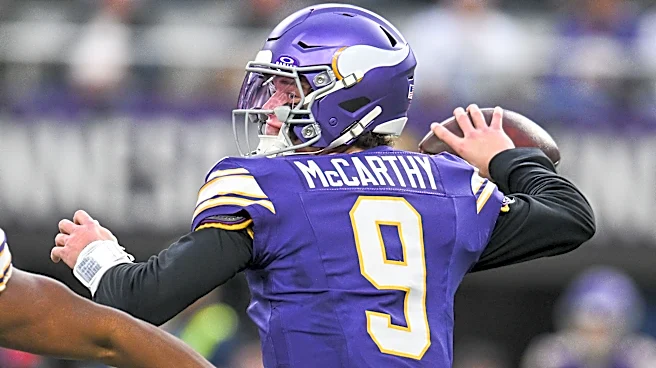
J.J. McCarthy has been freed from the prison of his own making. After two-plus seasons and more interceptions than touchdown passes, the former first round pickis no longer a Minnesota Viking.
Instead, his comeback begins with the New York Giants, who are in desperate need of quarterback help after losing Jaxson Dart to a season-ending knee injury. Jameis Winston, recipient of a fresh two-year, $13 million contract at the eve of the 2026 regular season, has looked like, well, a travel blogger and motivational speaker on the field, slinging passes to nowhere and finding a way to botch handoffs.
McCarthy will theoretically slide into the QB2 role behind Winston and ahead of Jake Haener -- though he was demoted to QB3 this summer after the preseason's
shortest quarterback battle, behind both Kyler Murray and Carson Wentz. It was clear a fresh start was necessary for a player once tabbed as a franchise cornerstone who'd been reduced to one of the last spots on the 53-man roster. But if you're betting on a McCarthy revival, you're probably going to be unhappy with the outcome.
McCarthy was not a quarterback let down by his offense as a Viking. He had a receiving corps led by Justin Jefferson and Jordan Addison. His impact as a starter set the background for the least productive year of Jefferson's career. He had fewer yards in 17 games with McCarthy atop the depth chart (albeit not for the whole season) than he did in 2023, when injurylimited him to 10 games and he had nearly 400 fewer snaps.
This was not simply a case of a player needing to grow into an offensive system and leveling up his game over time. McCarthy was bad and his throws reflected this. His 66.5 percent on-target throw rate ranked 33rd of 33 qualified quarterbacks, nearly three full points below No. 32 Caleb Williams. Since Pro Football Reference began charting that stat in 2019, only one player has been worse: Anthony Richardson in 2024.
Now he goes from Jefferson and Addison to a broken Malik Nabers and... Malachi Fields? Darnell Mooney? A soon-to-be 34-year-old Odell Beckham Jr.? Even if he outplays Winston -- swapping one notably inaccurate quarterback for another -- there's little room to thrive.
McCarthy would be best served playing with steady wideouts and an aggressive, run-heavy attack. That's how he built his draft status while winning a national championship at Michigan. He rose up to beat single coverage against sucked-in defenses, in part, because Jim Harbaugh ran the ball approximately 60 percent of the time.
No one is going to do that in the NFL -- the Vikings, with a useful Aaron Jones/Jordan Mason platoon, did so on about 45 percent of their non-sack offensive plays. The Giants are at about a 52 percent run share, but that's as much a function of Dart's absence (and his utility as a mobile quarterback) as anything.
That means McCarthy will have to lean on Cam Skattebo to be a bellcow back (with support from Tyrone Tracy Jr. and Devin Singletary). Through three weeks, Skattebo has been an average runner, with his numbers dipping after Dart's injury. He was hamstrung in Week 3 on a rainy day when the Tennessee Titans and their mostly-average run defense knew he was getting the ball. He had 74 yards after contact, which is good! That led to 60 rushing yards on 20 carries, which is not. Even though he faced a stacked box onjust 15 percent of his handoffs, the Titans still met him in the backfield repeatedly to prevent New York from generating even a single touchdown drive.
These are the things McCarthy needs to build a comeback. These are the things the Giants, concerningly, do not have. He's a low-cost backup with modest upside who will likely never been the quarterback envisioned when he was a top 10 draft pick. The odds are wildly against him in his quest to be more.
This article originally appeared on For The Win: Don't expect J.J. McCarthy to prove the haters wrong as a Giant