

Many have seen prehistoric-looking shoebills in person or, more likely, in recent images and videos.
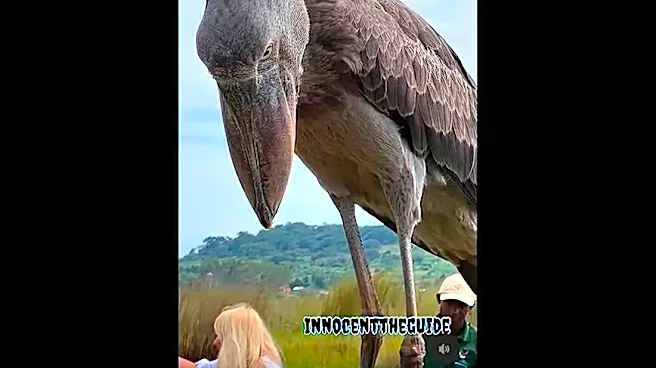
The striking swamp birds of East and Central Africa gained notoriety last November, thanks in large part to the accompanying image.

The viral image was captured by guide Innocent Muhumuza in a manner that made the shoebill appear extraordinarily large and menacing, as clients watched
from just yards away.But while scores of shoebill images and videos have since been shared, providing up-close looks at these living relics with piercing eyes, few have featured baby shoebills.
RELATED: Massive 'dinosaur bird' stalks, slurps snake in Uganda swamp
This week, at least two reels posted to Instagram show a baby shoebill with its mama in Uganda’s Mabamba
Swamp.
Both were shared by Muhumuza, of Uganda Shoebill. One video, captioned by Wild Uganda, includes the video text: "Have you ever been a baby dinosaur?" (Video posted below.)
It shows a protective mama shoebill, with newborn shoebill at her feet, casting a wary glance toward the videographer.
The second clip shows what appears to be a larger shoebill chick beginning to develop the classic shoebill appearance. (Video posted below.)
Muhumuza stated: "Mabamba Swamp is not just a home for shoebills but also breeding grounds for them in their natural habitats. Here is our [3-week-old] shoebill chick and I am here to let you know that you have high chances to see this chick [through November] before it leaves its nest.”
Shoebill chick sightings are exciting for those hoping for the survival of the species. Because of habitat loss and other disruptions, shoebill numbers have declined.
They’re listed as vulnerable and in danger of extinction, with perhaps as a few as 3,500 adult shoebills remaining in the wild.
An interesting tidbit, via BirdLife International: "Although shoebills commonly hatch more than one chick, they only raise one. The younger chicks are usually left to die, unless the eldest is weak or doesn’t survive."
This article originally appeared on For The Win: It's nesting season for shoebills, and that means 'baby dinosaurs'