


A 16-year-old boy in Florida hooked into what he first thought was a peacock bass only to realize he was battling a “jaguar.”
A what?
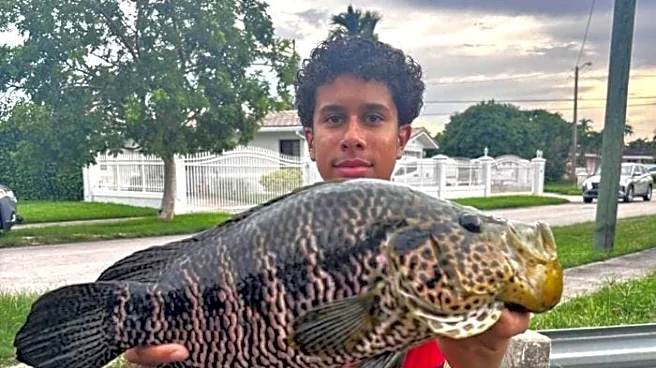
Xzavier Peon was fishing in the Westwood Lakes area with live bait when he landed a record-breaking, 3.02-pound jaguar guapote.
“When I hooked it, I thought it was a peacock bass,” Xzavier told the Florida Fish and Wildlife Conservation Commission. “But once the giant jaguar came up, I knew that it was a state record almost instantly. We started freaking out once we realized it was a state record.”
Indeed it was. Florida Fish and Wildlife Conservation Commission fisheries biologists certified the 3.02-pound, 16-inch catch as a state record, breaking the 9-year-old mark.

So, what the heck is a jaguar guapote?
For most
fisherman, at least those outside this region, it is largely an unknown species.
But this fish species, native to Central America, is well known within the tropical fish community where it is famous and mostly known by its other common name, the jaguar cichlid.
The jaguar guapote is reportedly known for its intelligence, striking patterns, and extreme aggressiveness, which is why the fish is a popular species to have in large aquarium tanks.
Also on FTW Outdoors: Fisherman snags paddlefish that avoided capture for 22 years
The fish is one of 34 nonnative freshwater fish species that have become established in Florida, primarily in the urban canal systems of southeast Florida. They range as far north as West Palm Beach.
Presumably, someone in the tropical fish community ignorantly or maliciously but definitely illegally released some into the wild. They were first identified in 1992 from a photograph of two specimens caught from a farm pond near Miami Canal.
In 2012, the jaguar guapote became eligible for state-record status. But it took five years before a record was established.
It was done so by another teen at the time, 14-year-old Jerry Martin from Miami. Fishing in the Snapper Creek Canal with live bait, Martin caught a 2.78-pound, 16.7-inch jaguar guapote in September 2017.

“The FWC strongly encourages anglers to catch, keep and eat nonnative fish (except legally introduced peacock bass and triploid grass carp) to control their numbers and reduce potential impacts on native fish,” the FWC stated. “Most nonnative fish provide excellent table fare. In addition, releasing fish from aquariums into the wild or moving nonnative fish between water systems is illegal and could produce detrimental effects on native fish and Florida’s ecosystems.”
This article originally appeared on For The Win: Teen fisherman catches a what? He knew, and it’s a state record