
The 2026 season has not gone as expected for the Oregon Ducks. A preseason national championship favorite, the Ducks haven't lived up to the billing. After walking a tightrope at home against Boise State in the opener, all of the expectations came crashing down with a stunning loss on the road against Oklahoma State, which the Ducks blew out of the building in Eugene a year ago.
Dante Moore hasn't been particularly impressive. The running game has suffered. The pass rush hasn't been as effective as hoped. Even the coaching staff has come into question.
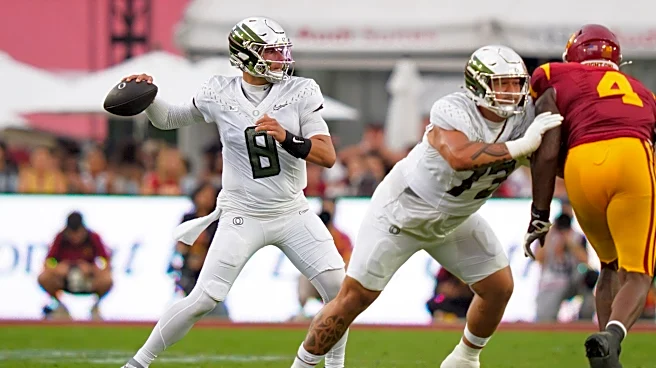
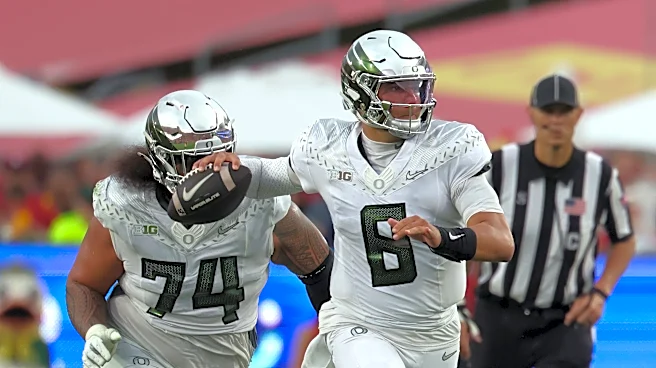
Plenty of concerns were quieted by the team's 41-27 win at USC last weekend, as the offense exploded for big plays, and while the defense struggled to contain the Trojans at times, it showed up
in the biggest moments to seal the victory
Now 3-1 on the season, the Ducks head into the bye week with an opportunity to reflect on what has gone right and wrong, as well as getting Dylan Raiola ready for potentially his first start at Oregon against UCLA. There have been plenty of surprises this season — some good, some not so good — and they could be telling for how the rest of the season plays out.
Let's take a look at the seven biggest surprises of the season so far for the Ducks, and what they might mean for the rest of the way.
Messiah Hampton Steps Up

The depth of the wide receiver room was praised all offseason, even though there was a clear top three in the offense. Evan Stewart and Dakorien Moore have lived up to the task, as did Jeremiah McClellan, but the latter has been sidelined with a foot injury.
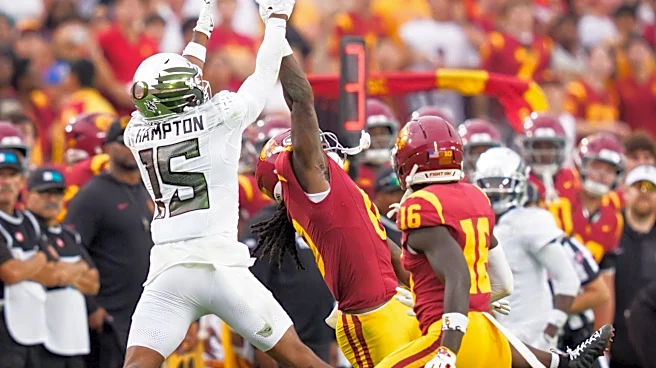
Oregon's true freshmen were expected to play a big role, particularly former five-star recruits Gatlin Bair and Jalen Lott. However, four-star Messiah Hampton has been the one taking over in McClellan's place, while Lott deals with a hand injury and Bair is still competing for playing time.
The New York native hasn't disappointed. After emerging in fall camp as a valuable option, Hampton got his first shot on the field against Oklahoma State when Oregon's receivers were dropping passes, and the coaching staff decided to shake things up. After McClellan went down pregame against Portland State, Hampton quickly stepped into a starting role, and he hasn't looked back. In three games, Hampton has made 14 catches for 142 yards and two touchdowns.
There is no clear timeline on when, or if, McClellan will return this season, but Hampton has the speed and size to win on the outside and fill the void. The Ducks haven't gotten much use out of UAB transfer Iverson Hooks, and it appears Bair and Lott still have some work to do to get on the field, once the latter is healthy. Hampton hasn't given the Ducks any reason to pull him off the field, and he could wind up as one of Oregon's top receiving leaders by the end of the season, despite arriving as one of the under-the-radar wideouts in the program's recruiting class.
Koi Perich's Disastrous Start

Koi Perich was the crown jewel of Oregon's transfer portal haul, which was smaller than usual. Perich drew plenty of comparisons to Dillon Thieneman as the top safety in the portal, even though they are different players with somewhat different styles. However, one thing is for certain: Perich has not matched Thieneman's level of play early on.
In every game, Perich has been caught in bad positions in coverage, often allowing an easy completion and failing to make the tackle afterward. He had multiple missed tackles and lapses in coverage against USC, but salvaged the performance with a late interception, his first of the season.
Perich's struggles tackling are highlighted because of how much time he spends playing in or around the box, like Thieneman did last season. While at Minnesota, Perich had success as a deep safety in coverage who could come downhill and make tackles to defend the run. Maybe the way Oregon is using Perich needs to change, but whether he's lined up against a tight end in the box or trying to take away the middle of the field from a deep post, Perich never seems to be in a good position to win.
Perich is a tremendous athlete, but it doesn't feel like he has found his footing in Eugene yet. If Oregon is going to make a run this season, they will need better play from their safeties, especially with high-flying offenses like UCLA and Ohio State still on the schedule.
Emergence of Ziyare Addison

Oregon's offensive line combination as a whole this season has been somewhat surprising, but maybe the biggest surprise of all was Ziyare Addison lining up at left tackle to begin the season. So far, the move is paying off for the Ducks. He did allow two sacks against Oklahoma State, one of which wasn't really his fault, but he has been great protecting Dante Moore in the backfield.
He helped Oregon's offensive line keep the Trojans away from the quarterback, allowing no sacks and just two pressures. In the running game, Addison is often looking for work and getting downfield to carve a path. Addison is one of the biggest success stories this season for offensive line coach A'lique Terry.
JORDON DAVISON HUGE RUN pic.twitter.com/1lQqgMu4aj
— FD (@flooduck) September 26, 2026
While I think Addison has been a standout in pass protection, running behind him could be the key to getting the running game going in the next few weeks. He's done a great job of winning against edge rushers and taking them to the sideline to spring big runs like Jordon Davison's 45-yard gash against USC.
Lack of Pressure

The defensive line was billed as the best in the country coming into the season, and it's easy to see why. With A'Mauri Washington and Bear Alexander on the inside and Teitum Tuioti and Matayo Uiagalelei on the edges, the Ducks had a front four all with reasonable first-round upside.
However, through four games, Oregon has only tallied seven sacks and isn't generating a ton of pressure. They have done a good job of batting down passes at the line of scrimmage, with Washington and D'Antre Robinson in particular succeeding in that area, but there hasn't been much pressure on quarterbacks in the pocket.
The Ducks had two sacks on the first drive of the game against USC, but were held in check after that. Drew Mestemaker was able to air it out against the Ducks because there was no pressure on a day when the Ducks had just one tackle for loss. Coming up, UCLA and Ohio State have very different rosters in terms of talent, but both have shown a willingness to sling the rock downfield.
Oregon may only go as far as its pass rush takes them this season. While the numbers suggest Oregon's pass defense has been a problem, and at times, it has, there have been too many situations where the defense is covering for so long that someone is bound to break open. The Ducks appear to have found a winning formula on the outside, with Ify Obidegwu (leads the team with five deflections) and Na'eem Offord patrolling the perimeter, and Brandon Finney Jr. sliding inside to the nickel.
Now, it just comes down to how the Ducks get home more often. Uiagalelei has been the best so far, but it could be wise to give Nasir Wyatt and Tank Jones more opportunities to win on the edge.
Linebacker Rotation Better Than Expected

Coming into the season, linebacker was again a bit of a concern for the Ducks. Dan Lanning didn't address the position in the portal, instead opting to lean on veterans Jerry Mixon and Devon Jackson to replace Bryce Boettcher. Jackson's speed and athleticism have been showcased, as he leads the team with 23 tackles and has a pick-six on the year.
Mixon was expected to be the leader of the group after a breakout season in 2025, but Jackson has been the most reliable so far. Mixon is still a threat against the run, but has had some lowlights with missed tackles so far. Enter Dylan Williams, who has occasionally taken Mixon's place on the field and thrived, making 11 tackles and two quarterback hits so far this season.
Williams is another guy who had to wait his turn, but he's made the most of his limited opportunities and is always in the frame making a play when he's on the field. Even Gavin Nix, who has been great on special teams, has flashed at times defensively. The linebacker room is deep right now, with a solid three-man rotation to work with, helping to hold opponents to 3.6 yards per carry.
Stalling Rushing Attack

On the other side, the Oregon running game hasn't been very productive, which is a first for a Lanning-coached team. Drew Mehringer has leaned more into the passing game, leaving Jordon Davison and Dierre Hill Jr. with little time to get going.
The numbers have improved in recent games against Portland State and USC. Hill had a breakout against the Trojans, rushing for 63 yards and two scores, and Davison started the game with a big 45-yard run. However, Davison averaged just 1.4 yards per carry on his 15 carries that followed. The Ducks still haven't produced a 100-yard rusher this season.
Some of the struggles can be attributed to the offensive line, which hasn't gotten much push and has already featured several different looks in the interior. But I would say it also comes down to a lack of vision on the part of the tailbacks. Davison and Hill have both missed running lanes or cut back on big runs when they didn't need to. That part is tougher to fix, but the running game is slowly improving.
Hopefully a week off can allow the Ducks to iron things out up front and create better opportunities to win on the ground. Using more pre-snap motion could help the Ducks open more running lanes, which will in turn open the play action pass up for the passing game. A great running game can go a very long way.
An Early Response to Adversity

The last pleasant surprise worth discussing is what has sunk the Ducks the past two seasons. In the 2025 Rose Bowl against Ohio State and the 2026 Peach Bowl against Indiana, Oregon clearly met its match. The Ducks were outplayed and outcoached in both games, and it was evident. There was a lack of fight that is so disheartening to watch. This season, even in a loss to Oklahoma State where Oregon was clearly outcoached again, there was very little to walk away from the game with optimism about.
When the going gets tough, that's often when we see programs fold. It happened to Penn State last season, when the Ducks knocked off the Nittany Lions at home and pushed them out of the championship picture, and they never recovered. The same could have happened to Oregon this season after beginning the season with two ugly games and an unfathomable loss. Instead, Lanning had an answer.
Coaches and players took accountability. Leaders were called out, both publicly and behind closed doors. It was clear something had to change, and rather than standing around feeling sorry for themselves, the Ducks pulled themselves together and found a new direction.
That direction couldn't have been more evident than when Moore was knocked out of the USC game after a dirty hit. After a brief skirmish, the Ducks didn't respond with a street fight. Instead, they responded with a flurry of scores and defensive stops. The common denominator: the Ducks were playing for their fallen brother, often making a play and saying, "That's for you, Five." While Moore was the central figure, it's clear the team has learned how to play for each other, and that sentiment shouldn't go away anytime soon.
Rather than packing it up because the season didn't start the way they hoped, the Ducks are doing things differently to find a way to win. Their goal remains obtainable, but the process required change, and so far, they are answering the call.
Contact/Follow @Ducks_Wire on X (formerly Twitter) and like our page on Facebook to follow ongoing coverage of Oregon Ducks news, notes, and opinions.
This article originally appeared on Ducks Wire: Oregon football's 7 biggest surprises so far in 2026 season