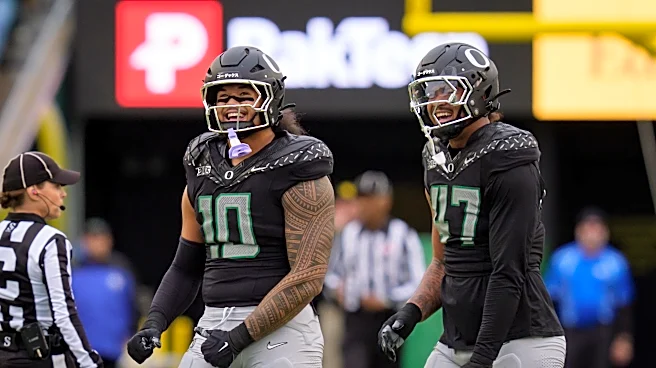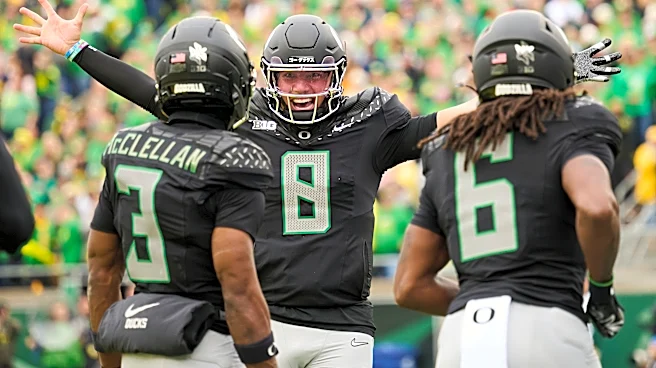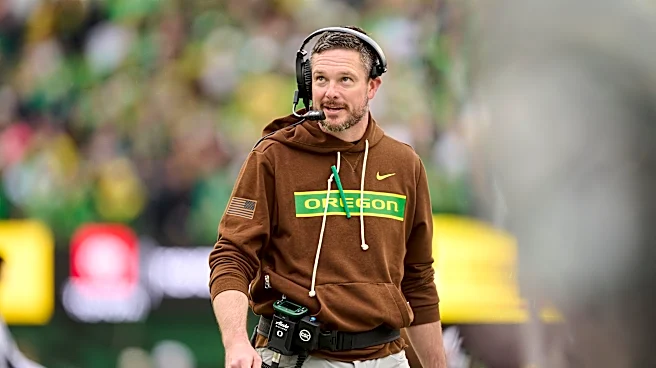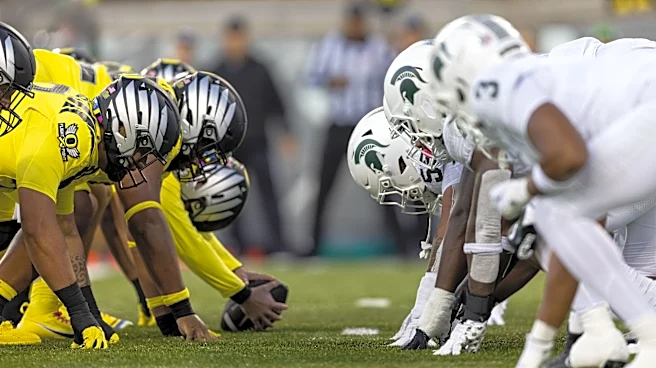

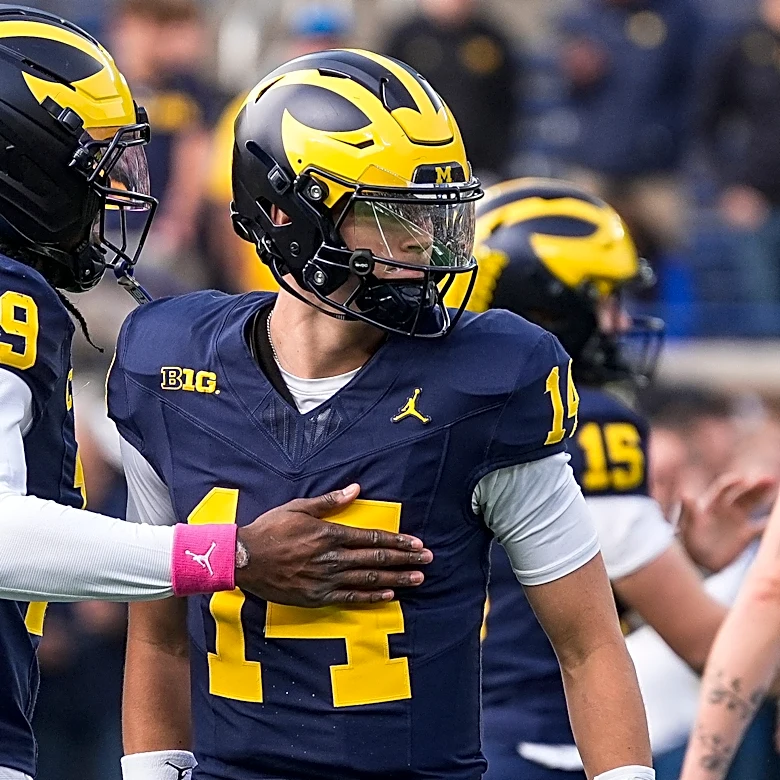

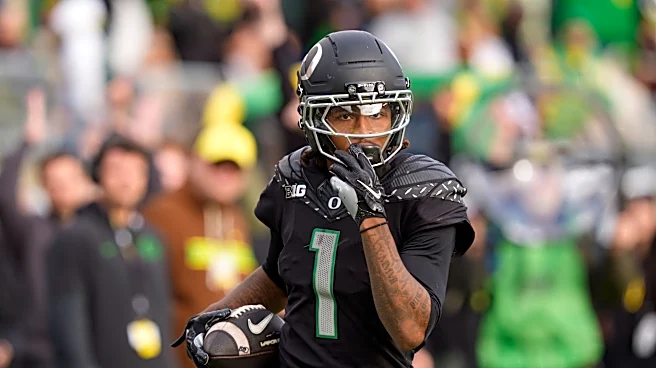
With how the first month of the season went, the Oregon Ducks' defense is playing about as well as they could've hoped come mid-November, hemming in talented Northwestern Wildcats and Ohio State Buckeyes offenses and putting the locks on the Michigan Wolverines in recent weeks.
The Ducks have settled in and are performing extremely well on the defensive side of the ball and will attempt to shut down their Week 12 opponent: the Michigan State Spartans.
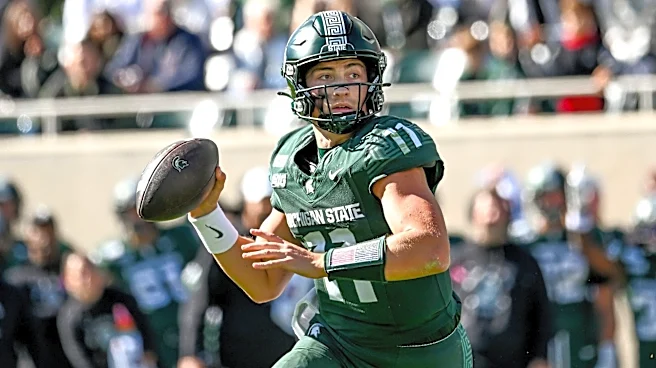
Just like when preparing for the Wolverines last week, the Spartans haven't officially announced which quarterback will trot out for them as the starter and what the game plan will be in terms of a potential rotation between Alessio Milivojevic and Cam Fancher. They split time against Washington
in Week 11, with Fancher having more success, but Milivojevic has started for the majority of the season.
Regardless, the Spartans have struggled for much of 2026 on the offensive side of the ball, both having issues moving the ball and putting points on the board when they do. It hasn't been a very bright year in East Lansing — but that could all change with a win over the ranked Ducks.
In this piece, we broke down what Michigan State does well offensively, who their players to watch are, if Oregon's built to stop their offense and what we expect to see come Friday night in East Lansing. Let's get into it.
What do the Michigan State Spartans do well on offense?
To be frank, the Spartans don't do a whole lot well offensively. They rank 107th in passing and 125th in rushing in the country, completing the subpar offensive trio in coming in with the 129th-ranked offense. They'll be easily the worst offense, statistically, that the Ducks have faced outside of FCS Portland State.
What you'll see out of the Michigan State offense isn't that different from the norm in college football, featuring a modern spread offense oftentimes in either 10 personnel (one running back, no tight ends and four wide receivers) or 11 personnel (one running back, one tight end and three wide receivers). They don't have a vast route tree combination, but they aren't one-dimensional in their pass game either.
In the run game, they prefer to operate out of the pistol with the running back lined up behind the quarterback. That allows the running back some momentum as he heads towards the line of scrimmage, not unlike a rushing attack that goes from under center. The Spartans rarely, if ever, go under center, so this is the pistol is their version of that. In the short-yardage, Michigan State has a Wildcat package in which the running back takes the snap and powers his way up the middle.
Though starting quarterback Alessio Milivojevic was injured in the Spartans last game and will be out against Oregon, they ran the same scheme and concepts with lefty backup Cam Fancher.
Who are the top players to know?
RB Brandon Tullis
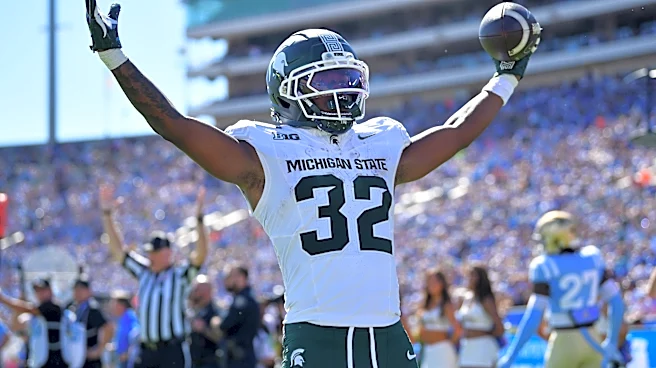
A junior running back from Dallas, TX, Brandon Tullis is just now getting his opportunity with the Spartans in 2026. He ran for 301 yards and four touchdowns a season ago, but found himself buried on the depth chart to begin this year. Due to injuries, Tullis is back in the limelight as Michigan State's No. 1 back in the past two games, combining to carry the ball 46 times for 168 yards against Michigan and Washington. There isn't anything special to Tullis' game, but the 6-foot-1, 224-pounder delivers punishing blows to anyone willing to step in his path.
WR Chrishon McCray
Chrishon McCray has emerged as Michigan State's No. 1 receiver in his second season with the program after beginning his career at Kent State. Catching passes from multiple quarterbacks, McCray is up to 39 receptions for 414 yards and a touchdown through ten games, using his small, compact 5-foot-10, 180-pound frame to both get open underneath and make defenders miss when the ball's in his hands.
TE Jayden Savoury
Redshirt freshman Jayden Savoury has been excellent in his first real action for the Spartans this fall, catching 29 passes for 271 yards. At 6-foot-5 and 253 pounds, Savoury is a reliable target in the middle of the field and on jump balls for Michigan State's cast of quarterbacks. While he won't total 100 yards, Savoury is a safe bet to have between 40-60 yards on four or five catches every game for Michigan State.
Are the Oregon Ducks built to stop Michigan State?
If they're not, then they shouldn't be allowed in the College Football Playoff conversation at all.
In all seriousness, this is an offense that the Ducks should, to put it simply, dominate. The Spartans have scored over 20 points in just two of their six Big Ten contests, failing to reach that mark against far inferior defenses than the Ducks' unit.
Up front, Oregon's front four, even with star edge rusher Teitum Tuioti sidelined, should create enough penetration to make Michigan State's attempts to run the ball a moot point. In that instance, the Spartans will have to turn to the passing game with their backup quarterback and with a group of wide receivers that is among the worst in the conference. Though Oregon's secondary has largely underperformed in 2026, they should outclass Michigan State's receiving core.
What should we expect on Saturday?
Nothing short of a complete shutdown of Michigan State's offense. I'd be surprised if the Spartans score more than a touchdown, likely scoring one and pair of field goals — if that. Unless they come up with a gameplan that has been unforeseen this season from them, they'll face a road block in terms of moving the ball.
Unless Oregon's offense stinks it up on the road, we should see complete and utter dominance from the Ducks in all phases of the game, especially on the defensive side of the ball.
Contact/Follow @Ducks_Wire on X (formerly Twitter) and like our page on Facebook to follow ongoing coverage of Oregon Ducks news, notes, and opinions.
This article originally appeared on Ducks Wire: What Oregon should expect from Michigan State's offense